

Greg Brockman Predicts AI Will Let Small Teams Match the Output of Large Ones if They Can Afford the Compute
OpenAI President Greg Brockman says the next wave of AI will flip the traditional work model: computers will do the work for users rather than users adapting to machines. He argues that with enough compute, small teams can produce the same output that once required large organizations, extending AI’s impact from software development to spreadsheets, presentations, scientific research and even company formation. The shift makes compute power the primary competitive asset, but also raises questions about cost barriers and societal disruption. Brockman warns that institutions and jobs will be reshaped, urging careful mitigation of downsides.

Claude Code Routines Let AI Fix Bugs and Review Code on Autopilot
Anthropic has launched "routines" for Claude Code, enabling the AI to automatically fix bugs, review pull requests, or respond to events without a developer’s local machine. The routines can be scheduled, triggered by GitHub events, or invoked via API and...

Ukraine Captures a Russian Position Using only Drones and Ground Robots
Ukraine announced the first capture of a Russian position achieved solely with drones and ground robots, marking a historic shift in combat tactics. The operation involved systems such as Ratel, TerMIT and others, completing over 22,000 missions in early 2026....

OpenAI Acquires AI Finance Startup Hiro, Which Built a "Personal AI CFO"
OpenAI has acquired the team behind Hiro, an AI startup that offered a personal AI CFO, in an acqui‑hire deal with no disclosed price. Hiro’s platform helped users manage over $1 billion in assets by modeling salary, debt and expense scenarios....

OpenAI's Leaked Memo Says New "Spud" Model Will Make All Its Products "Significantly Better"
OpenAI’s leaked internal memo reveals a new model codenamed “Spud” that aims to boost reasoning, intent understanding, and production reliability across its suite of products. The company is rolling out an enterprise‑focused agent platform called Frontier and a deployment engine,...

New AI Model Generates 45-Minute Lip-Synced Video From One Photo and Runs in Real Time
Researchers unveiled LPM 1.0, an AI model that can generate up to 45‑minute, lip‑synced video of a speaking, listening, or singing figure from a single image. The system processes text, audio, and reference images in real time, delivering facial expressions, gaze...

Google Now Offers Ultra Subscribers Video Generation with Veo 3.1 Lite at No Extra Credit Cost
Google is adding Veo 3.1 Lite, a zero‑credit video generation model for Ultra subscribers, to its AI video lineup. The Lite variant costs less than half of the existing Veo 3.1 Fast model while maintaining comparable speed. On May 10, Google will replace the Fast‑Lower‑Priority...

The AI Industry Is Running Out of Compute, with Outages, Rationing, and Rising GPU Prices
The surge in agentic AI is straining compute capacity, leading to outages, product cuts, and a near‑50% jump in GPU prices. Anthropic’s Claude API saw uptime dip to 98.95%, prompting some enterprise customers to migrate to OpenAI, which is shutting...

Apple Is Building Smart Glasses without a Display to Serve as an AI Wearable
Apple is developing a new pair of smart glasses, codenamed N50, that forgo a traditional display and function purely as an AI‑driven wearable. The glasses will work alongside AirPods and a camera pendant to capture the wearer’s surroundings via computer‑vision...

OpenAI Employee Tries to Explain Usage Limits of the New ChatGPT Pro Plans
OpenAI introduced a $100 ChatGPT Pro tier alongside its existing $200 plan, but the company has not clearly explained how usage limits differ. Employee Thibault Sottiaux clarified that the $100 plan currently offers at least ten times the Plus usage,...

Anthropic Seeks Advice From Christian Leaders on Claude's Moral and Spiritual Behavior
Anthropic, the $380 billion‑valued AI startup, convened about 15 Christian leaders from Catholic and Protestant backgrounds for a two‑day summit in late March. The forum aimed to obtain guidance on how its Claude chatbot should handle morally and spiritually sensitive situations,...

Agent Skills Look Great in Benchmarks but Fall Apart Under Realistic Conditions, Researchers Find
Researchers evaluated 34,198 open‑source AI "skills" across three leading agent models and found that while curated skills boost benchmark scores, performance collapses when agents must locate and adapt them themselves. Pass rates for Claude Opus 4.6 fell from 55.4% with force‑loaded...

Arcee AI Spent Half Its Venture Capital to Build an Open Reasoning Model that Rivals Claude Opus in Agent Tasks
Arcee AI unveiled Trinity‑Large‑Thinking, a 400‑billion‑parameter open‑weight model built to rival Claude Opus in agent‑centric tasks. The company spent roughly $20 million—about half of its total venture capital—training the model on 2,048 Nvidia B300 GPUs for 33 days. Using a mixture‑of‑experts...

Google's Gemma 4 Puts Free Agentic AI on Your Phone and No Data Ever Leaves the Device
Google unveiled Gemma 4, an open‑source, on‑device AI model that handles text, images, and audio without sending data to the cloud. The model ships in four sizes—E2B and E4B for smartphones, 26B and 31B for servers—and is bundled with the free...

AI Models Would Rather Guess than Ask for Help, Researchers Find
Researchers introduced ProactiveBench, a 108,000‑image benchmark that tests whether multimodal language models ask for clarification when visual information is missing. Across 22 models—including LLaVA‑OV, Qwen2.5‑VL, and GPT‑4.1—accuracy fell from roughly 80% on clear‑view tasks to under 20% on proactive scenarios,...

Claude Code's New Ultraplan Feature Moves Task Planning to the Cloud
Anthropic introduced Ultraplan, a new feature for Claude Code that moves the programming task planning phase to the cloud. Developers launch a planning job in the terminal while the plan is generated on the Claude Code web interface, allowing the...

Deepmind CEO Hassabis Says AGI Will Hit Like Ten Industrial Revolutions Compressed Into a Single Decade
DeepMind CEO Demis Hassabis told the 20VC podcast that artificial general intelligence could arrive within the next five years, delivering an impact equivalent to ten industrial revolutions compressed into a single decade. He described current systems as “jagged intelligences” that...

LLMs Crush Coding and Math but Choke on Casual Questions, and That's Not a Contradiction
Andrej Karpathy notes a stark split in large language model performance: free‑tier ChatGPT often falters on trivial everyday queries, while premium models such as OpenAI's GPT‑5.4 Thinking and Claude Opus 4.6 excel at complex coding and math tasks, even autonomously restructuring...

OpenAI Is Building a Cybersecurity Product for a Select Group of Companies
OpenAI is developing a cybersecurity product that will be offered only to a select group of companies through its Trusted Access for Cyber pilot. The offering, tied to the GPT‑5.3‑Codex model, provides highly capable AI tools for defensive security tasks...
OpenAI Halves Its Pro Price to $100 for Heavy Codex Users, Undercuts Anthropic and Google
OpenAI introduced a new Pro subscription at $100 per month, halving the price of its previous $200 tier and targeting heavy users of its Codex programming tool. The plan delivers up to five times the Codex usage allowance of the...

Google Gemini Now Generates Interactive Visualizations You Can Tweak and Explore Right in the Chat
Google Gemini now generates interactive visualizations directly within its chat interface, letting users tweak variables, rotate 3D models, and explore data on the fly. The feature is accessible through the Gemini Pro model on gemini.google, triggered by prompts such as...

New Stanford Study Reveals when Teaming up AI Agents Is Worth the Compute
A new Stanford study challenges the prevailing belief that multi‑agent AI systems are inherently superior. By matching compute budgets, the researchers found that a single, well‑scaled model performs as well as—or better than—team configurations across two multi‑step reasoning benchmarks. The...

Zhipu AI's GLM-5.1 Can Rethink Its Own Coding Strategy Across Hundreds of Iterations
Zhipu AI released GLM-5.1 under an MIT license, an open‑weight model that can self‑revise its coding strategy across hundreds of iterations. In internal tests it generated 21,500 queries per second on a vector‑database benchmark—a six‑fold improvement over Claude Opus 4.6—and delivered...

Meta's Muse Spark Is Its First Frontier Model and Its First without Open Weights
Meta’s Superintelligence Labs unveiled Muse Spark, the company’s first frontier‑scale AI model that is not open‑weight. The multimodal reasoning system delivers top‑5 benchmark scores, rivaling OpenAI’s GPT‑5.4, Google’s Gemini 3.1 and Anthropic’s Claude Opus. Meta claims a new pretraining stack provides more...

Stability AI Launches Brand Studio for Brand-Consistent Image Generation
Stability AI, the creator of the open‑source Stable Diffusion model, is pivoting toward commercial offerings with the launch of Brand Studio. The platform provides a "Brand Central" hub where creative teams can train custom, brand‑aligned image models and build reusable...

One in Four Quotes in AI Chatbot Responses Comes From Journalism, Muckrack Study Finds
Muckrack analyzed 15 million AI‑generated quotes from Gemini, Perplexity, Claude and ChatGPT and found that roughly one‑quarter of the citations come from journalistic sources. Reuters, Forbes and The Guardian are the most frequently referenced outlets, while former Business Insider editor Henry Blodget...

Nudifying Bots, Deepfakes, and Automated Archives: How AI Powers a Monetized Abuse Ecosystem on Telegram
A new AI Forensics report examined 2.8 million Telegram messages from Italy and Spain, revealing a thriving ecosystem that uses AI‑powered nudifying bots to create synthetic non‑consensual intimate images. The analysis found the term “bot” 16,232 times, with nearly half of...

Microsoft's Bing Team Open-Sources "Harrier" Embedding Model
Microsoft’s Bing team has open‑sourced an embedding model called Harrier, available in three sizes up to 27 billion parameters. The model supports more than 100 languages, offers a 32,000‑token context window, and was trained on over two billion examples plus synthetic GPT‑5...

China Actively Targeting Taiwan's Chip Talent and Technology, Security Report Says
Taiwan’s National Security Bureau warned that Beijing is intensifying efforts to lure semiconductor engineers and intellectual property from the island. The campaign targets senior chip designers, researchers, and supply‑chain specialists with attractive salaries and research grants. By siphoning talent, China...

Bezos' Project Prometheus Hires xAI Co-Founder From OpenAI
Jeff Bezos' AI venture Project Prometheus has recruited Kyle Kosic, co‑founder of Elon Musk’s xAI and former OpenAI infrastructure lead. Kosic will head AI infrastructure, bringing experience from xAI’s Colossus supercomputer. The startup, founded by Bezos and ex‑Google executive Vikram...

Meta Plans to Open-Source Parts of Its New AI Models
Meta announced it will open‑source portions of its next‑generation AI models, the first under CEO Alexandr Wang, who arrived via a roughly $15 billion Scale AI partnership. While smaller variants will be released to the public, the largest models remain proprietary...

Meta Employees Compete for Token Consumption on an Internal AI Leaderboard
Meta has created an internal “Claudeonomics” leaderboard that records AI token consumption for over 85,000 employees. In the first month, staff collectively burned roughly 60 trillion tokens, with the top user averaging 281 billion tokens daily. The gamified titles such as “Token...

Anthropic Signs Multi-Gigawatt TPU Deal with Google and Broadcom
Anthropic has struck a multi‑gigawatt TPU agreement with Google and Broadcom, with the hardware slated to be deployed in the United States beginning in 2027. The deal reflects surging demand, as the company’s annualized revenue now tops $30 billion, up from...

OpenAI's Safety Brain Drain Finally Gets an Explanation and It's Just Sam Altman's Vibes
OpenAI has dismantled its dedicated AI‑safety teams, prompting a wave of departures that helped spawn rival Anthropic. In a New Yorker profile, CEO Sam Altman attributes the exodus to a cultural mismatch, emphasizing rapid product development over traditional safety caution....

Less Work, Equal Pay: OpenAI Lays Out Its Vision for a World Reshaped by Superintelligence
OpenAI released a policy paper titled "Industrial Policy for the Intelligence Age" outlining early proposals for governments to manage the transition to superintelligence. The document suggests a public wealth fund that distributes AI‑driven returns to all citizens, a four‑day workweek...

OpenAI Reveals 600,000 Weekly Health Queries From Hospital Deserts as Seven in Ten Come After Hours
OpenAI disclosed that roughly 600,000 weekly health‑related queries come from U.S. residents living in “hospital deserts,” where the nearest hospital is at least a 30‑minute drive away. Overall, Americans send about two million messages per week to ChatGPT about health insurance,...

AI Benchmarks Systematically Ignore How Humans Disagree, Google Study Finds
Google Research and Rochester Institute of Technology examined how AI benchmarks handle human disagreement. Their study shows the common practice of using three to five annotators per test item often fails to produce reproducible model comparisons. By simulating thousands of...

AI Chatbot Traffic Grows Seven Times Faster than Social Media but Still Trails by a Factor of Four
Similarweb’s latest analysis shows AI chatbot platforms attracted 9.3 billion visits, a figure that is four times lower than social media’s 41 billion. However, chatbot traffic grew 44.4% year‑over‑year, outpacing social media’s 6.3% growth by a factor of seven. The audience demographics...

Alibaba's Qwen Team Makes AI Models Think Deeper with New Algorithm
Alibaba’s Qwen team introduced Future‑KL Influenced Policy Optimization (FIPO), a reinforcement‑learning algorithm that weights each token by its downstream impact on reasoning. By assigning credit more precisely, FIPO extends chain‑of‑thought lengths from roughly 4,000 to over 10,000 tokens. On the...

Know3D Lets Users Control the Hidden Back Side of 3D Objects with Text Prompts
Researchers from several Chinese universities introduced Know3D, a system that lets users shape the hidden backside of a 3D object using natural‑language prompts. The approach bridges a large language model, an image‑generation model, and Microsoft’s Trellis.2 3D generator, extracting intermediate...

Anthropic Says Claude Code's Usage Drain Comes Down to Peak-Hour Caps and Ballooning Contexts
Anthropic investigated why users of its Claude Code model were exhausting usage limits faster than anticipated. The company identified two primary drivers: stricter token caps during peak‑hour periods and the growth of 1‑million‑token context windows that dramatically increase consumption. Bugs...

OpenAI Shifts to Usage-Based Pricing for Codex in ChatGPT Business Plans
OpenAI announced a shift to usage‑based pricing for its Codex model within ChatGPT Business and Enterprise plans, eliminating upfront seat licenses. Administrators can now enable free Codex access across a workspace and pay only for the compute actually consumed, with...

Sakana AI Launches "Ultra Deep Research" To Automate Weeks of Strategy Work
Japanese AI startup Sakana AI introduced Sakana Marlin, its first enterprise‑focused product that autonomously researches a topic for up to eight hours and delivers a full written report plus presentation slides. The system combines the company’s AI Scientist, which resolves...

Microsoft's MAI-Transcribe-1 Runs 2.5x Faster than Its Predecessor at $0.36 per Audio Hour
Microsoft unveiled MAI‑Transcribe‑1, a speech‑to‑text model that covers 25 languages and sets a new low on the FLEURS benchmark. The system delivers a 2.5‑times speed boost over the previous Azure Fast offering while charging just $0.36 per audio hour. It...
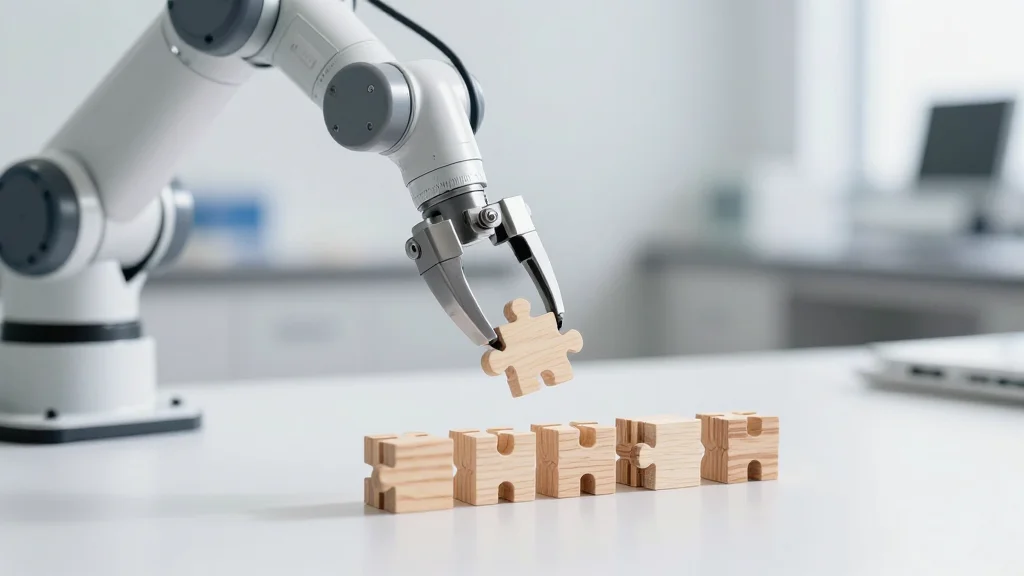
AI Models Fail at Robot Control without Human-Designed Building Blocks but Agentic Scaffolding Closes the Gap
Researchers from Nvidia, UC Berkeley, Stanford and CMU introduced CaP‑X, an open‑access framework that evaluates how large language models control robots via self‑written code. Testing twelve frontier models—including Gemini‑3‑Pro, GPT‑5.2 and Claude Opus 4.5—across seven manipulation tasks revealed that without high‑level...

Google Deepmind Study Exposes Six "Traps" That Can Easily Hijack Autonomous AI Agents in the Wild
Google DeepMind’s new paper defines six “AI agent traps” that exploit the perception, reasoning, memory, action, multi‑agent dynamics, and human‑in‑the‑loop stages of autonomous agents. The study shows real‑world proof‑of‑concept attacks, from hidden HTML instructions to coordinated multi‑agent flash‑crash scenarios. Researchers...

EU Bars AI-Generated Content From Official Communications, According to Politico
The European Commission, Parliament and Council have banned staff from using fully AI‑generated videos or images in official communications, allowing AI only for tasks like image‑quality enhancement. Officials say the rule protects authenticity and citizen trust. Experts argue the blanket...

Oracle Reportedly Lays Off Thousands of Employees to Bankroll Its Massive AI Infrastructure Bet
Oracle announced a massive workforce reduction, targeting 20,000 to 30,000 positions, to free up roughly $10 billion in cash flow for its AI infrastructure push. The cuts follow a $50 billion capital raise plan that has left the company in debt and...

Anthropic Accidentally Publishes Claude Code Source Code for Anyone to Find
Anthropic unintentionally released over 500,000 lines of Claude Code source on the public NPM registry, exposing more than 1,000 internal files. The leak, attributed to human error rather than a security flaw, included details on unreleased models and features. No...

Qwen3.5-Omni Learned to Write Code From Spoken Instructions and Video without Anyone Training It To
Alibaba unveiled Qwen3.5-Omni, an omnimodal AI model that handles text, images, audio, and video, boasting a 256,000‑token context window and the ability to process over ten hours of audio or 400 seconds of 720p video. The Plus variant set new...