
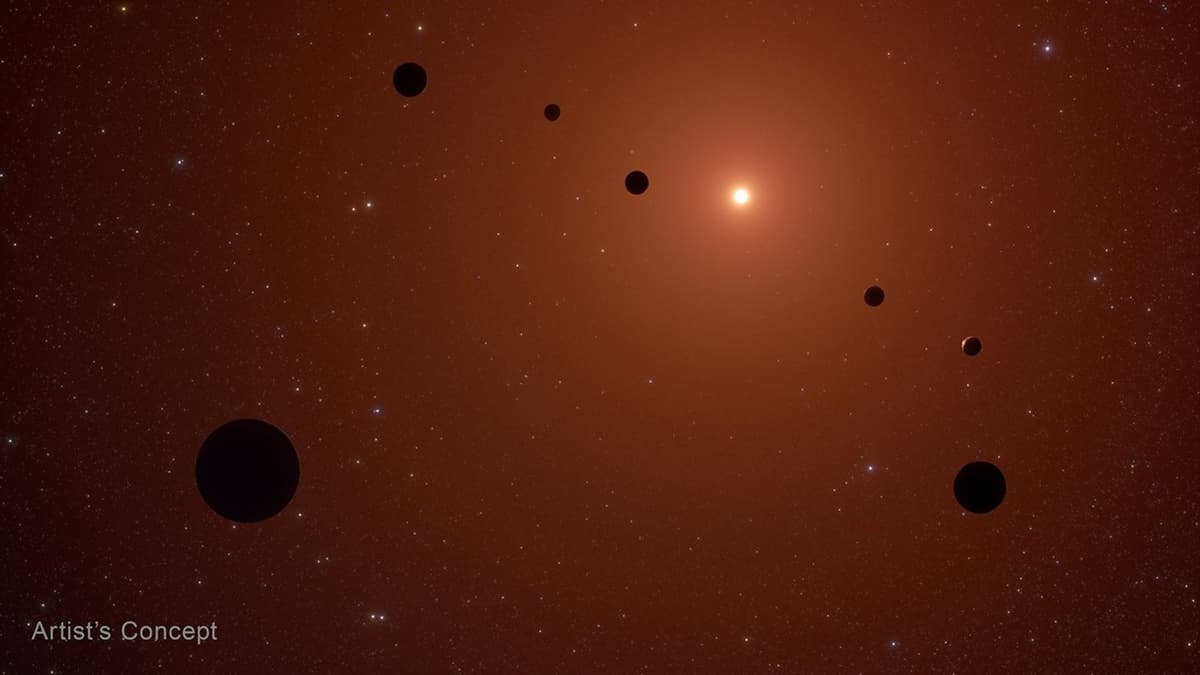
Introducing the 'Interplanetary Habitable Zone'
NASA astrobiologist Dr. Caleb Scharf introduces the Interplanetary Habitable Zone (IHZ), a multidimensional extension of the classic Goldilocks concept that incorporates power availability, radiation risk, transport difficulty, and material resources. His agent‑based simulation shows how a technological civilization might migrate from a home world to moons, asteroids, and other bodies as it seeks optimal conditions. When applied to the TRAPPIST‑1 system, the model predicts extinction within 45 years unless radiation exposure is halved. The IHZ therefore provides a richer framework for evaluating habitability across exoplanetary systems.

The Coldest "Stars" In the Galaxy Might Actually Be Alien Megastructures
Physicist Freeman Dyson’s megastructure concept gains fresh focus as a new arXiv pre‑print by Amirnezam Amiri identifies red dwarfs and white dwarfs as the most promising hosts. The study shows that a Dyson swarm would absorb visible light and re‑radiate it...

How to Weigh a Killer Asteroid at 22 Kilometers per Second
A new study proposes measuring the mass of small potentially hazardous asteroids by exploiting the inverse relationship between spacecraft velocity change and flyby distance. The technique calls for a main spacecraft to pass within a few asteroid diameters while deploying...
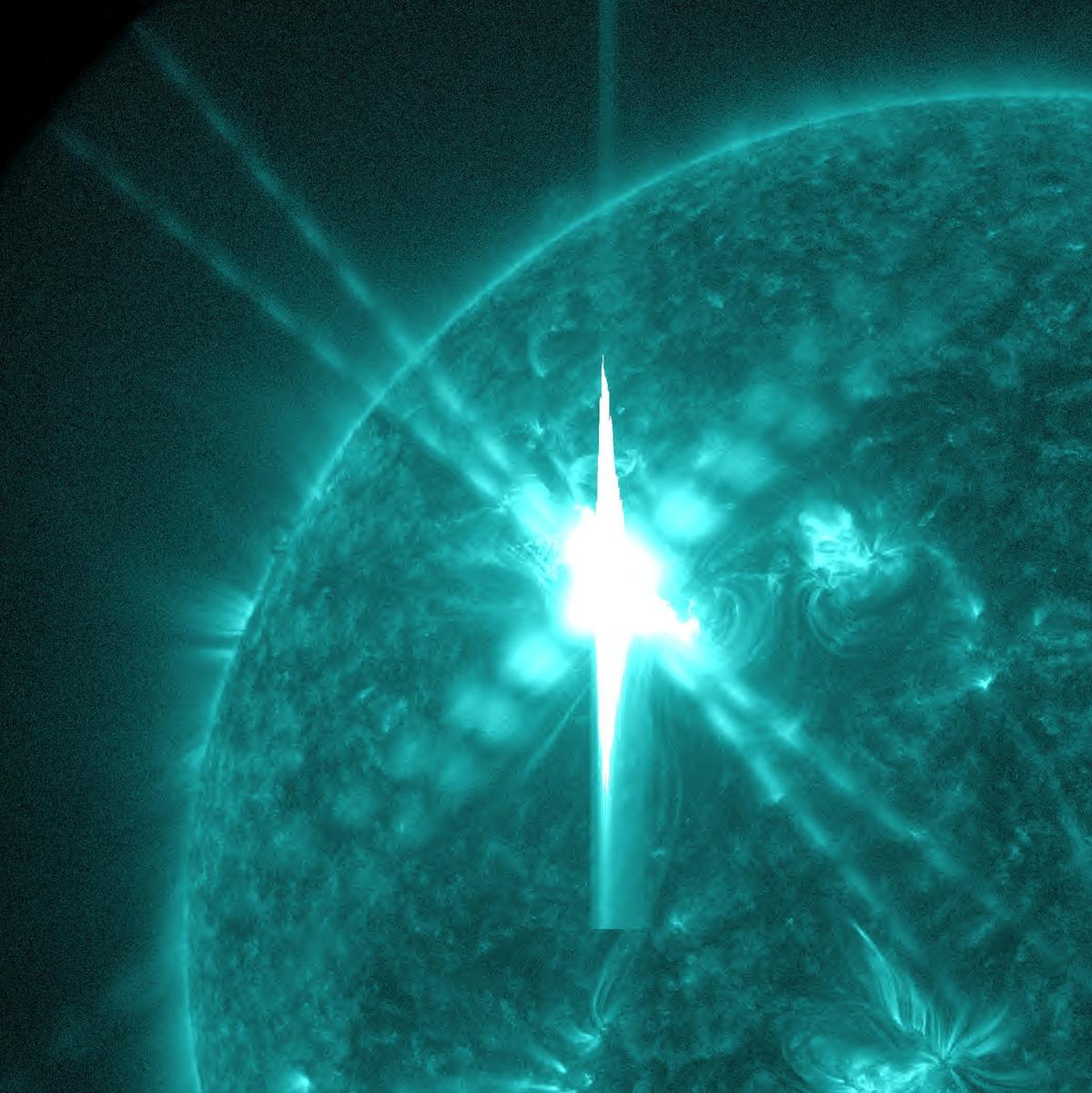
Predicting the Sun's Most Violent Outbursts
A multinational team led by Victor Velasco Herrera has unveiled a forecasting system that can identify super‑flare risk windows months to a year in advance and pinpoint the likely solar regions. By mining 50 years of GOES X‑ray data, researchers...
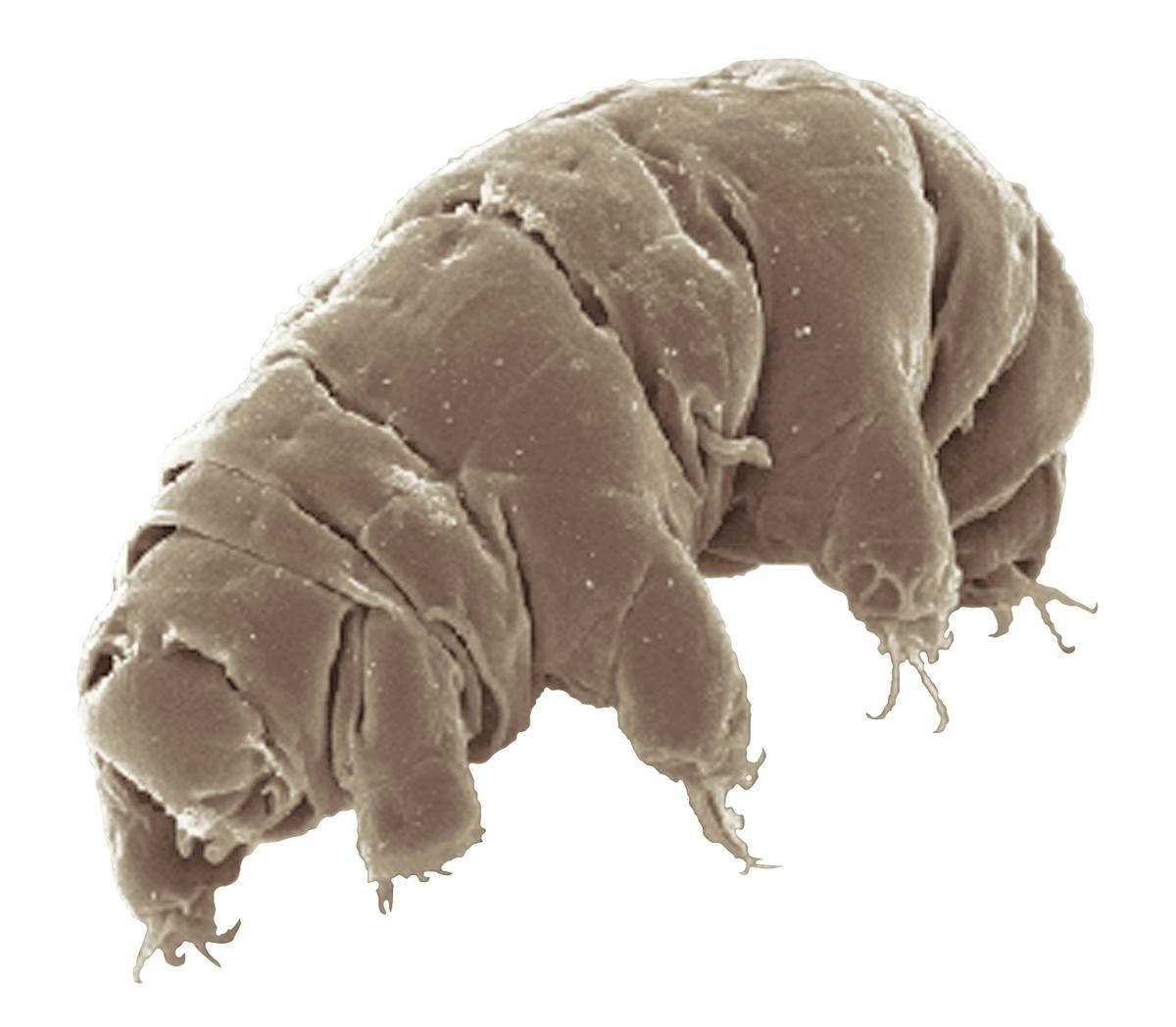
The Toughest Animals in the Universe Just Got a New Job
Penn State researchers used tardigrades, the ultra‑resilient "water bears," to test how Martian regolith affects living organisms. In simulated soil from the Curiosity‑sampled Rocknest deposit, the MGS‑1 simulant sharply reduced tardigrade activity, while a second, less inhibitory simulant performed better....

Europe's Answer to Starship
SpaceX’s Starship demonstrated a 33‑engine launch and a mid‑air booster catch, confirming its potential as a fully reusable super‑heavy lift vehicle. Independent analysis by Germany’s DLR, using extracted telemetry, estimates the current reusable Starship can deliver about 59 tonnes to low‑Earth...

Would Earth Still Be Habitable Without Us?
Researchers have built the most detailed computer model of a lifeless Earth, reproducing 19 pre‑industrial benchmarks over 4.5 billion years. The model shows that geological processes alone can maintain temperate surface conditions and liquid water without any biology. It also generates...

Researchers Examine How We Could Achieve Sustainable Water Systems for Space
Researchers led by David Bamidele Olawade reviewed sustainable water systems for space habitats. They note that the ISS’s Environmental Control and Life Support System already recovers 93% of water from urine, sweat and humidity but still faces power, durability and...

The Optical Engineering Required to Photograph an Earth Twin
Researchers at NASA Goddard have identified a 1.52 µm infrared sweet spot for the upcoming Habitable Worlds Observatory, allowing a 20 % bandwidth up to 1.68 µm without requiring a complex cryogenic cooling system. Their BARBIE IV analysis shows that high methane levels obscure...

Another Early Universe Surprise From The JWST: A Jellyfish Galaxy
Astronomers using JWST have identified COSMOS2020‑635829 as a candidate jellyfish galaxy at redshift z = 1.156, roughly 5 billion years after the Big Bang. The galaxy exhibits a unilateral tail of star‑forming knots, indicating ram‑pressure stripping in a proto‑cluster environment. Spectroscopic data reveal extremely...

How Mars' Toxic Soil Actually Makes Stronger Bricks
Researchers from the Indian Institute of Science and the University of Florida found that adding Martian perchlorates to a regolith simulant, together with the bacterium Sporosarcina pasteurii and natural guar gum, produces bricks with compressive strength more than double that...
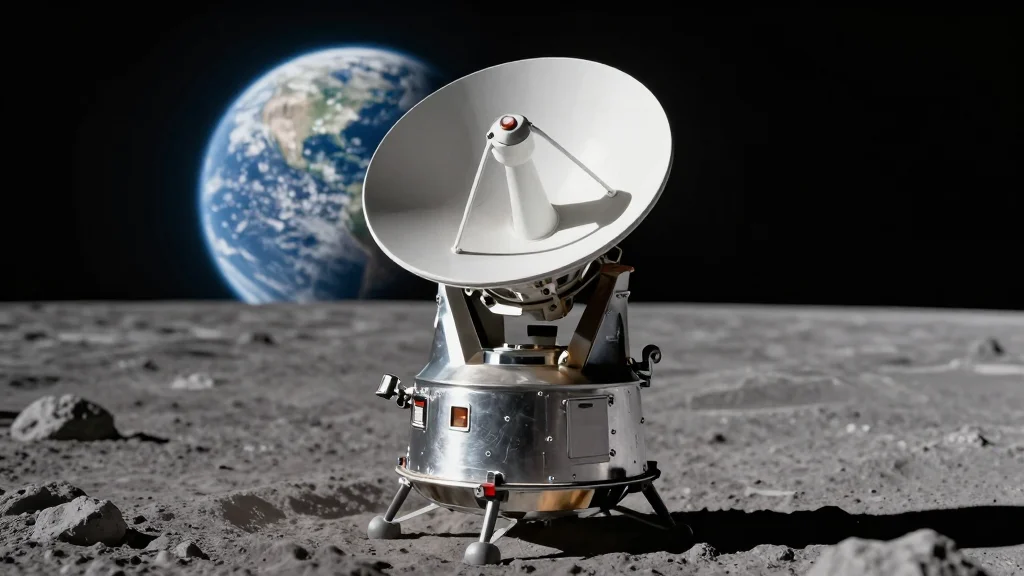
Earth's Radiation Fingerprint
Chinese researchers demonstrated that observing Earth from the lunar surface yields a unified measurement of the planet’s radiation budget, overcoming the spatial‑temporal trade‑offs of low‑Earth‑orbit and geostationary satellites. Their analysis showed that more than 90% of Earth’s outgoing radiation pattern...

Peering Into the Energetic Turbulence Around Supermassive Black Holes
New XRISM observations have directly measured turbulent gas motions driven by supermassive black holes in the M87 galaxy and the Perseus Cluster. The Nature paper on Perseus and the Astrophysical Journal paper on M87 reveal two distinct velocity components—a small‑scale,...

Hunting for the Lunar Debris Hiding Near Earth
A new study from Tsinghua University predicts roughly 500,000 lunar‑origin asteroids about 5 m across orbiting near Earth, yet only a handful have been identified. These objects travel at about 12.8 km s⁻¹ and approach from sunward or anti‑sunward directions, distinguishing them from...
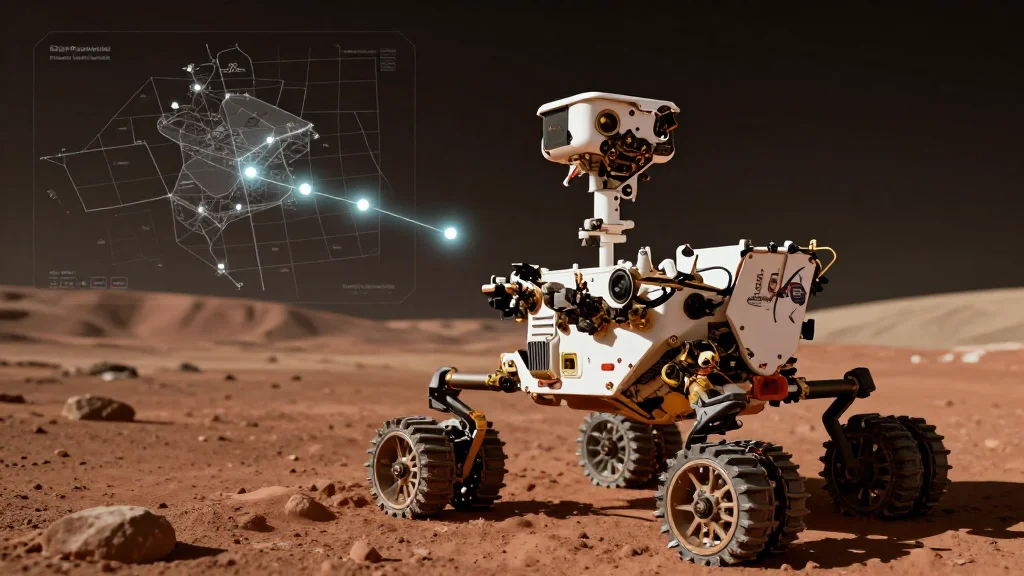
NASA Let AI Drive The Perseverance Rover For Two Days
NASA employed Anthropic’s Claude AI to generate waypoints for Perseverance, enabling the rover to travel 456 meters over two days without human control. The AI processed HiRISE orbital images and digital elevation models to identify hazards and plot a safe path....

Using Foldable Structures To Guide Microwaves
Researchers at UIUC have created origami‑inspired electromagnetic waveguides that fold compactly for launch and expand in space. The paper‑based structures, coated with a 35 µm aluminum laminate, achieve up to 87 % reduction in stowed volume while preserving low signal loss. Prototypes...

SpaceX Crew-12 Will Study How Microgravity Affects the Human Body
NASA’s Crew‑12 mission will launch aboard SpaceX’s Crew Dragon on Feb. 11, carrying two NASA astronauts, an ESA specialist, and a Russian cosmonaut. While aboard the ISS, the crew will conduct the Venous Flow study to assess blood‑clot risk and a...

Are There Hidden Dimensions to the Universe? Part 1: Kaluza and Klein
The article revisits the origins of extra‑dimensional physics, beginning with Theodor Kaluza’s 1919 proposal to add a fifth dimension for unifying gravity and electromagnetism, and Oskar Klein’s 1926 compactification idea that hides the dimension at the Planck scale. It explains...

Canadian Researchers Map the Milky Way's Magnetic Field
Canadian astronomers using the Dominion Radio Astrophysical Observatory have completed the Global Magneto‑Ionic Medium Survey (GMIMS) of the northern sky, producing the first full‑spectrum map of the Milky Way’s magnetic field. The effort, led by Dr. Jo‑Anne Brown and Dr....

The Collaboration that Brought You the First Image of a Black Hole Just Released Photos of Its Massive Jet
The Event Horizon Telescope collaboration released new VLBI images that pinpoint the launch point of M87*'s relativistic jet. By exploiting intermediate baselines, researchers identified a compact emission region about 0.09 light‑years from the black‑hole shadow, linking it to the jet’s...

The Dirty Afterlife of a Dead Satellite
Satellite megaconstellations are set to launch tens of thousands of low‑cost satellites, each with a 5‑10‑year lifespan. To avoid the Kessler Syndrome, operators plan to deorbit them by burning up in the atmosphere, potentially as many as 23 satellites per...

The "Little Red Dots" Observed by Webb Were Direct-Collapse Black Holes
Astronomers using JWST have identified the enigmatic “Little Red Dots” observed in the early universe as accreting direct‑collapse black holes (DCBHs). A Harvard‑led team led by Fabio Pacucci employed radiation‑hydrodynamic simulations that reproduced the dots’ infrared brightness, weak X‑ray emission,...

Turning Forgotten Telescope Data Into New Discoveries
Astronomers have unveiled Multiplexed Interferometric Radio Spectroscopy (RIMS), an algorithm that sifts through LOFAR’s archived background data. In just 1.4 years of observations, RIMS identified more than 200,000 previously hidden radio signals, many linked to stellar flares and a handful...

Neutron Scans Reveal Hidden Water in Famous Martian Meteorite
Researchers applied both X‑ray and neutron computed tomography to the Martian meteorite NWA 7034, known as Black Beauty, revealing hydrogen‑rich iron oxyhydroxide clasts that make up about 0.4 % of the scanned volume. These clasts account for roughly 11 % of the sample’s water,...

Reading the Moon’s Diary, One Speck of Dust at a Time
A new study using a nitrogen‑vacancy diamond sensor on a single lunar dust grain from Chang’e 5 shows that the Moon’s magnetism derives from both an ancient core dynamo and impact‑generated shock magnetization. Basaltic grains display weak, uniformly oriented fields, indicating...

For the First Time, Scientists Detect Molecule Critical to Life in Interstellar Space
Astronomers from the Max Planck Institute and Spain's Centro de Astrobiología have identified thiepine (C₆H₆S), a six‑membered sulfur‑bearing molecule, in the star‑forming cloud G+0.693–0.027 near the Milky Way’s center. The detection, confirmed by laboratory‑generated spectra and observations from the IRAM...

Cracks on Europa Sport Traces of Ammonia
NASA/JPL scientist Al Emran re‑examined Galileo’s near‑infrared spectra and identified faint ammonia absorption bands at 2.2 µm along Europa’s surface cracks. The ammonia, likely delivered by recent cryovolcanic eruptions, indicates that nitrogen‑rich brines are actively reaching the moon’s exterior. Because ammonia lowers...

A Laser Ruler for Sharper Black Hole Images
KAIST researchers have replaced traditional electronic timing signals in Very Long Baseline Interferometry with optical frequency‑comb lasers, delivering atomic‑clock precision across radio telescopes. The laser comb feeds directly into each dish’s receiver, establishing phase alignment at the fundamental stability of...

A New Theory for What Really Powers a Flare
A new study using ESA’s Solar Orbiter data shows solar flares are powered by “magnetic avalanches” rather than the traditional current‑sheet reconnection model. The high‑resolution EUI imager captured 2‑second cadence magnetic strands forming, winding, and repeatedly reconnecting thirty minutes before...

What’s Really Going On Inside Jupiter? New Models Offer Clues
A team of NASA and university scientists used combined 1‑D chemistry and 2‑D hydrodynamic models to probe Jupiter’s deep atmosphere. Their simulations reveal that Jupiter contains roughly 1.5 times more oxygen than the Sun, and that internal circulation moves far...

Chile's Paranal Observatory Saved From Industrial Development
The Chilean government halted AES Andes' INNA renewable‑energy project near the Paranal Observatory after astronomers warned it would raise light pollution by up to 35 percent and introduce ground‑vibrations that could cripple the Very Large Telescope array. Led by Nobel laureate...

Do Dwarf Galaxies Merge In The Milky Way's Halo?
Astronomers using Subaru’s wide‑field camera have identified an extended stellar distribution around the Ursa Minor dwarf spheroidal galaxy, revealing a population of main‑sequence stars beyond its tidal radius and aligned along a newly detected minor axis. The authors argue this...

The Magnetic "Birdsong" Of the Smallest Planet
BepiColombo’s Mio instrument recorded whistler‑mode magnetic waves—dubbed “birdsongs”—during six Mercury flybys between 2021 and 2025. These chirping waves mirror Earth’s chorus radiation but are confined to Mercury’s dawn side where solar‑wind compression intensifies the field. The waves act as electron...

The "China Sky Eye" Traces Fast Radio Bursts to a Binary Star System
An international team using China’s Five‑hundred‑meter Aperture Spherical Telescope (FAST) has identified a binary star system as the source of repeating fast radio burst FRB 20220529, located about 2.3 billion light‑years away. The study observed a dramatic rotation‑measure flare, interpreted as a...

This Rapidly Growing Black Hole Is Challenging Super-Eddington Accretion
Astronomers have identified quasar eFEDS J084222.9+001000 (ID830) at redshift 3.435, only 1.5 billion years after the Big Bang. The object shines as the most X‑ray luminous radio‑loud quasar in the eFEDS field, accreting at roughly 15 times the Eddington limit. Its extreme X‑ray...

The Rubin Observatory Will Rapidly Detect More Supernovae
The Vera C. Rubin Observatory, beginning its ten‑year Legacy Survey of Space and Time (LSST), is poised to dramatically increase the detection of core‑collapse supernovae in the Milky Way. Simulations of 100,000 synthetic events indicate the telescope can localize nearly...

The HWO Must Be Picometer Perfect To Observe Earth 2.0
NASA’s Habitable Worlds Observatory (HWO) has advanced to Concept Maturity Level 3, entering the trade‑space phase that evaluates telescope architectures and technology gaps. The flagship mission aims to directly image at least 25 Earth‑like exoplanets, requiring picometer‑scale stability—about 1,000 times...

NASA's Webb Telescope Peers Into the Heart of the Circinus Galaxy
The James Webb Space Telescope employed the Aperture Masking Interferometer on its NIRISS instrument to capture the sharpest infrared image yet of the Circinus galaxy’s active nucleus, effectively achieving a 13‑meter virtual aperture. The data show that 87 % of the...

The Sun's Red Dwarf Neighbors Provide Clues to Origins of Carbon and Oxygen
Astronomers led by Darío González Picos measured rare carbon‑13 and oxygen‑18 isotopes in 32 nearby M‑dwarf stars using high‑resolution spectra originally collected for exoplanet hunting. The precise isotope ratios reveal that stars with lower metallicity contain fewer of these minor isotopes,...

Mutations From Space Might Solve an Antibiotic Crisis
A University of Wisconsin‑Madison team sent 1,660 pre‑engineered bacteriophage variants to the International Space Station, letting microgravity and radiation drive co‑evolution with E. coli. In space, bacterial membranes flipped phospholipids outward, prompting surviving phages to acquire hydrophobic receptor‑binding proteins. When...

Radio Telescopes on the Moon Could Let Us Observe Dozens of Black Hole Shadows
A new arXiv study proposes deploying radio dishes on the Moon to create an Earth‑Moon interferometer capable of sub‑microarcsecond resolution. By leveraging the lunar radius as a baseline, the array could resolve black‑hole shadows as small as one‑tenth of a...

Astronomers Find that Black Holes "Seesaw" Between Ejecting Material as Winds or Jets
Astronomers using NASA’s NICER X‑ray telescope and South Africa’s MeerKAT radio array have shown that the black‑hole binary 4U 1630‑472 alternates between relativistic jets and X‑ray winds, but never produces both at the same time. The three‑year monitoring revealed a stable...

Could Bees Be a Model for SETI Searches?
Researchers at Monash and RMIT demonstrated that bees can recognize Arabic and Roman numerals, solve basic addition and subtraction, and communicate complex information via their waggle dance. The findings suggest that mathematics may be a shared cognitive ability across vastly...

Deep Magma Oceans Could Help Make Super-Earths Habitable
Researchers led by Miki Nakajima have shown that deep basal magma oceans (BMOs) in super‑Earths can become highly electrically conductive, enabling them to generate magnetic dynamos. Laboratory laser‑driven shock experiments on iron‑rich ferropericlase and numerical simulations demonstrate that planets with...

Searching for 'Green Oceans' And 'Purple Earths'
The Living Worlds Working Group’s white paper outlines the Habitable Worlds Observatory (HWO) as a next‑generation exoplanet telescope that will directly image planets using a coronagraph. To meet Decadal Survey goals, HWO must achieve extremely high signal‑to‑noise and cover a...

The Universe's Most Common Water Is a Hot Mess
Scientists at SLAC and the Sorbonne have experimentally produced superionic water—an exotic, electrically conductive ice—by compressing water to 1.8 million atmospheres and heating it to 2500 K with diamond‑anvil cells and laser pulses. High‑speed X‑ray diffraction showed the material’s crystal lattice is...

Why Mars Is Actively Manufacturing Poison
A new study led by Alian Wang and Neil Sturchio demonstrates that electrostatic discharges generated by Martian dust storms drive the conversion of chloride salts into perchlorates and carbonates. High‑energy electrons from these discharges produce reactive CO and O radicals...
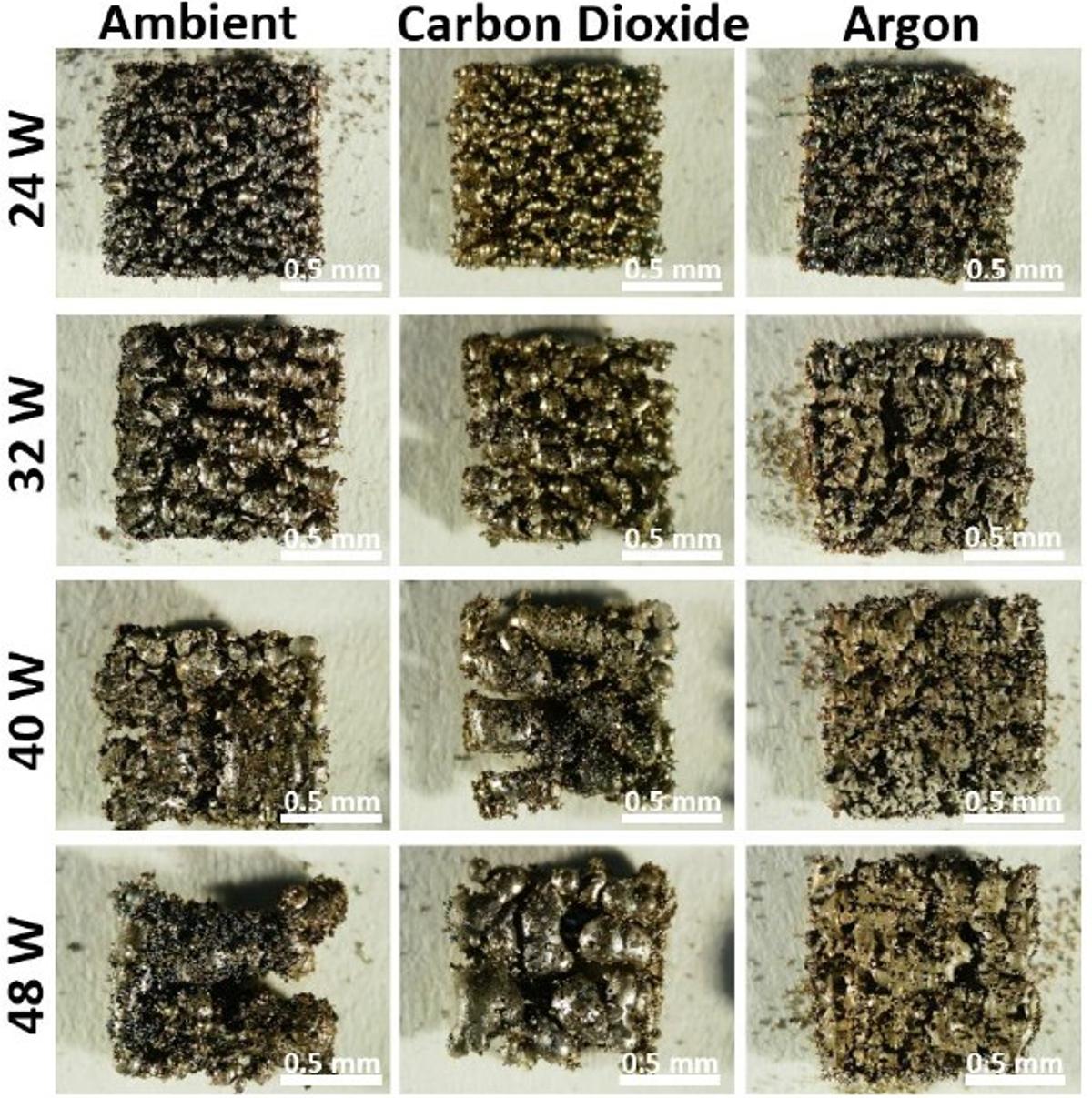
How Astronauts Will Fix Their Gear Using Thin Air
A new arXiv paper shows that carbon dioxide, the dominant component of Mars’ atmosphere, can serve as a viable shield gas for selective laser melting (SLM) metal 3D printing. While Argon delivers about 98% area retention, CO₂ achieves roughly 85%,...
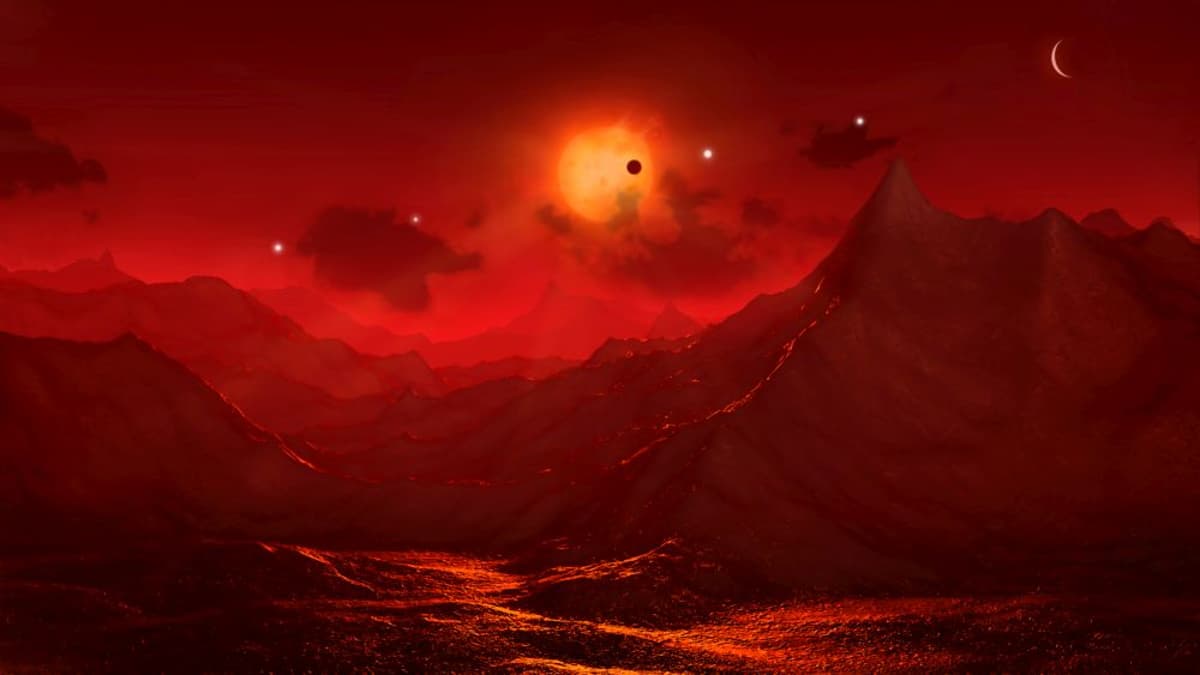
Red Dwarfs Are Too Dim To Generate Complex Life
A new study examines whether planets orbiting dim red dwarfs can trigger a Great Oxidation Event (GOE) like Earth’s. Using TRAPPIST‑1e as a proxy, the authors find it receives only 0.9% of Earth’s photosynthetically active radiation, implying a 63‑billion‑year timescale...

These Gravitationally Lensed Supernovae Could Resolve The Hubble Tension
Astronomers using JWST’s VENUS survey have identified two strongly‑lensed supernovae, SN Ares and SN Athena, whose multiple images arrive at different times. The predicted reappearances—Athena in 2–3 years and Ares in about 60 years—provide a natural time‑delay experiment to measure the Hubble...