VentureBeat AI
VentureBeat's coverage of artificial intelligence news and trends

OpenAI's GPT Image 1.5 Challenges Google at Enterprise-Grade Visuals
OpenAI released GPT Image 1.5, upgrading ChatGPT’s image generation and API with the GPT‑5.2 engine. The update delivers sharper editing, consistent lighting, composition, and more reliable instruction following. It also improves text rendering and the ability to generate smaller faces within group scenes. The rollout targets enterprise users seeking precise visual design tools, positioning OpenAI against rivals like Google’s Nano Banana and Alibaba’s Qwen‑Image.

With AI Browsers Creating Fresh Security and Privacy Concerns, Norton Neo Is the First to Enter with a Safety-First Approach
Norton has released Neo, the first AI‑native browser built around privacy and security, positioning it against AI‑first competitors like Perplexity and OpenAI. Neo eliminates the need for user prompts by proactively delivering summaries, reminders and context‑aware suggestions directly within the...

MIT Offshoot Liquid AI Releases Blueprint for Enterprise-Grade Small-Model Training
Liquid AI, an MIT spin‑off, has published a 51‑page technical report that details the architecture, training curriculum, and post‑training pipeline behind its LFM2 family of small, on‑device foundation models. The report reveals a hardware‑in‑the‑loop architecture search that favors gated short...

Anthropic Says It Solved the Long-Running AI Agent Problem with a New Multi-Session Claude SDK
Anthropic announced a new Claude Agent SDK that tackles the long‑running agent memory problem by splitting tasks between an initializer agent and a coding agent. The initializer sets up the environment and logs progress, while the coding agent makes incremental...
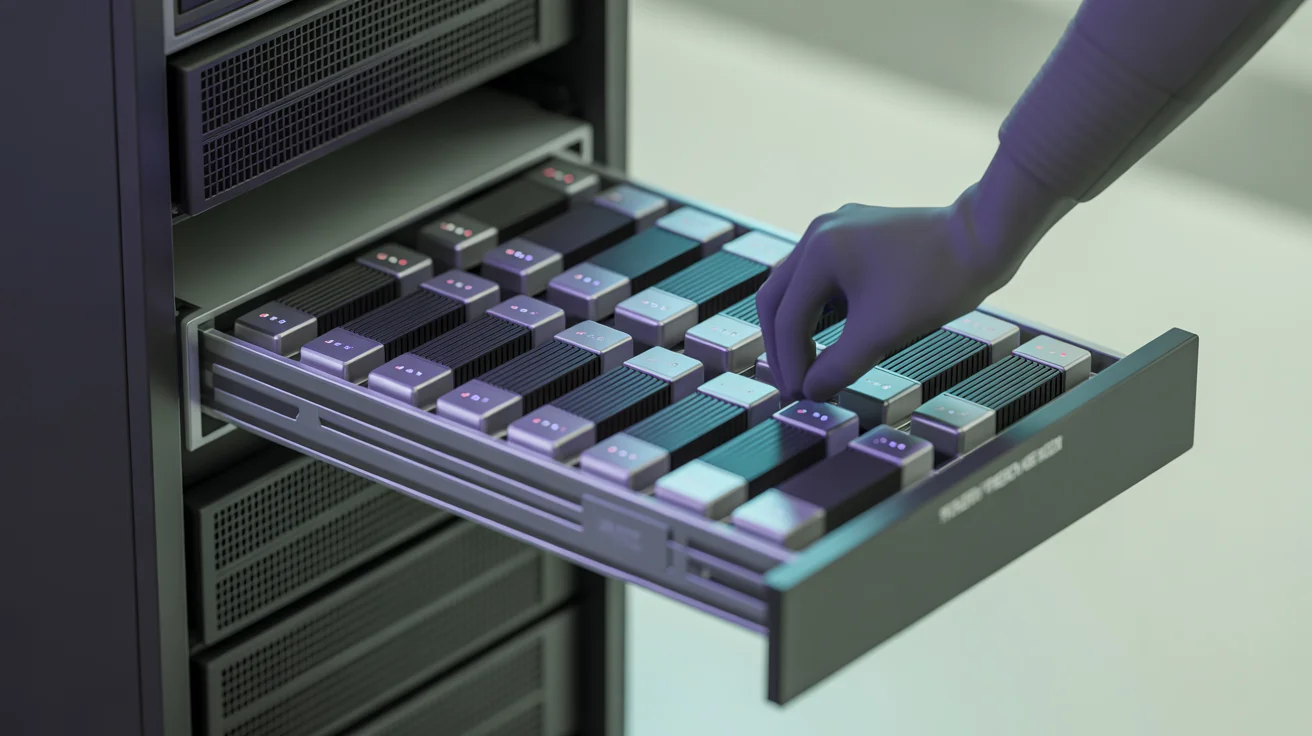
ScaleOps' New AI Infra Product Slashes GPU Costs for Self-Hosted Enterprise LLMs by 50% for Early Adopters
ScaleOps unveiled an AI Infra Product that automates GPU allocation and scaling for enterprises running self‑hosted large language models and other GPU‑intensive AI workloads. The platform integrates with any Kubernetes distribution, cloud or on‑prem environment without code changes, using proactive...

In a Sea of Agents, AWS Bets on Structured Adherence and Spec Fidelity
AWS has moved its Kiro coding agent from preview to general availability, adding property‑based testing, checkpointing, and a command‑line interface that lets developers build custom agents directly from the terminal. The new features let enterprises upload specifications, automatically generate hundreds...

From Shiny Object to Sober Reality: The Vector Database Story, Two Years Later
Two years after the hype around vector databases, the market has shifted from unicorn aspirations to pragmatic hybrid retrieval stacks. Pinecone, once a flagship startup, is reportedly exploring a sale after struggling with competition from open‑source and incumbent databases that...

Google’s New AI Training Method Helps Small Models Tackle Complex Reasoning
Researchers from Google Cloud and UCLA unveiled Supervised Reinforcement Learning (SRL), a framework that reformulates problem solving as a sequence of intermediate actions and provides step‑wise rewards. SRL enables 7‑billion‑parameter models such as Qwen2.5‑7B‑Instruct to gain a 3 % lift on...

Upwork Study Shows AI Agents Excel with Human Partners but Fail Independently
Upwork’s Human+Agent Productivity Index evaluated three leading AI agents—Gemini 2.5 Pro, GPT‑5 and Claude Sonnet 4—on more than 300 real freelance jobs under $500. Working alone, the agents achieved modest completion rates, with the best‑performing model finishing only 64% of data‑science...

Inside LinkedIn’s Generative AI Cookbook: How It Scaled People Search to 1.3 Billion Users
LinkedIn has rolled out an AI‑powered people search that lets users pose natural‑language queries—e.g., “Who is knowledgeable about curing cancer?”—to a graph of 1.3 billion members. The system combines a 7‑billion‑parameter policy model distilled into a 1.7 B teacher and a 220 M...

How Deductive AI Saved DoorDash 1,000 Engineering Hours by Automating Software Debugging
Deductive AI, a stealth startup, raised $7.5 million in seed funding led by CRV to commercialize AI‑driven SRE agents that use reinforcement learning to diagnose production incidents. The platform builds a knowledge graph linking codebases, telemetry and documentation, enabling multiple AI...

Terminal-Bench 2.0 Launches Alongside Harbor, a New Framework for Testing Agents in Containers
Terminal-Bench 2.0 was launched with 89 rigorously validated, more difficult tasks, addressing inconsistencies of the original suite and setting a new standard for evaluating autonomous AI agents in terminal environments. The accompanying Harbor framework enables large‑scale, container‑based rollouts across major...

Ship Fast, Optimize Later: Top AI Engineers Don't Care About Cost — They're Prioritizing Deployment
Leading AI teams at companies like Wonder and Recursion are de‑emphasizing compute cost in favor of rapid deployment, low latency and scalable capacity. Wonder finds AI adds only a few cents per order but is now hitting cloud‑capacity limits, prompting...

Moonshot's Kimi K2 Thinking Emerges as Leading Open Source AI, Outperforming GPT-5, Claude Sonnet 4.5 on Key Benchmarks
Moonshot AI unveiled Kimi K2 Thinking, a trillion‑parameter Mixture‑of‑Experts model that activates 32 billion parameters per inference and is released under a modified MIT license on Hugging Face. In third‑party benchmarks it posted 44.9% on Humanity’s Last Exam, 60.2% on BrowseComp, 71.3% on SWE‑Bench...
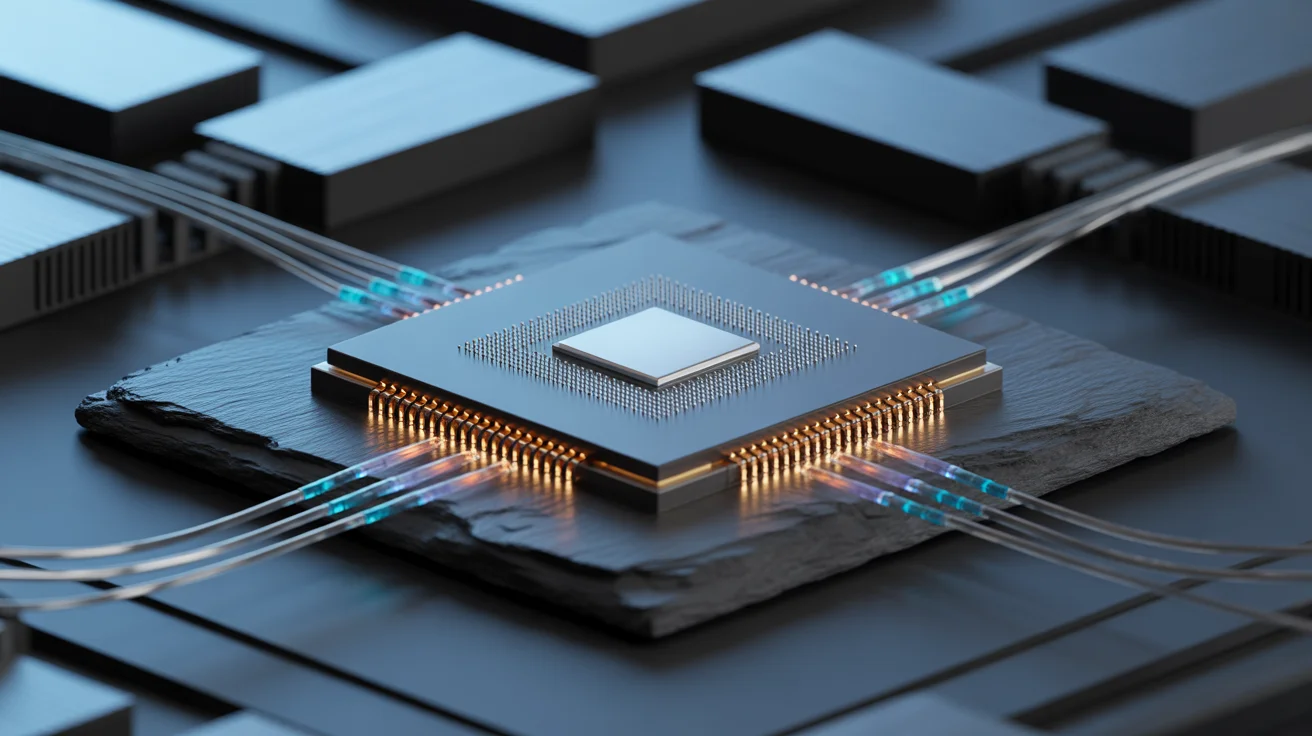
Google Debuts AI Chips with 4X Performance Boost, Secures Anthropic Megadeal Worth Billions
Google Cloud unveiled its seventh‑generation Tensor Processing Unit, Ironwood, which offers more than four‑times the training and inference performance of the previous generation and scales to pods of 9,216 chips with 1.77 petabytes of high‑bandwidth memory and optical circuit‑switching. Anthropic announced...