Specialised, Consolidated and Mission-Focused: A New Model for Mergers Emerges
King’s College London (KCL) and Cranfield University have agreed to merge, creating a new hybrid institution that combines KCL’s comprehensive teaching capacity with Cranfield’s specialist expertise in aerospace, defence and management. The deal, framed as a mission‑focused consolidation rather than a cost‑cutting acquisition, promises to preserve jobs while smoothing Cranfield’s volatile international fee income with KCL’s broader funding base. By aligning with the UK government’s post‑16 education and industrial strategy, the merger aims to boost national research capability and regional economic impact. Regulators and policymakers are watching to see if this model will reshape higher‑education consolidation.

OfS Investigation Has Been One Big Guessing Game
The Office for Students (OfS) has placed two conditions on the University of Northampton after a 2023 investigation into its computing provision. The regulator’s decision arrived after the cohort in question had already graduated, prompting criticism of the timing and...

How Can Emerging Leaders of Higher Education Develop Skills in Institutional Change?
Brian Rosenberg’s 2023 book argues that structural features of U.S. and U.K. higher‑education systems actively discourage transformative leadership. The article expands on his analysis, highlighting how reputation‑driven rankings, consensus‑heavy governance, diverse stakeholder interests, and disciplinary silos create inertia. It stresses...

NMC Splits the Difference on Nursing and Midwifery Hours
The Nursing and Midwifery Council (NMC) has opened a consultation that would slash the minimum pre‑registration nursing programme from 4,600 to 3,600 hours while extending the minimum midwifery course from three to four years, keeping the 4,600‑hour requirement. The nursing...
(At Least) Thirteen Ways in Which OfS’s Guidance on Free Speech May Now Need to Change
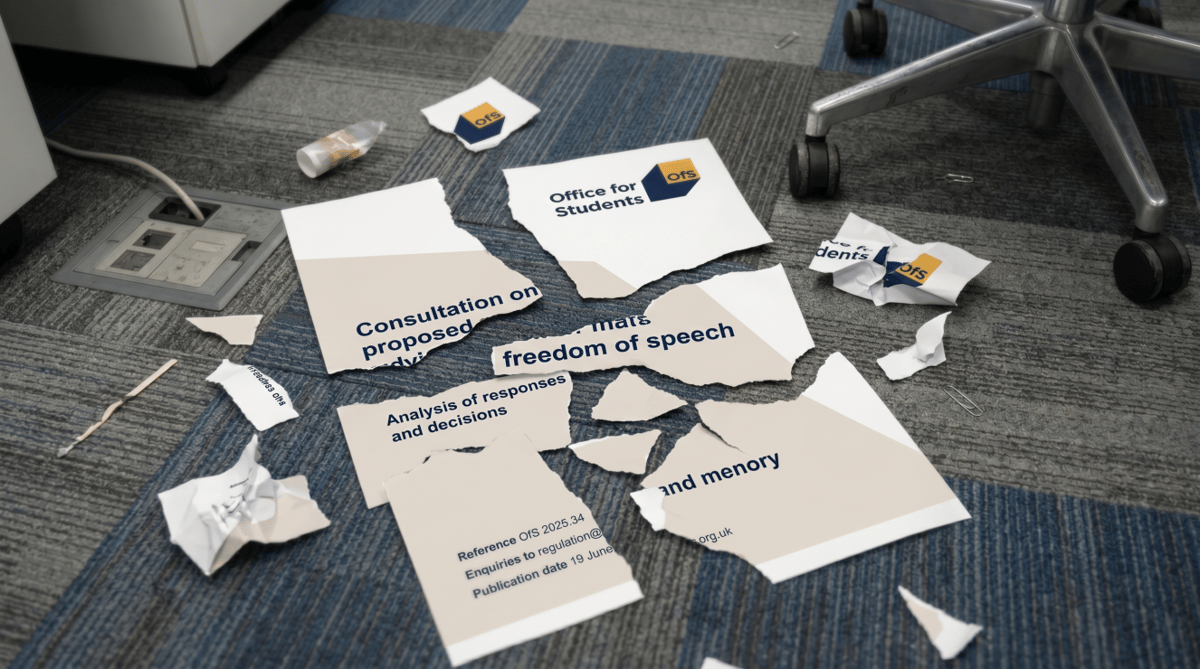
The Office for Students’ Regulatory Advice 24 (RA24) on free‑speech compliance, built around 54 illustrative vignettes, now appears misaligned with the University of Sussex v OfS judgment. The court rejected the guidance’s absolutist view that any policy touching lawful speech...

Looking After Researchers Themselves Is a Blind Spot in University Research Ethics
University research ethics focus on participant protection while overlooking the mental health of researchers who engage with traumatic narratives. Qualitative scholars experience vicarious trauma—insomnia, intrusive memories, and anxiety—yet institutional support is scarce. The article highlights the Vicarious Trauma Reflexive Sequence...

AI Isn’t Taking Graduate’s Jobs, but It Will Reshape Entry-Level Roles
AI is set to reshape, not eliminate, entry‑level graduate roles, with 87% of employers expecting changes to tasks and skill requirements. About 40% of firms anticipate no graduate positions will be replaced in the next three years, while another 40%...

The HE Sector Is Making Progress on Transformation – but Government Support Could Turbo-Charge the Potential Gains
Universities UK and sector bodies are accelerating the Transformation and Efficiency Taskforce recommendations, focusing on joint procurement, digital data standards, and governance reforms. Recent analysis shows institutions will absorb roughly $11 billion in extra costs and lose about $4.7 billion in funding...

Sussex Wins in Free Speech High Court Challenge
A UK Administrative Court ruled that the Office for Students (OfS) acted with predetermination and legal errors in its investigation of the University of Sussex’s free‑speech policies. The court upheld several of Sussex’s grounds, limiting OfS’s jurisdiction to constitutional documents...

Thinking Through Staff Development Following the Defunding of the Academic Professional Apprenticeship
From January 2026 the UK government withdrew funding for the level‑7 Academic Professional Apprenticeship (APA), a key pathway that universities used to develop early‑career teaching staff. The APA, aligned with Advance HE’s Professional Standards Framework and often delivered alongside a PGCLTHE, was...

The OIA Is Getting Faster While the System It Depends on Gets Slower
The Office of the Independent Adjudicator (OIA) recorded a historic 4,234 complaints in 2025, a 17% increase from the previous year and the first time receipts topped 4,000. The complaint rate per 100,000 students surged to roughly 166, four times...

AI Literacy Is Not Enough – Universities Must Teach Through Disciplinary Standards
Former Prime Minister Rishi Sunak warned that AI is eroding the routine tasks that traditionally train graduates, a trend confirmed by rising AI‑lit job ads and a 56% wage premium for AI‑skilled workers. As firms automate low‑risk activities, the graduate...

Data Security Is a Question of Trust
UK Biobank discovered that de‑identified health data from its 500,000‑volunteer cohort appeared on a Chinese Alibaba auction site, prompting a rapid joint response from the biobank, Alibaba and UK and Chinese authorities. The leak was traced to three accredited researchers...

Do the Silent Middle Get to Belong in Higher Education?
The article highlights the “silent middle” – students who meet minimum requirements yet remain invisible in higher‑education belonging initiatives. It argues that current belonging frameworks privilege vocal, visible engagement, overlooking structural, cultural and strategic reasons many learners stay quiet. By...

Students Should Be Partners in Mergers, Not Subjects or Consumers
Advance HE has released a three‑phase governance guide for university mergers, mapping decision‑shaping, decision‑making and decision‑taking milestones for boards and executives. While the resource is thorough on structural and legal steps, it largely treats students as data sources rather than...