
The New Leadership Imperative: From Decision Makers to Experience Makers
The article argues that modern leaders must evolve from pure decision‑makers to "experience makers" who shape how change feels for employees. It notes that most transformation failures are rooted in unaddressed emotions rather than flawed strategies. To close the gap, leaders need three people‑first capabilities: emotional awareness, psychological safety, and human‑centred communication. The author backs the claim with work at firms such as Microsoft, Barclays and Mott MacDonald, showing that experience‑focused leadership drives lasting results.

The Qualities that Get Managers Promoted Are the Reasons People Don’t Like Them
A new Hogan Assessments report reveals a stark disconnect between the traits that propel managers to senior roles and the qualities employees deem essential for effective leadership. While executives are distinguished by confidence, competitiveness, visibility and self‑promotion, staff prioritize clear...

Prime Office Costs Continue to Rise Around the World, Says Savills
Savills’ Q1 2026 Global Prime Office Cost Index shows net effective occupier costs rising 0.7 percent globally, taking the annual increase to 5 percent and a two‑year gain of 9.1 percent. Tokyo posted the steepest quarterly jump at 12.7 percent, while Midtown Manhattan’s costs...

Geopolitics Reshapes CEO Priorities as Firms Focus on Profitability, AI and Dealmaking
The EY‑Parthenon CEO Outlook Survey of 1,200 leaders across 21 countries finds geopolitical risk now tops the agenda, with 56% naming it the most pressing threat for the next year. Executives are pivoting toward disciplined growth, prioritising profitability, financial flexibility...

Microsoft Report Claims AI Agents Will Reshape Organisations and Redefine Knowledge Work
Microsoft’s latest Work Trend Index, based on a survey of 31,000 workers in 31 countries, predicts that AI agents will become embedded participants in everyday workflows, giving rise to a new “frontier firm” model. The report says most knowledge workers...

Why Your Emotional Journey Through Change Makes Complete Sense
Organisations often focus on the logical side of change—business cases, plans, and communications—while overlooking the deep emotional impact on employees. The article explains that change disrupts identity, causing grief, anxiety, and a non‑linear emotional journey that can derail initiatives if...

Motivation Shifts Rather than Declines During Periods of Uncertainty, According to New Poll
A Wiley Workplace Intelligence poll of over 2,000 U.S. employees shows motivation does not collapse in uncertain times; it reshapes around leader‑employee interaction. Respondents said uncertainty itself isn’t the main driver of disengagement, but visible, transparent, consistent leadership is. Employees...

More than Half of UK Freelancers Have Considered Quitting Self-Employment in Past Year
A new Industry Frustration Report by The Accountancy Partnership surveyed 1,060 UK freelancers and small business owners, finding that 50.7% have thought about leaving self‑employment in the past year. Of those, 16.4% seriously considered it, while 34.3% only entertained the...

AI Displays Bias when Judging People, and that Matters for some of Its Most Common Uses
Researchers at Hebrew University examined how large language models judge people, finding that AI systems emulate human notions of competence, integrity and benevolence but do so with rigid, component‑based scoring. Using 43,000 simulated decisions and nearly 1,000 human participants, the...

Flokk Strengthens North American Push with New Acquisition
Norwegian furniture maker Flokk announced the acquisition of US‑based Spec Furniture, adding a commercial seating and table specialist to its growing North American portfolio. The deal follows a series of takeovers—including 9to5 Seating, Stylex and Via Seating—designed to boost scale...

Re-Humanising the Workplace: Why Prevention, Support and Standards Matter More than Ever
A new UK government‑commissioned report warns that ill health and stress cost employers roughly £85 billion ($108 billion) in lost output each year, while the public sector bears an additional £47 billion ($60 billion) in welfare and NHS expenses. The analysis argues that stress...

New Issue of Works Magazine Is Out Now and Ready for You to Explore
Works magazine has released its 19th issue in a digital format, with the print edition slated for delivery soon. The issue delivers a broad survey of workplace design and management trends, from AI implications and sustainability debates to innovative case...
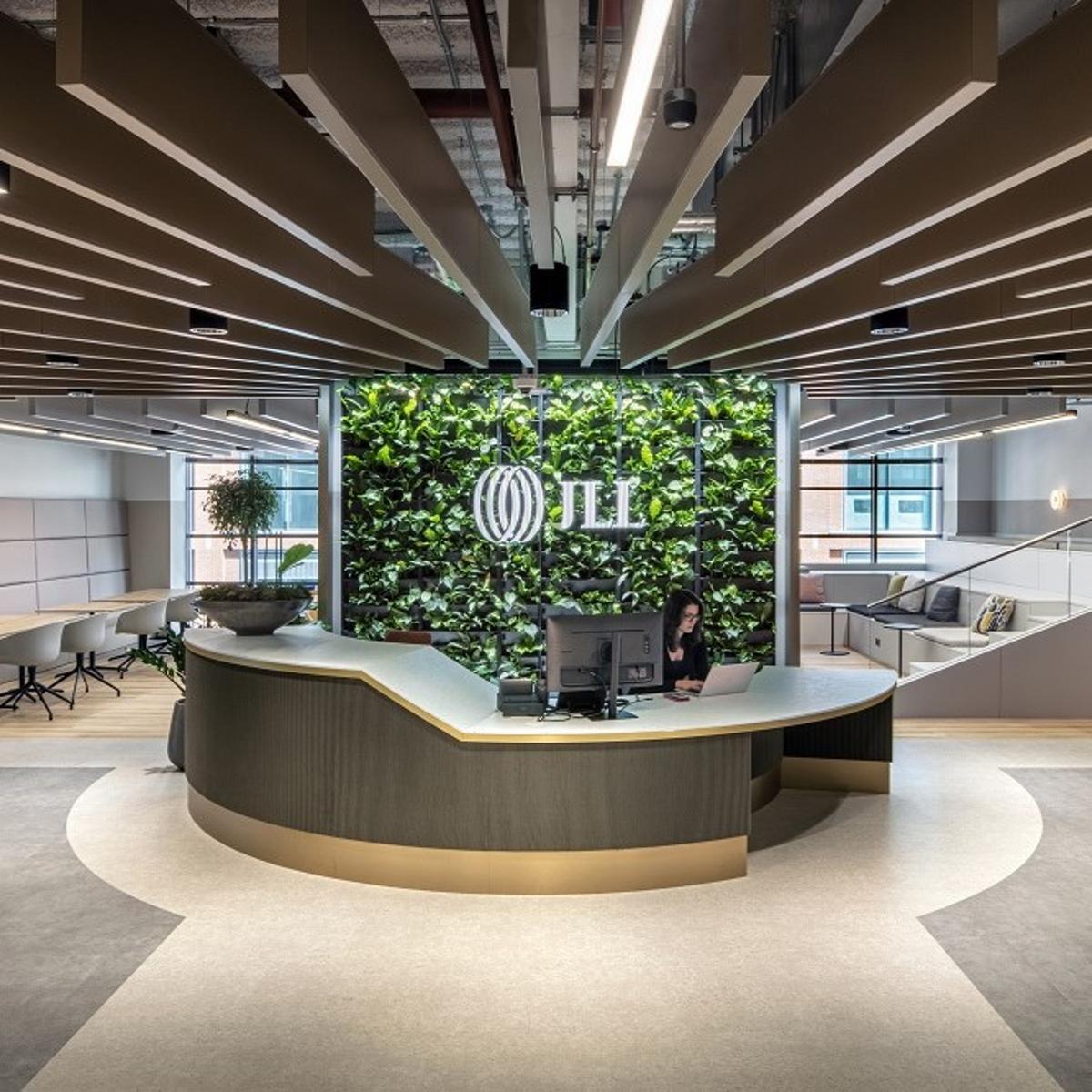
Global Office Fit-Out Costs Rise as Geopolitical Pressure and AI Reshape Workplaces
JLL’s 2026 Global Office Fit‑Out Cost Guide finds that worldwide office fit‑out expenses have risen up to 6% over the past year, pushing the benchmark for a medium‑quality space to roughly $2,150 per square metre. The increase stems from higher...

Study Confirms that Digital Tools Blur Boundaries Between Work and Personal Life
A new study in the International Journal of Electronic Finance confirms that digital tools are eroding the line between work and personal life. Researchers found that smartphones, laptops and cloud platforms enable constant connectivity, extending work into virtually every moment...

Challenge for Workplace Is Balancing Culture with the Business’s Need for Speed and Innovation
An EU‑funded Culture Compass 2026 report surveyed more than 540 managers and employees in Austria, Germany, the Netherlands and Switzerland and found a “productivity paradox”: high employee engagement coexists with slow decision‑making and limited autonomy. While 42 % of organisations describe...