D-Wave Riding The Dual-Rail For Its Gate-Model Quantum Ambitions
Companies Mentioned

Why It Matters
By marrying annealing expertise with fault‑tolerant gate‑model hardware, D‑Wave could shorten the timeline for enterprise‑grade quantum computing and become a one‑stop vendor in a rapidly consolidating market.
Key Takeaways
- •Q1 bookings surged 1,994% to $33.4 million, driven by major deals.
- •Dual‑rail qubits detect ~90% of errors, targeting 99.9% two‑qubit fidelity.
- •Roadmap promises 17‑qubit (2026) to 100‑logical‑qubit (2032) systems.
- •Federal CHIPS Act may provide up to $100 million for development.
- •D‑Wave aims to offer both annealing and gate‑model platforms to enterprises.
Pulse Analysis
The quantum‑computing landscape is at a crossroads, with hyperscalers and traditional OEMs racing to commercialize gate‑model machines while niche players like D‑Wave have built revenue streams around quantum annealing. D‑Wave’s recent surge—nearly $34 million in Q1 bookings—signals that customers are willing to invest in proven quantum services, even as the industry grapples with noisy intermediate‑scale quantum (NISQ) limitations. By leveraging its existing superconducting expertise, D‑Wave is positioning itself to capture a broader slice of the market beyond optimization workloads.
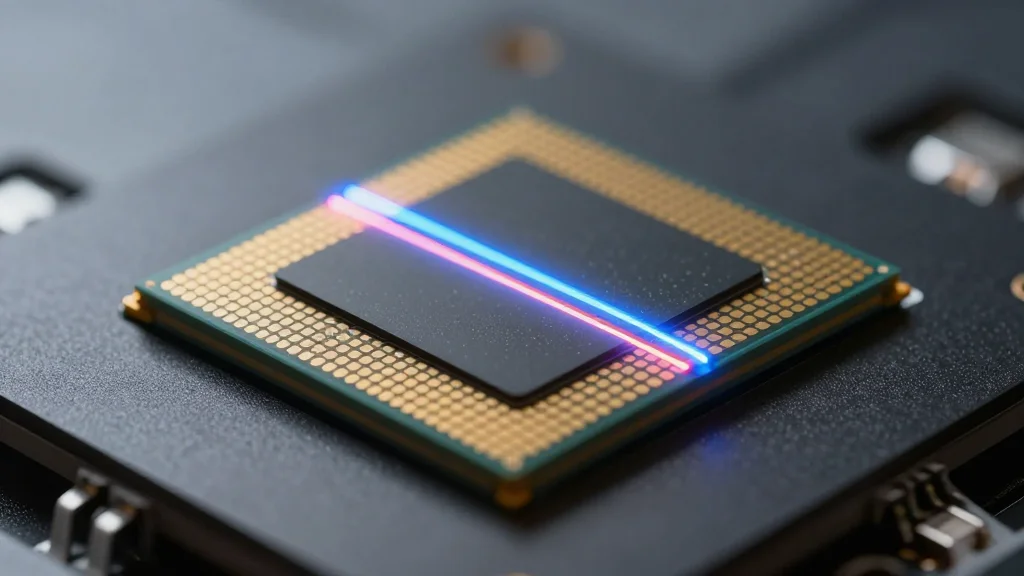
At the heart of D‑Wave’s gate‑model push is its dual‑rail qubit architecture, which embeds error detection directly into each qubit. The approach claims to identify roughly 90% of errors in real time, delivering two‑qubit fidelities of 99.9% and a Lambda error‑reduction factor of 10—far above the industry norm of 2. This hardware‑level correction could dramatically reduce the physical qubit count needed for logical qubits, accelerating the path to fault‑tolerant systems. The company’s roadmap outlines a staged rollout: a 17‑qubit prototype this year, a 49‑qubit system in 2027, a 181‑qubit machine by 2028, and ultimately a 100‑logical‑qubit, million‑gate processor by 2032.
Federal backing adds another layer of credibility. An LOI under the U.S. CHIPS and Science Act could unlock up to $100 million for D‑Wave’s development of both a 100,000‑qubit annealer and a 10,000‑qubit gate‑model computer. This endorsement not only eases financing pressures but also signals government confidence in D‑Wave’s hybrid strategy. As competitors like IBM, Google, and IonQ focus on scaling qubit counts, D‑Wave’s emphasis on error correction and a unified annealing‑gate portfolio may set a new benchmark for commercial quantum readiness, especially for material‑science and quantum‑chemistry applications.
D-Wave Riding The Dual-Rail For Its Gate-Model Quantum Ambitions
Comments
Want to join the conversation?
Loading comments...