IBM Q1 2026 Earnings Surge, Unveils Roadmap for Fault‑Tolerant Quantum Processor by 2029

Companies Mentioned
Why It Matters
IBM’s quantum roadmap marks one of the most concrete timelines for a fault‑tolerant quantum computer, a milestone that could shift the competitive balance in a field still dominated by research prototypes. Achieving scalable error correction would unlock applications that are currently infeasible, accelerating drug discovery, materials science, and complex optimization problems. For the broader quantum ecosystem, IBM’s progress validates the commercial potential of quantum hardware and may spur increased venture capital and corporate investment into the sector. The earnings beat also demonstrates that IBM can fund ambitious R&D while delivering solid financial performance. This dual capability reassures investors that quantum development will not come at the expense of short‑term profitability, a concern that has hampered other tech firms’ long‑term projects. As enterprises increasingly demand AI‑enhanced solutions, IBM’s integrated stack—spanning mainframes, hybrid cloud, AI software, and quantum—positions it as a one‑stop shop for next‑generation computing.
Key Takeaways
- •Revenue rose 9.5% YoY to $15.917 billion, driven by AI and hybrid‑cloud demand.
- •Free cash flow increased 13% to $2.2 billion, the highest Q1 figure in ten years.
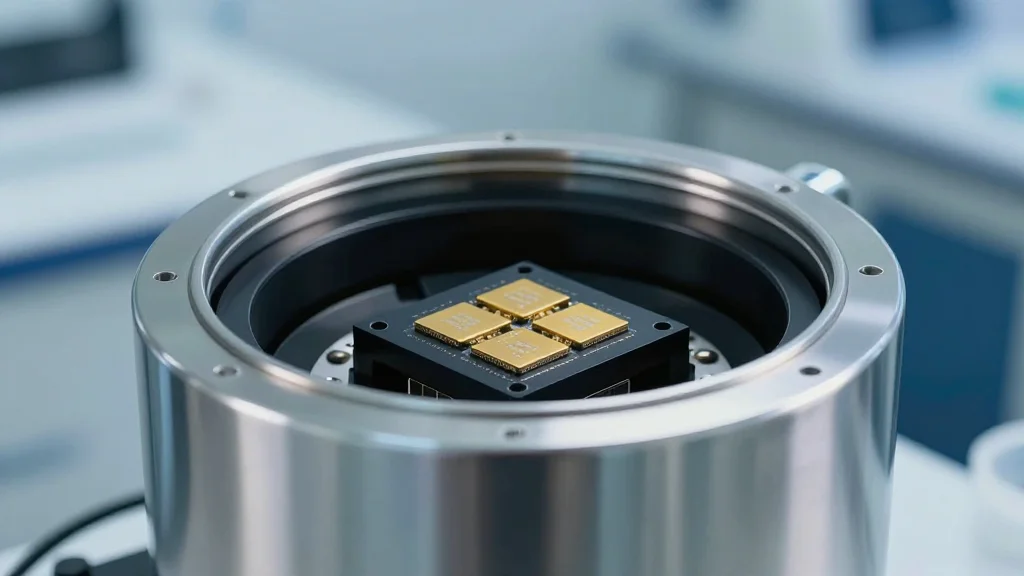
- •IBM reaffirmed its target to deliver a fault‑tolerant quantum computer by 2029.
- •Quantum demos included pharmaceutical and material simulations using IBM hardware.
- •Dividend expected to rise to $1.6875 per share, marking a 27th consecutive year of growth.
Pulse Analysis
IBM’s Q1 results illustrate a rare alignment of financial strength and deep‑tech ambition. The company’s ability to generate $2.2 billion in free cash flow while committing to a 2029 fault‑tolerant quantum system suggests a disciplined capital allocation model that balances short‑term shareholder returns with long‑term strategic bets. Historically, quantum initiatives have been the preserve of pure‑play startups and research labs; IBM’s enterprise scale and cash flow give it a unique lever to accelerate hardware development, attract ecosystem partners, and lock in early revenue streams.
The quantum roadmap also redefines competitive dynamics. Google’s Sycamore and Microsoft’s Azure Quantum have focused on cloud‑based access to NISQ devices, positioning themselves as service providers rather than hardware manufacturers. IBM’s approach—building a full stack from qubit architecture to error‑corrected processors—could enable tighter integration with its existing mainframe and hybrid‑cloud offerings, creating a differentiated value proposition for large enterprises that need both legacy reliability and quantum acceleration.
However, the timeline is aggressive. Scaling error correction from a handful of logical qubits to a system capable of solving real‑world problems will require breakthroughs in materials, cryogenics, and control electronics. Any delay could erode IBM’s first‑mover advantage, especially as rivals pour capital into similar goals. Investors will watch upcoming quarterly updates for concrete milestones—such as qubit count, coherence improvements, and early customer pilots—to gauge execution risk. If IBM meets its 2029 target, it could catalyze a wave of quantum‑enabled services, reshaping sectors from finance to drug discovery and cementing IBM’s role as a cornerstone of the next computing era.
IBM Q1 2026 Earnings Surge, Unveils Roadmap for Fault‑Tolerant Quantum Processor by 2029
Comments
Want to join the conversation?
Loading comments...