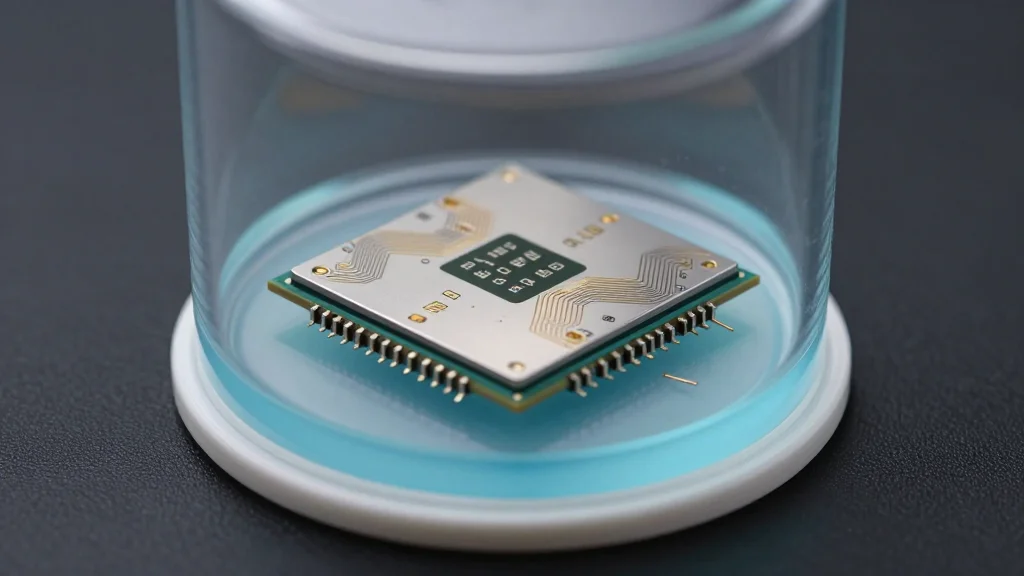
Microsoft's 1,000‑Fold Qubit Leap and Quantinuum IPO Signal Quantum Surge

Companies Mentioned
Why It Matters
The Majorana 2 announcement pushes the envelope on qubit stability, a critical metric for any CTO evaluating quantum‑ready roadmaps. Longer coherence reduces error‑correction overhead, potentially lowering the cost and complexity of integrating quantum accelerators into enterprise workloads. Simultaneously, Quantinuum’s IPO surge signals that investors are willing to fund quantum ventures despite the technology’s nascent state, providing the capital needed for larger‑scale prototypes and talent acquisition. For technology leaders, the twin narratives illustrate a shifting risk‑reward calculus. Companies that can align their R&D pipelines with topological approaches may gain a competitive edge, while those betting on more established superconducting platforms must watch for breakthroughs that could render their investments obsolete. The influx of public capital also means more scrutiny of performance claims, prompting CTOs to demand rigorous, peer‑reviewed data before committing to quantum pilots.
Key Takeaways
- •Microsoft's Majorana 2 chip reports a mean qubit lifetime of 20 seconds, up to 60 seconds in some runs
- •Coherence time is claimed to be 1,000 times longer than the February predecessor
- •Quantinuum increased its share price and offering size ahead of its NYSE debut
- •U.S. Dept. of Commerce pledged $2 billion to nine quantum firms, including $100 million to Quantinuum
- •Experts caution that topological qubits remain unproven at scale, highlighting market and technical risk
Pulse Analysis
Microsoft’s claim of a 1,000‑fold improvement in qubit coherence is a watershed for topological quantum computing, but the lack of peer‑reviewed validation leaves the breakthrough vulnerable to skepticism. Historically, quantum hardware advances have been incremental, with each generation delivering modest gains in error rates rather than order‑of‑magnitude leaps. If Microsoft’s data hold up, the longer coherence could compress the error‑correction budget, making fault‑tolerant architectures more attainable and potentially accelerating the transition from research‑grade QPUs to commercial services. CTOs would then need to reassess timelines for quantum‑enhanced workloads, especially in cryptography, materials science, and optimization.
The Quantinuum IPO, meanwhile, reflects a maturing market ecosystem where public capital is no longer confined to private rounds. By opting for a traditional IPO, Quantinuum signals confidence in regulatory compliance and financial transparency—attributes that may attract more conservative enterprise investors. This influx of liquidity could spur a wave of M&A activity, as larger tech firms seek to acquire proven quantum software stacks and talent. However, the market’s appetite is tempered by the reality that no firm has yet delivered a quantum computer with clear commercial value, a point underscored by Olivier Roussy’s warning that investors are buying "a probability."
Together, these developments suggest a bifurcated trajectory: hardware breakthroughs will continue to push the scientific envelope, while financial markets will increasingly price the uncertainty surrounding practical deployment. CTOs must therefore monitor both the technical validation pipeline and the evolving investment landscape to make informed decisions about quantum adoption, partnership strategies, and risk mitigation.
Microsoft's 1,000‑Fold Qubit Leap and Quantinuum IPO Signal Quantum Surge
Comments
Want to join the conversation?
Loading comments...