Rigetti Launches 108‑qubit Modular Quantum Computer at 99.1% Fidelity, Sparking Scaling Debate

Companies Mentioned
Why It Matters
The fidelity gap in Rigetti’s Cepheus‑1‑108Q highlights a pivotal engineering hurdle: achieving error rates low enough to make large‑scale quantum computation practical. Fault‑tolerant quantum computers depend on surface‑code error correction, which becomes untenable if per‑gate errors exceed roughly 0.5%. Rigetti’s modular chiplet strategy promises rapid scaling and supply‑chain flexibility, but only if cross‑chiplet gates can match the fidelity of monolithic designs. Success would diversify the hardware roadmap and potentially accelerate commercial quantum applications in chemistry, logistics, and cryptography. Failure, however, could consolidate market leadership around IBM and Google, whose monolithic approaches already target 99.9% fidelity. Beyond technical considerations, the financial narrative matters. With over half a billion dollars in cash and a multi‑year runway, Rigetti can afford a sustained R&D push, but investors are increasingly sensitive to performance metrics that directly affect valuation. The 99.1% figure has already become a focal point for analysts, influencing stock sentiment and future funding prospects. The outcome will therefore affect not only the technical trajectory of quantum computing but also the capital allocation patterns across the sector.
Key Takeaways
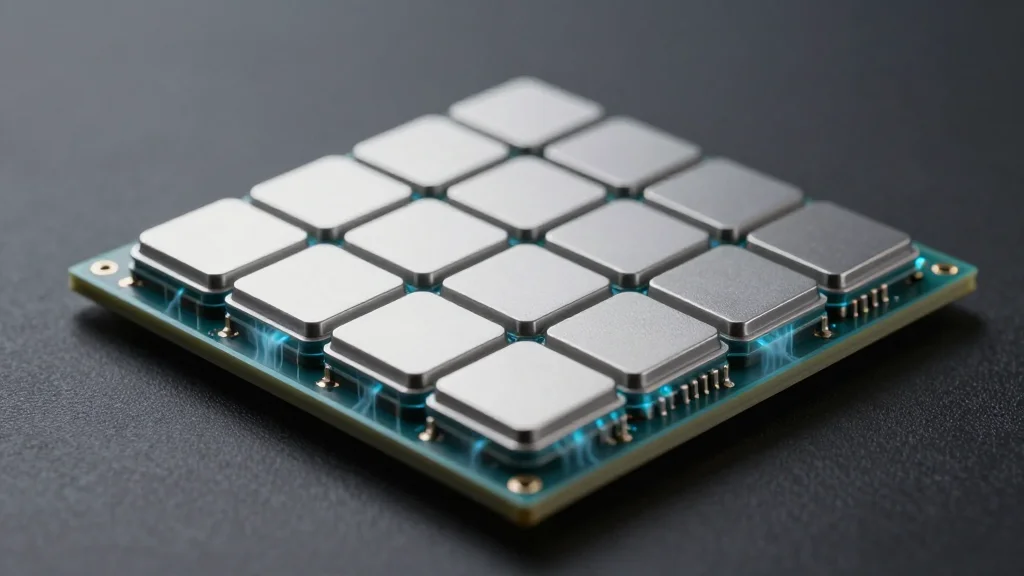
- •Rigetti's Cepheus‑1‑108Q modular processor combines twelve 9‑qubit chiplets for a total of 108 qubits.
- •The system achieves a median two‑qubit gate fidelity of 99.1%, 0.4 points below Rigetti's 99.5% scaling target.
- •Rigetti holds $569 million in cash with no debt, providing over five years of runway at a $26 million quarterly loss.
- •Cross‑chiplet gates are the primary source of fidelity loss, challenging the chiplet architecture's scalability.
- •Rigetti aims to scale to a 200‑plus chiplet system by 2028, a milestone that will determine the viability of modular quantum computing.
Pulse Analysis
Rigetti’s latest milestone underscores a classic trade‑off in quantum hardware: modularity versus raw performance. The chiplet approach offers a clear path to rapid iteration—fabricating nine‑qubit modules in parallel and stitching them together can outpace the monolithic wafer‑scale production cycles that IBM and Google rely on. However, the fidelity penalty observed in cross‑chiplet gates suggests that the engineering overhead of inter‑module communication may erode the very advantage the architecture promises. In practice, each additional chiplet introduces a new set of couplers, calibration routines, and thermal management challenges, all of which compound error rates.
From a market perspective, Rigetti’s cash position gives it a strategic cushion to experiment with advanced packaging, cryogenic interconnects, and error‑mitigation algorithms. Yet capital markets are increasingly data‑driven; the 99.1% figure has already become a proxy for the company’s ability to deliver on its roadmap. If Rigetti can publish a clear path—say, a 99.4% median fidelity on a 150‑chiplet system within the next 12 months—it could restore investor confidence and attract a new wave of enterprise cloud contracts. Conversely, a prolonged fidelity gap may push corporate customers toward IBM’s roadmap, which promises 127‑qubit monolithic processors with 99.9% fidelity by 2027, or Google’s Sycamore‑type systems that focus on logical‑qubit demonstrations.
Strategically, the next two years will be a litmus test for modular quantum computing. Success would diversify the supply chain, reduce reliance on a few fab facilities, and potentially lower the cost per qubit. Failure would consolidate the industry around a few large players, limiting competition and possibly slowing the overall pace of quantum adoption. Investors, policymakers, and research institutions should therefore monitor Rigetti’s fidelity trajectory as a bellwether for the broader quantum hardware ecosystem.
Rigetti launches 108‑qubit modular quantum computer at 99.1% fidelity, sparking scaling debate
Comments
Want to join the conversation?
Loading comments...