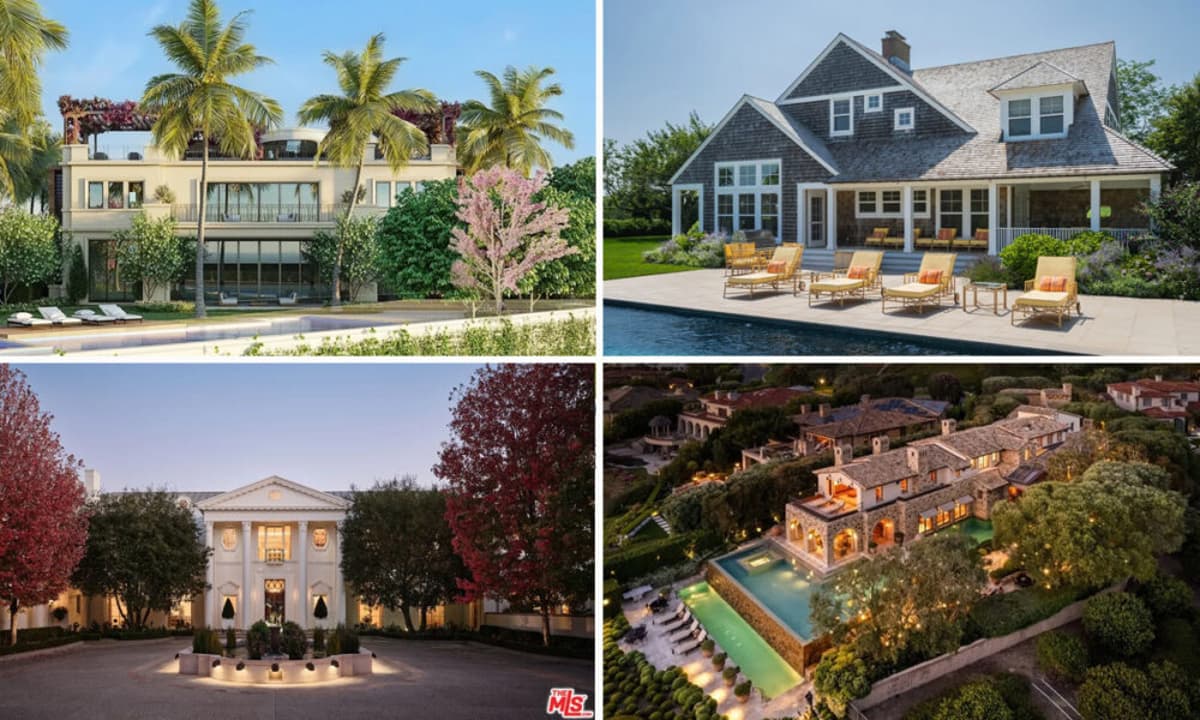
America’s Most Expensive ZIP Codes – 2026
•February 27, 2026
0
Why It Matters
The shift underscores California’s continued pull for ultra‑high‑net‑worth buyers and highlights how regional risks and waning demand can reshape the ultraluxury market, affecting developers, agents, and investors.
Key Takeaways
- •Newport Coast median price $12.5M, up 29.3% YoY
- •Fisher Island median price $11.98M, down 3.8% YoY
- •California holds six of top ten luxury ZIPs
- •Bridgehampton and Water Mill anchor East‑Coast luxury
- •Online interest fell across all top‑10 ZIPs, up to 30% drop
Pulse Analysis
The ultraluxury segment of U.S. residential real estate has crystallized around a $5.5 million entry threshold, separating it from the broader luxury market that hovers near $1.2 million. This bifurcation reflects the concentration of wealth in a narrow band of high‑net‑worth buyers who seek expansive estates, privacy, and exclusive amenities. Analysts track the 99th percentile—now at $5.64 million—to gauge market health, as movements at this level often signal shifts in capital allocation among the affluent.
In 2026, Newport Coast, California, surged to the top of the list with a $12.5 million median price, outpacing Fisher Island’s $11.98 million. The 29.3 % YoY jump illustrates strong demand for coastal, single‑family estates in Southern California, even as neighboring markets like Malibu slipped due to wildfire exposure and a 60 % plunge in online engagement. California’s six‑spot presence in the top ten underscores the state’s magnetic appeal, while the entry of Paradise Valley, Arizona, signals a modest geographic diversification among ultra‑wealthy purchasers.
Despite record‑high listings, buyer urgency is easing. Every top‑10 ZIP recorded a decline in page‑view activity, with Bel‑Air and Water Mill seeing drops exceeding 30 %. This softening of digital interest suggests that while capital remains abundant, purchasers are adopting a more measured approach, possibly waiting for price corrections or evaluating risk‑adjusted returns. For agents and developers, the trend emphasizes the need for targeted marketing, enhanced virtual experiences, and a focus on properties that combine scale with resilience to environmental and economic headwinds.
America’s Most Expensive ZIP Codes – 2026
0
Comments
Want to join the conversation?
Loading comments...