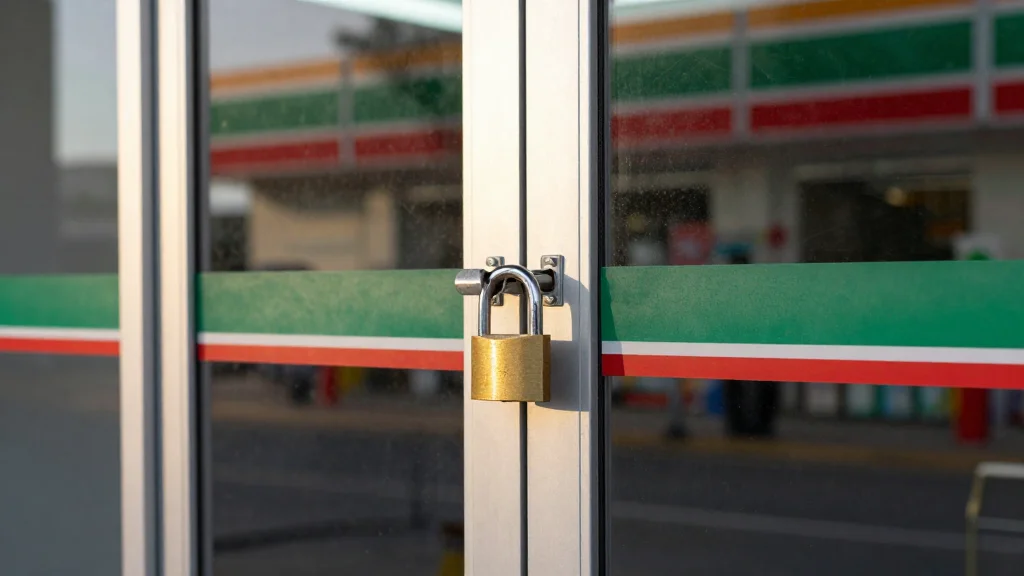
7-Eleven Expects to Close 645 Locations This Year
Companies Mentioned
Why It Matters
The aggressive store reduction signals a strategic pivot toward higher‑margin fuel services and digital delivery, reshaping the convenience‑store landscape amid tightening consumer budgets. Investors and competitors will watch how the shift impacts 7‑Eleven’s profitability and market share.
Key Takeaways
- •7‑Eleven will close 645 North American stores in 2026
- •Only 205 new stores slated to open, net loss of locations
- •Closures focus on converting sites to wholesale fuel stores
- •Revenue forecast down 9.4% to $59.5 billion amid inflation
Pulse Analysis
The convenience‑store giant’s decision to close 645 locations reflects mounting pressure from a cost‑conscious consumer base. Rising gasoline prices, driven by geopolitical tensions such as the U.S.–Israel conflict with Iran, have eroded discretionary spending, especially among low‑income households. By trimming its footprint, 7‑Eleven aims to eliminate underperforming assets while preserving cash flow, a tactic common among retailers facing inflationary headwinds. The scale of the closures—three times the number of planned openings—underscores the urgency of adapting to a softer retail environment.
A key element of the restructuring is the conversion of many shuttered sites into wholesale fuel outlets. Seven & i already operates over 900 fuel‑only locations in North America, a segment that offers higher margins and lower operational complexity than traditional convenience stores. Coupled with a renewed focus on fresh‑food offerings and the expansion of the 7NOW on‑demand delivery service, the company is betting on a hybrid model that blends physical fuel hubs with digital convenience. This approach aligns with broader industry trends where retailers leverage ancillary services to offset declining in‑store sales.
For investors, the 9.4% revenue dip to an estimated $59.5 billion signals short‑term challenges but also highlights the potential upside of a leaner, more focused operation. Competitors may respond by accelerating their own fuel‑centric strategies or enhancing loyalty programs to retain price‑sensitive shoppers. Meanwhile, consumers stand to benefit from improved service speed at fuel stations and greater access to delivery options. As 7‑Eleven navigates this transition, its ability to balance store closures with growth in high‑margin segments will be a critical determinant of long‑term market positioning.
7-Eleven Expects to Close 645 Locations This Year
Comments
Want to join the conversation?
Loading comments...