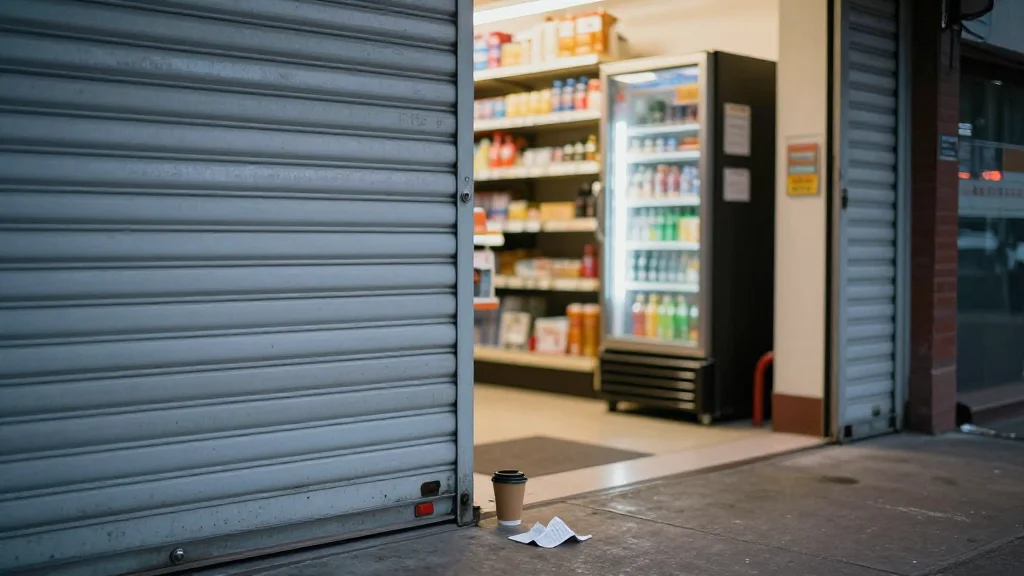
7-Eleven Is Closing 645 Stores — The Five-Year Decline Most Customers Don't See
Companies Mentioned
Why It Matters
The aggressive downsizing signals a strategic pivot toward higher‑margin wholesale and larger‑format stores, reshaping the convenience‑store landscape and pressuring rivals to adapt. Investors and franchisees must reassess growth models as 7‑Eleven seeks to restore earnings momentum.
Key Takeaways
- •645 North American stores slated for closure by FY2026.
- •Closures continue five-year trend; 373 closed FY2025, 474 FY2024.
- •Company will open 205 wholesale locations in FY2026.
- •Aiming for 1,300 wholesale sites by 2030, focusing on larger formats.
- •Strategy mirrors Wawa and Casey’s, seeking higher profitability.
Pulse Analysis
The latest closure announcement underscores a broader industry shift as convenience‑store operators grapple with saturated markets and evolving consumer habits. While 7‑Eleven remains a cultural icon, its store count has contracted for five consecutive years, reflecting weaker foot traffic in smaller formats and rising labor costs. Competitors such as Wawa and Casey’s have already trimmed underperforming locations, reallocating capital toward larger, experience‑driven stores that blend quick‑service food with sit‑down areas. This trend illustrates how legacy chains are re‑engineering their footprints to stay relevant in a market dominated by digital ordering and delivery platforms.
Seven & i Holdings’ plan to close 645 stores and launch 205 wholesale fuel sites is a calculated effort to boost same‑store sales and margin expansion. Wholesale locations require fewer staff, lower operating expenses, and generate revenue through fuel sales and ancillary services. By converting select underperforming stores into these lower‑overhead formats, the company expects to improve earnings per square foot while preserving brand presence in high‑traffic corridors. The FY2026 strategy also includes a longer‑term target of 1,300 wholesale sites by 2030, signaling a decisive pivot away from the traditional convenience‑store model toward a hybrid retail‑fuel network.
For investors and franchisees, the implications are twofold. First, the reduction in store count may compress short‑term revenue but should enhance profitability metrics, potentially stabilizing the stock’s valuation. Second, the emphasis on larger, food‑centric stores and wholesale fuel outlets could set a new industry benchmark, prompting rivals to reevaluate their own portfolio mixes. As the convenience sector continues to evolve, operators that successfully balance footprint optimization with consumer demand for convenience and quality will likely capture the next wave of growth.
7-Eleven Is Closing 645 Stores — The Five-Year Decline Most Customers Don't See
Comments
Want to join the conversation?
Loading comments...