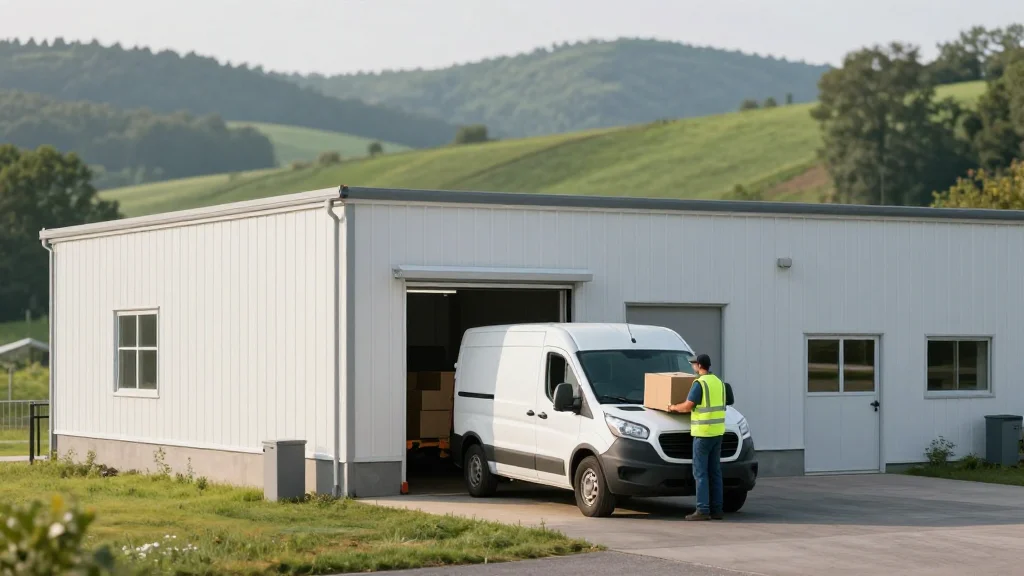
Amazon Advances Rural Delivery Push with New West Virginia Facilities
Companies Mentioned
Why It Matters
The move accelerates fast‑shipping access for rural consumers while generating local employment, reinforcing Amazon’s dominance in last‑mile logistics. It also signals a broader industry shift toward hyper‑local fulfillment to meet escalating delivery expectations.
Key Takeaways
- •Two new fulfillment sites create ~500 jobs in West Virginia.
- •Facilities target same‑day delivery within 65‑mile radius.
- •Part of $4 billion rural shipping investment.
- •Amazon’s same‑day deliveries rose 70% in 2025.
- •Rural network set to triple by 2026.
Pulse Analysis
Amazon’s latest rollout in West Virginia marks a strategic push into America’s underserved hinterland. By situating compact fulfillment hubs in Davisville and Beaver, the company brings inventory closer to towns like Parkersburg and Beckley, trimming the distance between stock and doorstep. The sites will employ roughly 500 workers, split between warehouse staff and drivers contracted through Amazon’s logistics partners, injecting new wages into local economies that have traditionally relied on manufacturing and coal. This move dovetails with the tech giant’s broader $4 billion commitment to rural shipping infrastructure, a bet that logistics efficiency can unlock growth in low‑density markets.
The operational footprint directly fuels Amazon’s same‑day service ambitions. Analysts note that the company’s same‑day deliveries surged 70 percent year‑over‑year in 2025, driven by heightened demand for groceries, pet supplies, and other essentials. With a 65‑mile service radius from each West Virginia hub, customers in surrounding counties can now expect deliveries within three to four hours, narrowing the gap with urban markets. Competitors such as Walmart and Target have begun piloting micro‑fulfillment centers, but Amazon’s scale and its integrated carrier network give it a decisive edge in meeting ultra‑fast delivery promises.
Beyond consumer convenience, the expansion reshapes the logistics landscape of rural America. By tripling its rural delivery network by the end of 2026, Amazon is creating a new tier of last‑mile infrastructure that could attract ancillary businesses, from local retailers to third‑party logistics providers. The influx of jobs and the promise of rapid shipping may also influence real‑estate values and spur investment in broadband, a prerequisite for efficient order processing. As the company refines its micro‑fulfillment model, the ripple effect could set a benchmark for how e‑commerce firms serve sparsely populated regions nationwide.
Amazon advances rural delivery push with new West Virginia facilities
Comments
Want to join the conversation?
Loading comments...