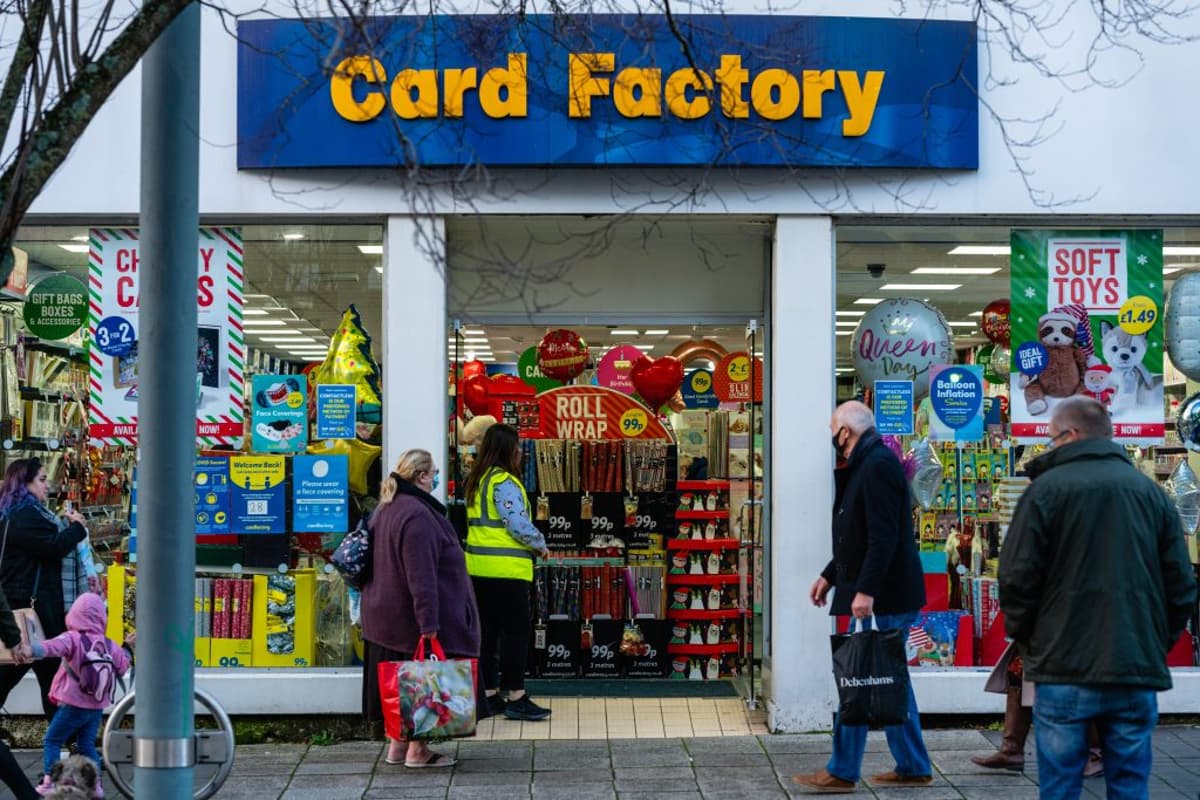
Card Factory Profits Fall as Weaker Footfall Hits Christmas Trading
Why It Matters
The results underscore the pressure on traditional retailers from shifting consumer habits while showing how strategic store expansion and digital acquisitions can offset footfall weakness. Investors watch Card Factory’s blend of physical growth and online capability as a bellwether for the UK celebrations market.
Key Takeaways
- •Revenue up 7.4% to £582.7m (~$740m) despite weaker footfall.
- •Adjusted pre‑tax profit fell 15.2% to £56m (~$71m).
- •Like‑for‑like sales flat at –0.2%; basket size rose, trips fell.
- •Opened 27 net new stores, total 1,117 sites across UK & Ireland.
- •Free cash flow up 41% to £40.7m (~$52m), supporting dividend rise.
Pulse Analysis
Card Factory’s FY26 results illustrate the tightening squeeze on UK high‑street retailers. Revenue climbed 7.4% to £582.7 million (about $740 million), driven largely by new store openings and the Funky Pigeon acquisition, yet adjusted pre‑tax profit slipped 15.2% to £56 million (~$71 million). The decline reflects softer footfall during the crucial Christmas window, as consumers trimmed discretionary spend amid lingering inflation. Like‑for‑like sales were essentially flat at –0.2%, with higher basket values barely offsetting fewer shopper trips.
The retailer’s expansion strategy remained aggressive, adding 27 net new locations to bring its UK and Ireland footprint to 1,117 stores. This organic growth is complemented by a digital push; the August 2025 purchase of online personalised‑card platform Funky Pigeon contributed roughly £13.5 million (~$17 million) in sales and broadened Card Factory’s e‑commerce capabilities. Management views the combined brick‑and‑mortar and online model as a pathway to a “global celebrations group,” betting that a stronger digital offering will capture younger shoppers and mitigate future footfall volatility.
Despite profit pressure, the balance sheet showed resilience. Free cash flow surged 41.2% to £40.7 million (~$52 million), enabling a dividend increase to 5.0 p per share and a £15 million (~$19 million) share‑buyback programme. The company signalled that FY27 adjusted earnings should align with market forecasts, though it warned that geopolitical instability and Middle‑East conflict could lift freight and fuel costs. For investors, the mix of disciplined cost management, continued store roll‑out, and a growing digital channel offers a cautiously optimistic outlook in a fragmented retail environment.
Card Factory profits fall as weaker footfall hits Christmas trading
Comments
Want to join the conversation?
Loading comments...