Why It Matters
The offering taps a growing consumer appetite for ready‑made survival solutions, positioning Colruyt as a proactive retailer in crisis preparedness and potentially opening a new revenue stream.
Key Takeaways
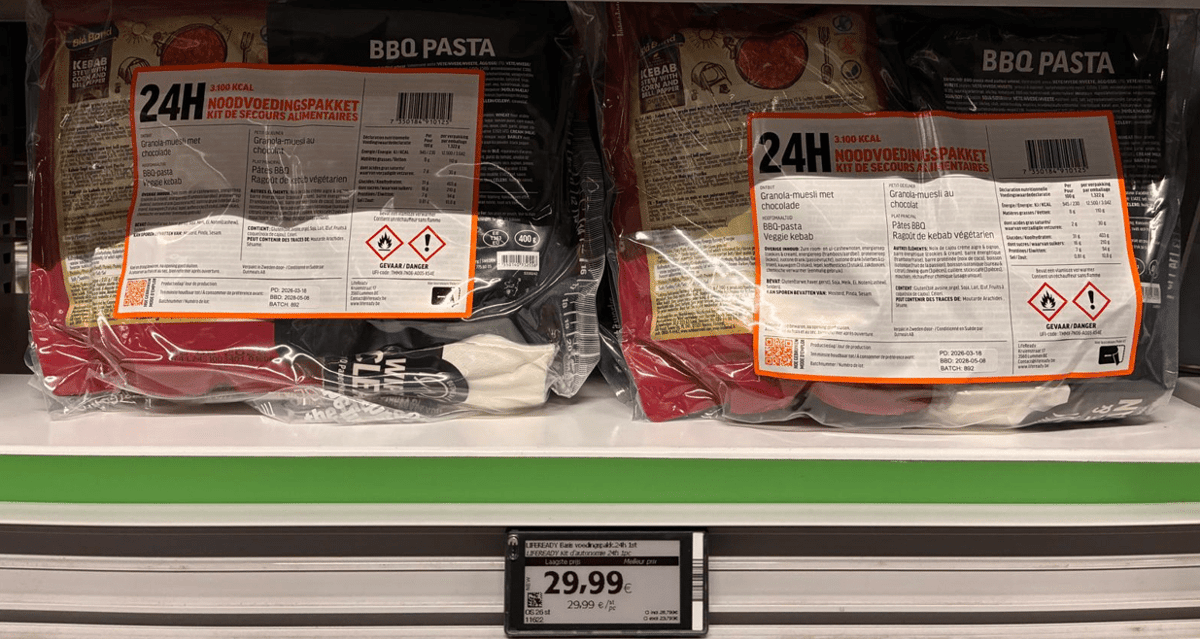
- •Basic kit provides 3,100 calories for 24‑hour self‑sufficiency
- •Priced at €29.99 (~$33), sold in 80 Belgian stores
- •Includes vegetarian meals, energy bars, drink powder, and heater
- •Demand driven by recent floods and gas outage incidents
- •Potential expansion to all stores if sales surge
Pulse Analysis
In the wake of recent natural disasters and infrastructure failures across Belgium, retailers are increasingly stepping into the emergency‑supply niche. Colruyt’s decision to launch a 24‑hour food kit reflects a broader shift where consumers expect supermarkets to provide not just everyday groceries but also rapid, reliable solutions for short‑term crises. By aligning its product with government calls for self‑sufficiency, the Belgian chain reinforces its role as a community‑focused brand, differentiating itself from traditional competitors that have been slower to address such needs.
The kit’s composition is designed for both nutritional adequacy and convenience. At roughly 3,100 calories, it offers a balanced mix of vegetarian meals, energy bars, cashews, isotonic drink powder, coffee sticks, and a flameless heater, all packaged for immediate use. Priced at €29.99—about $33—its cost is comparable to similar emergency packs offered by humanitarian groups, yet it adds a commercial retail dimension that can reach a wider audience. The inclusion of a heater and non‑perishable items addresses the practical challenges faced during power outages, floods, or gas supply interruptions, making the product a compelling option for households seeking peace of mind.
From a business perspective, the initiative could open a new, high‑margin product line for Colruyt. Early adoption in 80 stores serves as a pilot, allowing the retailer to gauge demand without overcommitting inventory. Should the kits sell out quickly, scaling to the full network could boost foot traffic and cross‑sell opportunities, while also strengthening brand loyalty among safety‑conscious shoppers. Moreover, this move signals to the broader retail sector that emergency preparedness is becoming a mainstream consumer expectation, potentially spurring further innovation in the grocery industry.
Colruyt is selling emergency food kits
Comments
Want to join the conversation?
Loading comments...