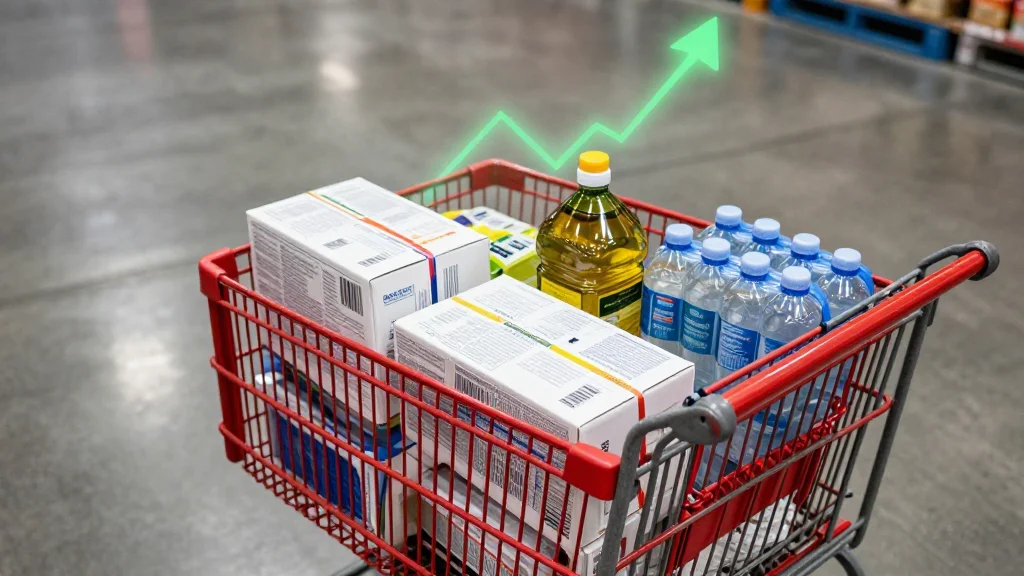
Costco Posts 9.8% Same‑store Sales Growth in Q3 2026, Underscoring Retail Resilience

Companies Mentioned
Why It Matters
Costco’s robust same‑store sales growth provides a rare positive data point for the retail sector, which is otherwise grappling with sluggish consumer sentiment and rising living costs. The company’s performance validates the appeal of a membership‑driven, low‑price model, suggesting that value‑oriented retailers can still capture market share when discretionary spending is constrained. For investors, Costco’s earnings underscore why the stock commands a premium valuation: it offers a blend of defensive cash flow and growth potential that many peers lack. The results also have strategic implications for competitors. Traditional brick‑and‑mortar chains may need to reassess pricing strategies, supply‑chain efficiencies, and loyalty programs to remain relevant. Meanwhile, the data point that gas sales contributed significantly to growth highlights the importance of ancillary revenue streams in bolstering overall performance during periods of economic uncertainty.
Key Takeaways
- •Costco’s Q3 2026 same‑store sales rose 9.8% year‑over‑year.
- •Total revenue reached $70.5 billion, up 11.6% from the prior year.
- •Diluted EPS increased 15.2% despite broader macro‑economic headwinds.
- •Growth driven by strong gasoline sales, larger ticket sizes, and higher foot traffic.
- •Costco trades at a P/E of 48, reflecting investor confidence in its resilient model.
Pulse Analysis
Costco’s latest earnings illustrate how a disciplined, membership‑centric approach can thrive when consumer confidence wanes. The retailer’s ability to deliver double‑digit same‑store growth hinges on three pillars: pricing power, ancillary revenue (notably fuel), and a sticky membership base that guarantees recurring cash flow. In an environment where inflation erodes disposable income, shoppers gravitate toward bulk‑buy formats that promise lower unit costs, a dynamic Costco has mastered.
Historically, the warehouse club model has weathered economic cycles better than pure‑play e‑commerce or specialty retailers. The current data suggest that Costco’s scale not only secures favorable vendor terms but also enables it to absorb cost pressures without passing the full burden to consumers. This creates a virtuous cycle—lower prices drive higher traffic, which in turn reinforces the club’s negotiating leverage.
Looking forward, the key risk lies in external variables such as gasoline price volatility and potential shifts in consumer behavior toward digital channels. If fuel prices dip sharply, a portion of the sales boost could evaporate, pressuring the retailer to find new growth levers. Conversely, continued investment in omnichannel capabilities could open additional revenue streams, helping Costco maintain its premium valuation. Competitors that fail to replicate this blend of value, convenience, and membership loyalty may find themselves increasingly marginalized in a market that rewards efficiency and price discipline.
Overall, Costco’s performance serves as a barometer for the health of value‑oriented retail. Its ability to grow profitably amid macro‑economic headwinds not only validates its strategic model but also sets a performance benchmark that could reshape competitive dynamics across the sector.
Costco posts 9.8% same‑store sales growth in Q3 2026, underscoring retail resilience
Comments
Want to join the conversation?
Loading comments...