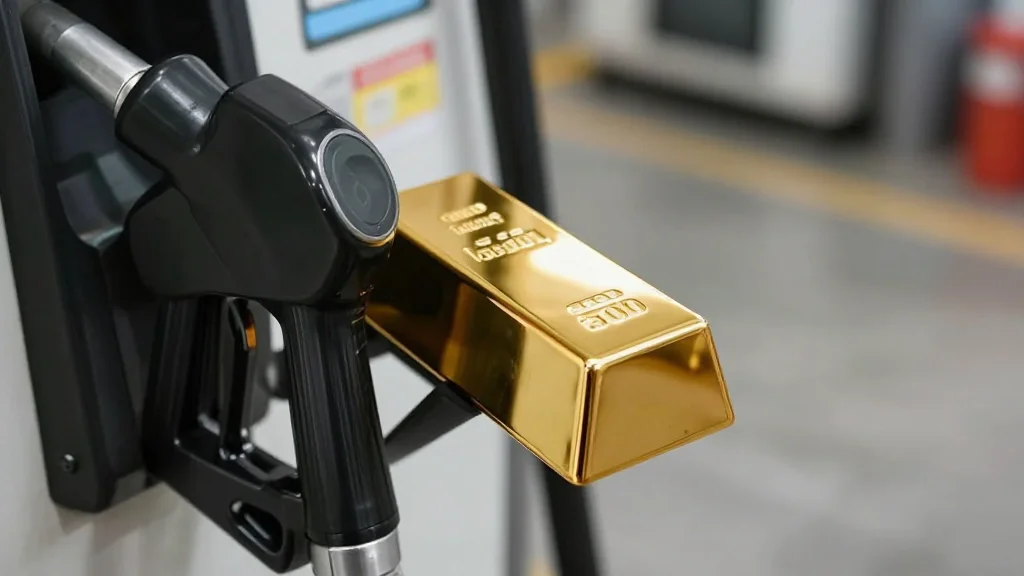
Costco’s Sales Surge on Gas Discounts and Gold Bar Craze

Companies Mentioned
Why It Matters
Costco’s dual‑pronged growth strategy illustrates how traditional retailers can thrive amid macroeconomic headwinds. By turning a high‑margin commodity like gold into a brand‑building tool, Costco deepens member engagement without sacrificing its low‑price promise. Simultaneously, its subsidized fuel stations provide a tangible, recurring value proposition that directly offsets inflation pressures on shoppers. Together, these tactics protect membership renewal rates and create cross‑selling opportunities that bolster the entire ecosystem, from in‑store groceries to online sales. The success also pressures rivals. Sam’s Club’s fee hike signals that competitors may need to lean into similar value‑add services or risk losing price‑sensitive members. As fuel costs remain volatile, retailers that can lock in discount pricing at the pump will likely capture a larger share of discretionary spend, reshaping the competitive dynamics of the warehouse‑club segment.
Key Takeaways
- •Comparable store sales rose 6.7% YoY in Q2, outpacing most retailers.
- •Gold‑bar sales generated tens of millions of dollars and drove online traffic.
- •Costco’s gas discount saves members ~20¢ per gallon, covering membership fees quickly.
- •Stock up >10% YTD, while e‑commerce grew 22.6% in the quarter.
- •Sam’s Club raised membership fees to $60/$120, narrowing the price gap with Costco.
Pulse Analysis
Costco’s recent performance underscores a broader shift toward experiential value in a price‑driven market. The gold‑bar episode is less about profit margins on the metal and more about creating a buzz that pulls members into the digital funnel. In an era where loyalty is increasingly transactional, the club’s ability to turn a niche product into a traffic engine demonstrates the power of brand trust. This approach mirrors the success of limited‑time offers in fast‑moving consumer goods, but with a higher perceived value that reinforces the premium aura of membership.
Fuel discounts, meanwhile, act as a sticky anchor. As inflation erodes disposable income, the tangible savings at the pump become a daily reminder of Costco’s value proposition, encouraging repeat visits and higher basket sizes. The model also offers a hedge against future price spikes; if gasoline prices climb further, the relative discount widens, deepening the club’s relevance. Competitors lacking a comparable fuel network must either find alternative loss‑leader tactics or risk losing the price‑sensitive segment.
Looking forward, the key question is scalability. Expanding stand‑alone gas stations could amplify the advantage but also raises capital costs and regulatory hurdles. Moreover, the gold‑bar strategy may face scrutiny if regulatory bodies view commodity sales as a financial service. Costco’s disciplined focus on low margins for core merchandise, paired with high‑margin, high‑visibility add‑ons, positions it to navigate these risks. If the retailer can replicate this formula across other high‑interest categories—think crypto‑related products or sustainable energy kits—it could cement a defensible moat that keeps its membership base growing even as macro pressures persist.
Costco’s Sales Surge on Gas Discounts and Gold Bar Craze
Comments
Want to join the conversation?
Loading comments...