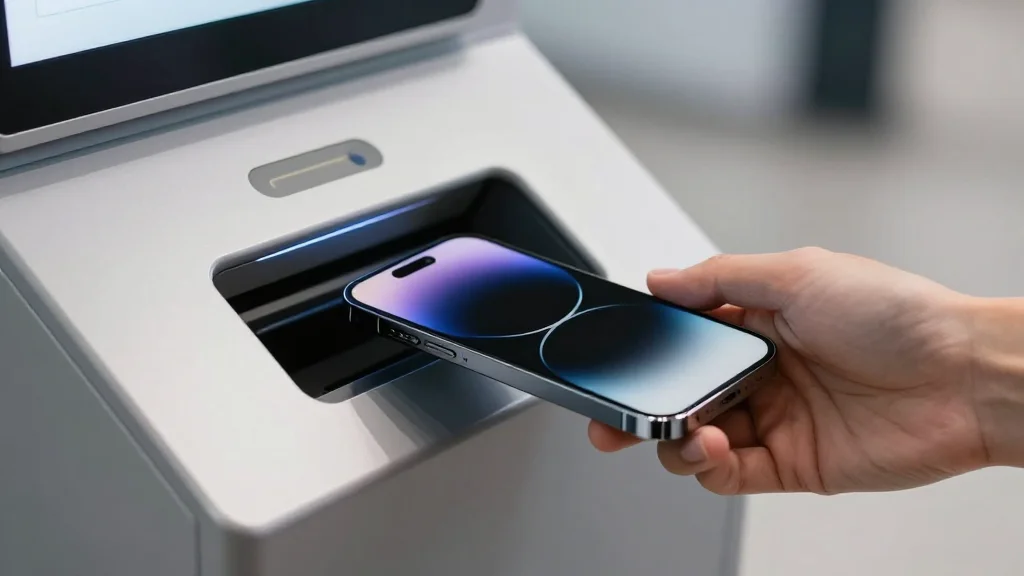
Could Device Trade-Ins Be Retail’s Most Underutilized Sales Tool?
Why It Matters
Effective trade‑in programs can unlock significant revenue, shorten product cycles, and deepen customer loyalty, giving retailers a competitive edge.
Key Takeaways
- •61% of U.S. smartphone buyers receive a trade‑in offer
- •44% of those offered complete the trade‑in, leaving $83B idle
- •71% would upgrade early with a compelling trade‑in incentive
- •68% would choose a premium model when credit exceeds $270
- •84% say good trade‑in offers boost retailer loyalty
Pulse Analysis
Device trade‑in schemes have long been a peripheral service in retail, but recent data suggests they are poised to become a strategic lever. Alchemy’s study reveals that while 71% of U.S. consumers would accelerate an upgrade if presented with an attractive offer, only 61% actually encounter a trade‑in proposition at checkout. The resulting gap leaves an estimated $83 billion worth of devices languishing in drawers, representing untapped resale value and a missed opportunity to capture early adopters. Understanding this mismatch is the first step toward converting latent demand into measurable sales.
The financial upside of a well‑executed trade‑in program is multi‑dimensional. When credit exceeds $270, 68% of shoppers say they would opt for a higher‑priced model, directly boosting average transaction value. Moreover, 84% of respondents indicate that a competitive offer makes them more likely to return to the same retailer, turning a single transaction into a long‑term loyalty driver. Addressing the three primary consumer hesitations—valuation transparency, data‑privacy assurance, and awareness of residual value—can lift completion rates well above the current 44% benchmark.
Retailers can operationalize these insights by integrating real‑time valuation tools, clear data‑wiping policies, and proactive outreach at both online and in‑store touchpoints. Partnerships with circular‑tech specialists like Alchemy streamline logistics, refurbishment, and resale, extending the model beyond smartphones into appliances and floor‑care equipment. By embedding trade‑in discussions into the standard sales conversation, retailers not only capture the $83 billion idle pool but also shorten product cycles, increase margin on premium upgrades, and cement a sustainable competitive advantage in an increasingly circular economy.
Could Device Trade-Ins Be Retail’s Most Underutilized Sales Tool?
Comments
Want to join the conversation?
Loading comments...