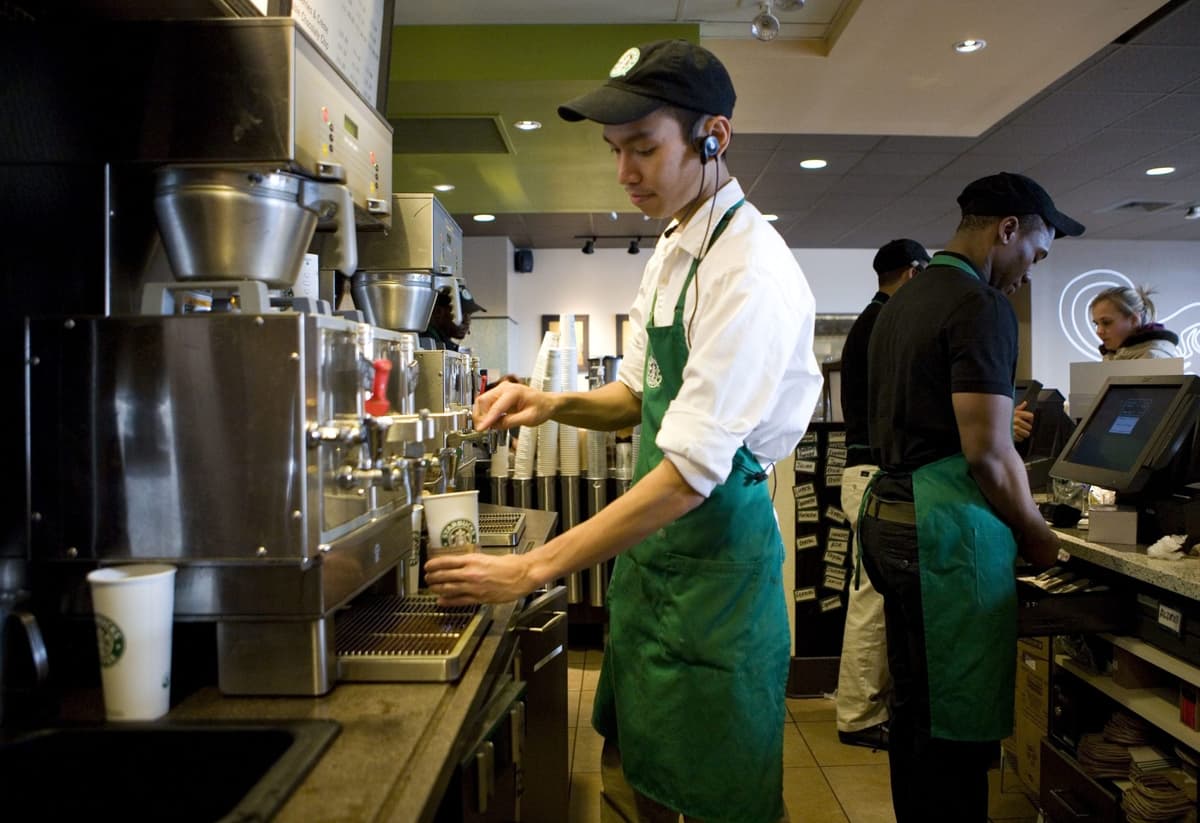
He Started as a Part-Time Starbucks Barista at 17. Now He’s an Exec Designing the Menu
Companies Mentioned
Why It Matters
The story shows that frontline hospitality jobs now offer competitive pay, skill development, and clear routes to executive roles, reshaping traditional career ladders for a generation facing AI‑driven job displacement.
Key Takeaways
- •Henderson rose from part‑time barista to Europe‑EMEA menu exec
- •He created the Cookies and Cream Frappuccino
- •Starbucks will pay U.S. baristas up to $1,200 annual bonuses
- •UK invests ~£100 million ($125 million) in youth hospitality jobs
- •Hospitality experience provides transferable skills valued by tech firms
Pulse Analysis
Sam Henderson’s journey from a Saturday shift at a Leicester Starbucks to leading the menu strategy for the company’s Europe‑Middle East‑Africa region underscores a broader labor‑market shift. As artificial‑intelligence tools automate routine office tasks, entry‑level white‑collar roles are disappearing, while hospitality positions remain uniquely human. Henderson’s ascent—culminating in the creation of the iconic Cookies and Cream Frappuccino—demonstrates that on‑the‑floor experience can translate into high‑impact product development and corporate leadership.
Corporate giants are responding to this trend. Starbucks announced a new incentive program that will grant U.S. baristas up to $1,200 in performance bonuses, potentially boosting take‑home pay by 5‑8% on top of an average $30‑per‑hour wage. In the United Kingdom, the government is allocating roughly £100 million (about $125 million) to expand hospitality jobs for young people, aiming to curb youth unemployment and provide a buffer against AI‑driven job losses. Talent leaders at firms like Verizon echo this sentiment, emphasizing that customer‑facing roles cultivate conflict‑resolution, relationship‑management, and experiential‑design skills that are highly transferable across industries.
For Gen Z professionals, the takeaway is clear: the title of a first job matters less than the competencies built within it. Barista, bartender or retail positions now function as modern “grad schemes,” offering structured training, mentorship networks, and clear promotion pathways. By treating these roles as on‑the‑job apprenticeships—seeking internal competitions, volunteering for cross‑functional projects, and continuously upskilling—young workers can position themselves for rapid advancement, just as Henderson did, turning a pocket‑money gig into a global executive career.
He started as a part-time Starbucks barista at 17. Now he’s an exec designing the menu
Comments
Want to join the conversation?
Loading comments...