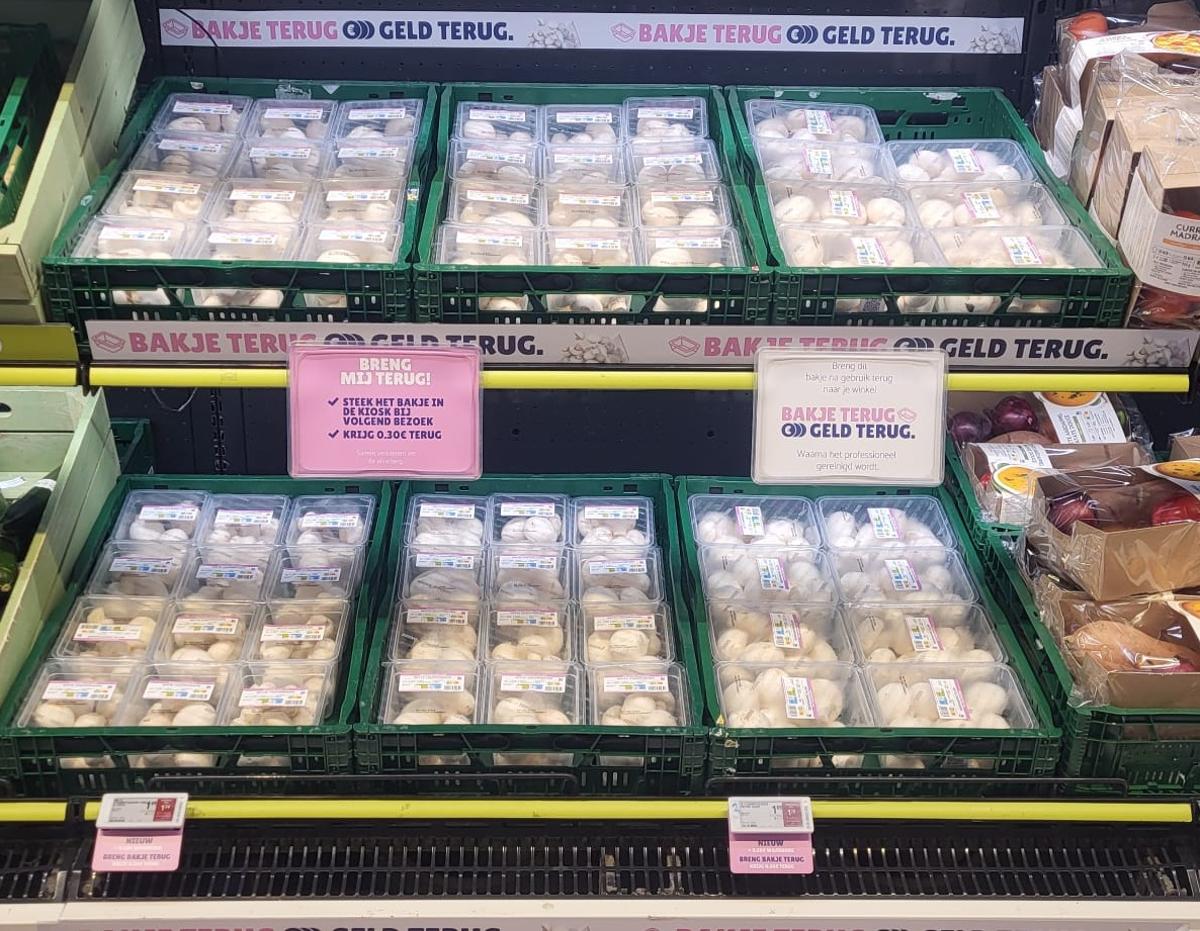
How Reusable Mushroom Trays Are Set to Revolutionize Belgian Waste Management
Why It Matters
A successful rollout would give the Belgian fresh‑produce sector a scalable route to meet EU mandates while cutting waste, emissions, and long‑term packaging costs.
Key Takeaways
- •All major Belgian supermarkets test a single reusable tray system
- •Deposit is €0.30 (~$0.33) per polypropylene container
- •QR codes enable real‑time tracking of returns and container lifespan
- •Pilot evaluates consumer behavior, logistics costs, and emission reductions
- •Success could trigger EU‑wide reusable packaging rollouts beyond produce
Pulse Analysis
Europe’s push toward a circular economy has placed fresh‑produce packaging under intense scrutiny. The new EU Packaging Regulation, effective 2030, will prohibit single‑use plastic for fruits and vegetables under 1.5 kg, forcing retailers to rethink how they deliver these items. Belgium, with its dense retail landscape and high per‑capita consumption of packaged produce, is a natural testing ground. By uniting all major chains under a single reusable‑tray model, the pilot sidesteps fragmented efforts that have hampered earlier sustainability initiatives.
The Mechelen pilot introduces a sturdy polypropylene tray that carries a modest €0.30 deposit—roughly $0.33—paid at purchase and refunded upon return. Each tray is equipped with a QR code that logs every rotation, enabling precise measurement of return rates, lifespan, and logistical touchpoints. Retailers have deployed both in‑store voucher machines and checkout scans to capture returns, while logistics partners assess the impact on transport loads, cleaning cycles, and overall cost structure. Early behavioral data suggests that clear financial incentives and seamless return options can shift consumer habits, a critical factor for any reuse system to achieve scale.
Should the pilot demonstrate economic viability and high return compliance, the model offers a template for EU‑wide adoption across multiple food categories. Beyond waste reduction, the approach promises lower raw‑material demand, reduced greenhouse‑gas emissions from manufacturing, and a more resilient supply chain less dependent on disposable packaging. Industry analysts view this coordinated effort as a potential catalyst for broader regulatory compliance, positioning Belgium as a leader in reusable packaging and setting a benchmark for other markets navigating the transition to a circular economy.
How reusable mushroom trays are set to revolutionize Belgian waste management
Comments
Want to join the conversation?
Loading comments...