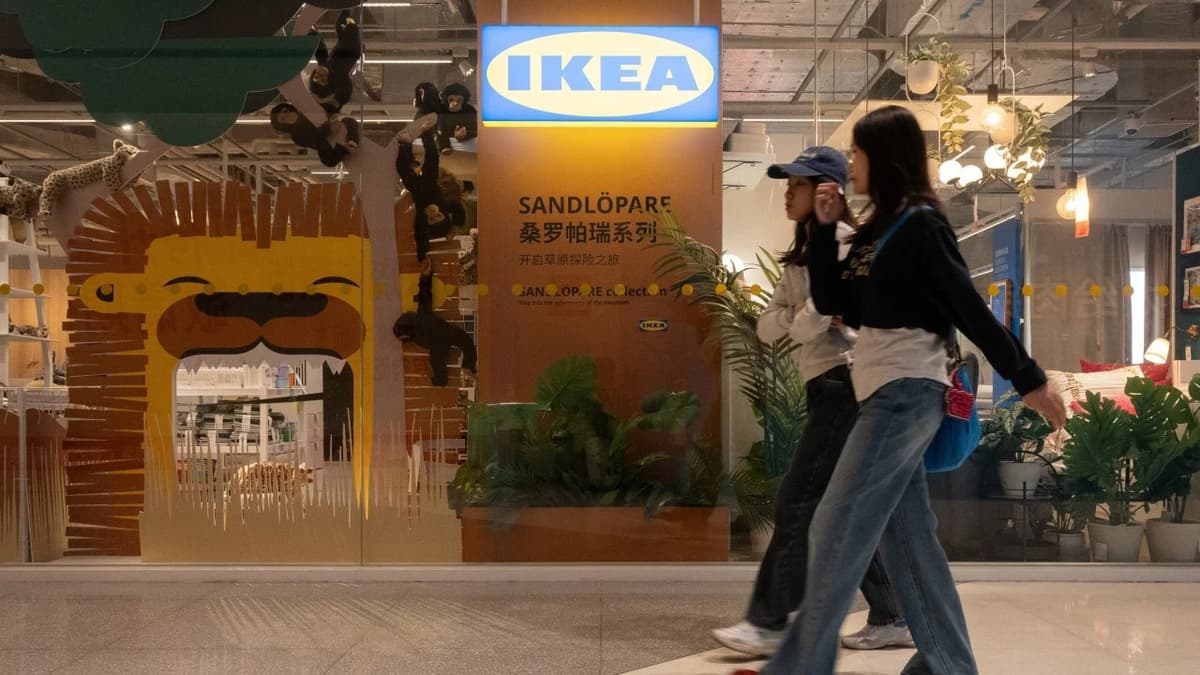
Ikea to Open First Small-Format Beijing Store to Tap China’s Changing Consumer Trends
Why It Matters
By pivoting to compact, service‑focused stores, Ikea can capture foot traffic in residential hubs and offset declining new‑home sales, reinforcing its relevance in China’s fast‑evolving retail landscape.
Key Takeaways
- •Ikea opens 1,500 sqm store in Beijing’s Tongzhou district.
- •Small-format stores target young couples, families, and residential hubs.
- •Instant delivery via JD.com adds digital edge in Chinese market.
- •Strategy shifts focus from new-home furnishing to renovation services.
- •Additional small-format stores planned for Chaoyang and Shenzhen.
Pulse Analysis
Ikea’s shift to small‑format stores reflects a broader re‑calibration of the Chinese furniture market, where urban consumers increasingly favor convenience over the traditional warehouse‑style shopping experience. The country’s property slowdown has reduced demand for brand‑new home furnishings, prompting retailers to explore renovation‑driven revenue streams. By scaling down its footprint to roughly 1,500 square metres, Ikea can locate stores closer to transit nodes and residential districts, a tactic that aligns with the rising preference for quick, experience‑rich visits.
The Tongzhou outlet is designed for young couples and families, offering 20 curated display zones, personalized design consultations, and an instant‑delivery partnership with JD.com. This digital integration taps into China’s highly connected e‑commerce ecosystem, allowing customers to order items online and receive same‑day fulfillment—a service that differentiates Ikea from competitors still reliant on bulk‑store pickups. The focus on design services also addresses a growing appetite for home‑renovation assistance, positioning Ikea as a one‑stop solution for both new‑home décor and legacy‑home upgrades.
Looking ahead, Ikea’s rollout of additional small‑format locations in Chaoyang, Shenzhen and other tier‑1 cities signals a strategic bet on a hybrid retail model that blends physical proximity with online agility. The approach could boost footfall, improve inventory turnover, and enhance brand relevance amid intensifying competition from local fast‑fashion furniture players. Moreover, the emphasis on sustainability—through reduced store sizes and localized logistics—reinforces Ikea’s global commitment to greener operations while catering to Chinese consumers’ increasing environmental awareness.
Ikea to open first small-format Beijing store to tap China’s changing consumer trends
Comments
Want to join the conversation?
Loading comments...