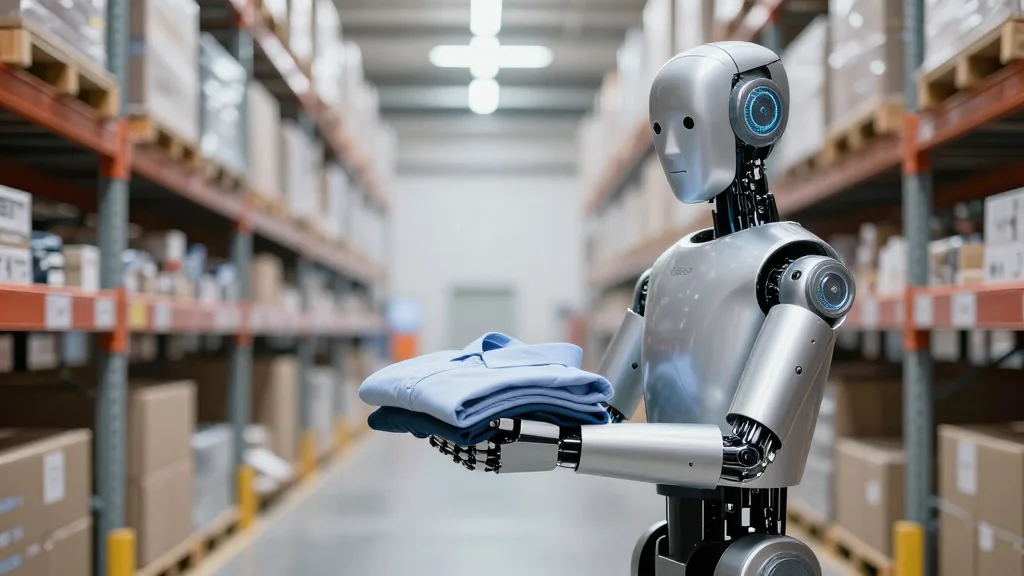
JCPenney Parent Catalyst Brands Deploys Humanoid Robots in Nevada Warehouse
Why It Matters
The deployment shows how advanced humanoid robotics can modernize apparel supply chains, cutting labor costs and boosting efficiency. It also sets a precedent for broader retail adoption of AI‑driven hardware.
Key Takeaways
- •Catalyst Brands partners with Figure AI to test humanoid robots in Nevada warehouse
- •Figure 03 robots handle sorting, packing, and barcode detection autonomously
- •Deployment follows a $40 million Reno facility upgrade, targeting labor efficiency
- •Robots’ fingertip sensors manage delicate garments without damage
- •Success could create a playbook for retail‑wide humanoid automation
Pulse Analysis
Retailers have long looked to automation to tame the complexity of fast‑moving apparel supply chains, but most have relied on conveyor‑based systems rather than true humanoid robots. Amazon’s limited experiments have demonstrated the technology’s potential, yet the broader industry has stayed cautious due to cost, integration challenges, and workforce concerns. Figure AI’s Figure 03 model, however, brings a new level of dexterity and AI reasoning that can mimic human hands while operating continuously, positioning it as a viable alternative for brands that need flexibility across varied SKUs.
Catalyst Brands’ decision to install the robots in its Reno hub reflects a strategic push to modernize a facility that just received a $40 million infrastructure overhaul. By automating the “Joey Pouch” sorting system, the humanoids can scan barcodes, orient packages, and place them on conveyors with minimal errors, freeing human associates to focus on quality control, inventory management, and customer‑centric tasks. The robots’ fingertip sensors detect forces as low as three grams, allowing them to handle soft poly bags, folded garments, and irregular shapes without crushing items—an advantage over traditional grippers that often struggle with delicate apparel.
If the pilot proves cost‑effective, Catalyst could roll the technology across its portfolio of brands, from Brooks Brothers to Nautica, creating a unified labor platform that scales with seasonal demand. Such a rollout would signal to investors that multi‑brand holding companies can leverage AI‑driven hardware as a growth engine, potentially reshaping labor economics in the retail sector. Moreover, the partnership may inspire other apparel conglomerates and logistics firms, like UPS, to explore similar humanoid deployments, accelerating the industry’s shift toward smarter, more adaptable warehouses.
JCPenney Parent Catalyst Brands Deploys Humanoid Robots in Nevada Warehouse
Comments
Want to join the conversation?
Loading comments...