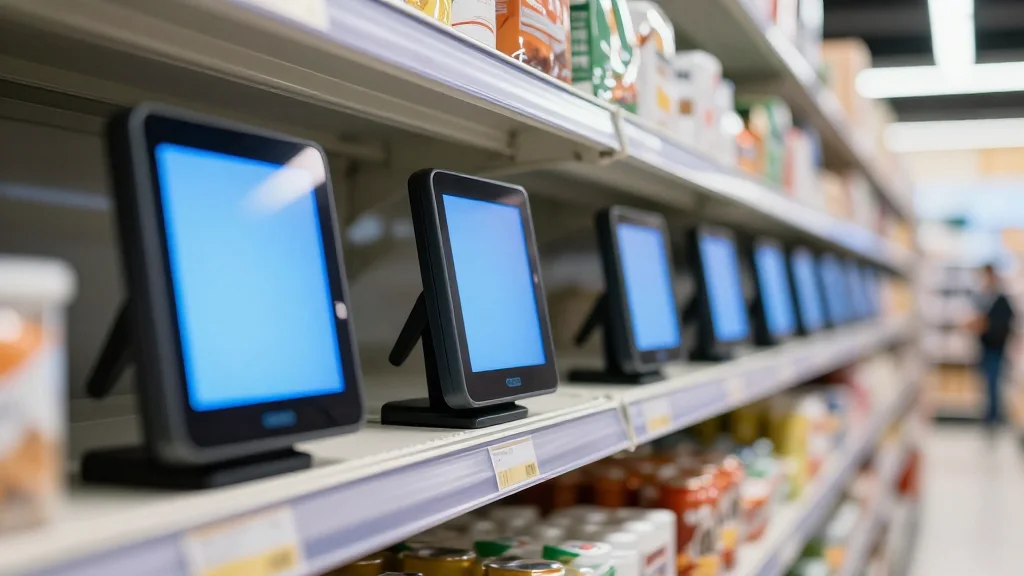
Kroger Rolls Out Electronic Shelf Labels to Nearly All Cincinnati-Dayton Stores

Companies Mentioned
Why It Matters
The ESL deployment signals a broader shift toward automation in grocery retail, where real‑time price adjustments can improve margin management and reduce labor costs. For consumers, the technology could mean more frequent price updates and clearer discount signals, but also raises concerns about dynamic pricing tactics. Simultaneously, Kroger’s $100 million investment to fix refrigeration leaks highlights the growing financial and reputational stakes of environmental compliance for large retailers, potentially influencing how they allocate capital between sustainability initiatives and digital transformation. Together, these developments illustrate the dual pressures shaping the modern grocery sector: the drive for operational efficiency through technology and the imperative to meet tightening environmental regulations. How Kroger balances these forces will likely set a benchmark for other chains navigating similar challenges.
Key Takeaways
- •103 of Kroger's 104 Cincinnati‑Dayton stores now have electronic shelf labels, covering ~25% of its total U.S. footprint.
- •Paula Kash, Kroger's group VP of operations, stated the ESLs will free staff for customer service and prevent surge pricing.
- •Kroger faces a $100 million, three‑year spend to fix refrigeration leaks and a $2.5 million civil penalty for Clean Air Act violations.
- •Only a handful of Kroger divisions, such as Harris Teeter and Ruler Foods, have not yet installed ESLs.
- •The settlement requires public comment until June 5, 2026, adding regulatory scrutiny to Kroger's cost structure.
Pulse Analysis
Kroger’s aggressive ESL rollout reflects a strategic bet that automation can offset rising labor costs and enhance price elasticity in a market still reeling from post‑pandemic inflation. By centralizing price changes, the chain can react to supply chain disruptions, competitor moves, and perishable inventory pressures faster than rivals still reliant on manual tagging. This agility could translate into modest margin improvements, especially as grocery margins hover around 2‑3% nationally.
However, the $100 million refrigeration remediation underscores a hidden cost of scaling. Capital allocated to environmental compliance may limit the funds available for further tech investments or price‑cut initiatives championed by CEO Greg Foran. Moreover, the settlement could set a precedent, prompting other retailers to audit and upgrade their cooling systems, potentially reshaping the cost landscape of the industry.
From a competitive standpoint, Kroger’s ESL deployment narrows the technology gap with Walmart, which already operates digital tags in roughly half of its U.S. stores. If Kroger can demonstrate tangible labor savings and price‑optimization benefits without triggering consumer backlash over dynamic pricing, it may force peers to accelerate similar rollouts. Conversely, any missteps—such as perceived price gouging—could invite regulatory scrutiny akin to the Clean Air Act case, reinforcing the delicate balance between innovation and compliance in retail.
Kroger Rolls Out Electronic Shelf Labels to Nearly All Cincinnati-Dayton Stores
Comments
Want to join the conversation?
Loading comments...