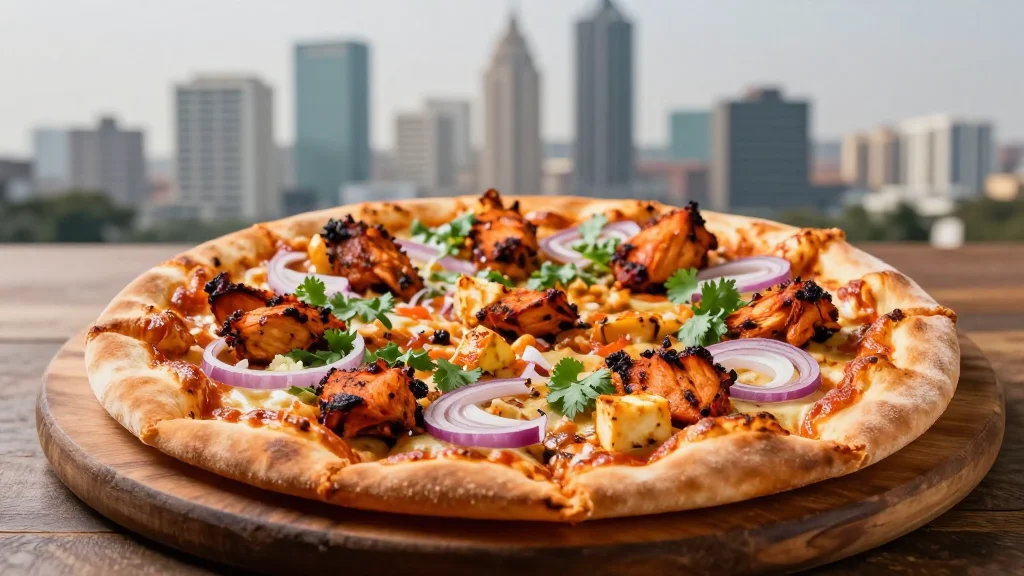
Papa John’s Comeback Play: Rs 100 Cr in Year 2, 650-Store Ambition
Companies Mentioned

Why It Matters
The aggressive rollout demonstrates confidence in India’s now‑affluent pizza market and could reshape QSR dynamics by proving a fully owned, localized model can achieve rapid scale and profitability.
Key Takeaways
- •Targeting $12 M revenue in year two with 650‑store goal
- •Adopting 100% company‑owned model to ensure quality consistency
- •Clustered expansion in Bengaluru, Chennai, Hyderabad drives economies of scale
- •Localised supply chain cuts import duties, improves unit economics
- •Average daily store sales $845, breakeven in six months, payback 2‑2.5 years
Pulse Analysis
India’s pizza market has matured dramatically since Papa John’s initial 2006 entry, when high import duties and limited delivery platforms hampered growth. Today, average order values have doubled to roughly $9‑10, and digital aggregators like Swiggy and Zomato now drive 60‑65% of sales for peers. This shift in consumer spending power and logistics infrastructure creates a fertile environment for premium brands to capture market share, especially when they can offer a localized menu at competitive price points.
Pulsar Capital’s strategy hinges on a fully owned, company‑operated (CoCo) model that sidesteps the consistency challenges of franchising. By localising the entire supply chain—sourcing cheese, dough, and sauces domestically—the venture eliminates the previous 100% import duty burden, reducing cost per pizza and enhancing unit economics. Store formats range from 300‑sq‑ft cloud kitchens to 2,000‑sq‑ft dine‑in locations, with capital expenditures between $60,000 and $180,000, allowing flexible rollout based on market density. The cluster‑led expansion, beginning with Bengaluru and extending to Chennai and Hyderabad, leverages shared central kitchens and manpower, driving economies of scale while keeping rental costs low at 7‑8% of revenue.
If Papa John’s can sustain its $845 average daily sales and achieve breakeven within six months, the model could set a new benchmark for QSR scalability in India. Investors are likely to view the 650‑store, $12 million‑in‑year‑two target as a signal of both market confidence and operational discipline. Success may spur other international brands to adopt similar CoCo and hyper‑local strategies, intensifying competition but also accelerating overall sector growth as Indian consumers continue to spend more on premium fast‑food experiences.
Papa John’s comeback play: Rs 100 cr in year 2, 650-store ambition
Comments
Want to join the conversation?
Loading comments...