Why It Matters
The concept showcases how retailers can embed supply‑chain transparency and sustainability directly into the shopping experience, setting a new benchmark for experiential retail.
Key Takeaways
- •Store functions as factory‑warehouse hybrid
- •Central island mimics forklift and pallet logistics
- •Magnetic felt panels enable transitional product display
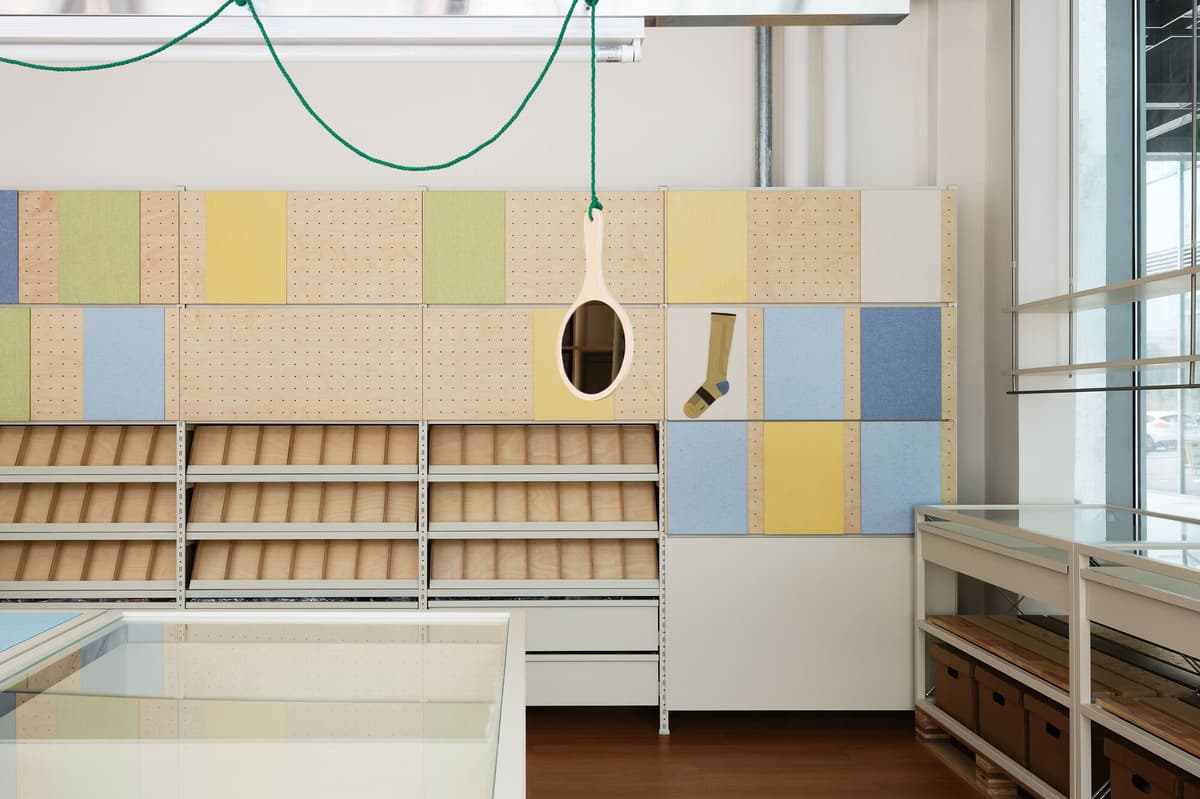
- •Recycled fabric resin panels embed sample socks
- •Distributed layout emphasizes process over static aesthetics
Pulse Analysis
Retail is undergoing a paradigm shift where the storefront becomes a narrative of production rather than a static showcase. By integrating logistics‑inspired architecture, Senpop’s Chengdu location offers shoppers a glimpse into the supply chain, satisfying growing consumer demand for transparency. This approach aligns with broader industry movements toward omnichannel experiences that merge physical and operational realities, reinforcing brand authenticity while differentiating from traditional retail formats.
The store’s spatial logic draws directly from industrial processes. A central island, designed like a forklift‑compatible pallet platform, can be reconfigured to mirror the flow of goods, while lightweight magnetic felt panels allow products to hover between sampling and storage. Materials such as MDF, particle board and recycled‑fabric resin panels not only reduce waste but also serve as tactile storytelling devices, embedding actual socks within the panels to record the brand’s manufacturing lineage. This modular, process‑centric design reduces fixed fixtures, enabling rapid adaptation to inventory changes.
For the broader market, Senpop’s hybrid model signals a viable blueprint for brands seeking to fuse sustainability, storytelling, and operational efficiency. By treating the retail environment as an active component of the product’s lifecycle, companies can deepen consumer engagement, justify premium pricing, and potentially lower logistics costs through on‑site inventory handling. As more retailers experiment with in‑store manufacturing and transparent supply chains, the industry may see a rise in spaces that are simultaneously production sites, warehouses, and experiential venues, reshaping the future of brick‑and‑mortar commerce.
Senpop / amass
Comments
Want to join the conversation?
Loading comments...