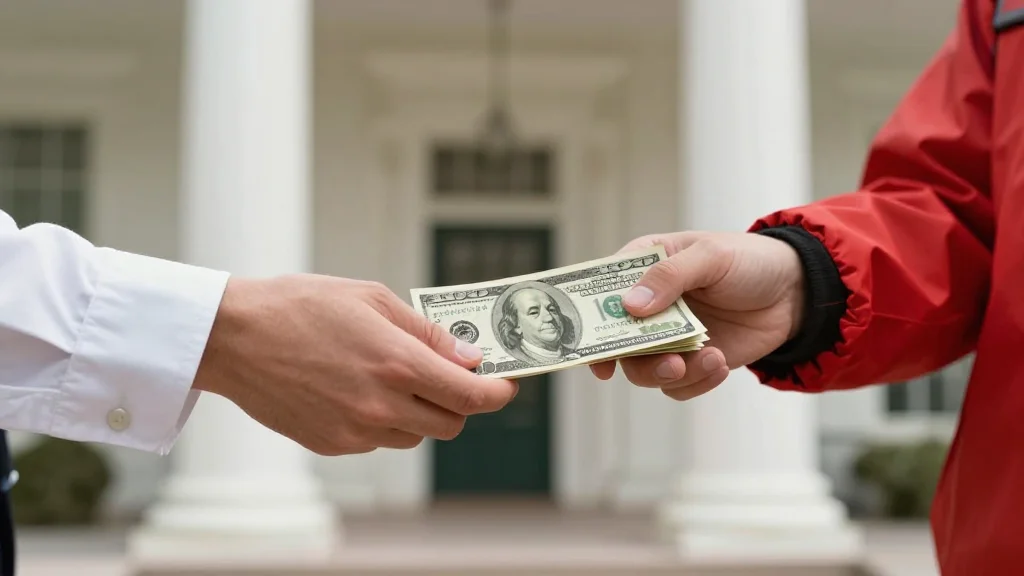
Trump Tips DoorDash Driver $100 After Oval Office McDonald's Delivery, Touts No‑tax‑on‑tips Policy

Companies Mentioned
Why It Matters
The incident spotlights the intersection of political messaging and the gig‑economy, a rapidly growing segment of retail that now accounts for over 10% of U.S. consumer spending. By framing a DoorDash delivery as proof of policy success, the Trump administration is attempting to humanize tax legislation and sway public opinion ahead of upcoming elections. At the same time, the episode raises concerns about the authenticity of political theater and the potential for policy decisions to be driven more by optics than by data. If the “no tax on tips” provision is extended, it could reshape compensation structures for millions of delivery and ride‑share workers, influencing labor market dynamics, platform pricing, and state‑level tax policies. Conversely, a repeal could reverse those gains, reigniting debates over fair wages, tax equity, and the role of government in regulating the gig economy.
Key Takeaways
- •President Trump gave DoorDash driver Sharon Simmons a $100 cash tip after delivering McDonald’s to the Oval Office.
- •Simmons has completed over 14,000 DoorDash deliveries and earned roughly $11,000 in tips last year.
- •The “no tax on tips” law, part of the 2025 budget reconciliation bill, saved Simmons $3,000‑$4,000 in taxes.
- •Trump used the delivery to showcase the policy, linking it to broader economic relief for gig workers.
- •The tip‑tax provision is set to expire in 2028, making its political future a key battleground.
Pulse Analysis
The DoorDash episode illustrates how political leaders can weaponize everyday retail interactions to craft narratives around policy. Trump's decision to tip a gig worker publicly serves a dual purpose: it personalizes a tax reform that otherwise sits in legislative jargon, and it attempts to counteract negative press surrounding his recent AI‑generated Jesus meme. By anchoring the discussion in a relatable, low‑stakes scenario—a fast‑food delivery—the administration hopes to make the abstract benefits of the tip‑tax law concrete for voters.
From a market perspective, the spotlight on DoorDash could have a modest but measurable impact on the platform’s brand perception. While the company has not officially endorsed the event, the visibility may attract new drivers seeking similar recognition, potentially expanding its labor pool. However, the episode also risks backfiring if critics successfully frame the delivery as a staged publicity stunt, which could erode trust in both the platform and the policy it purports to champion.
Looking forward, the sustainability of the “no tax on tips” provision will hinge on congressional negotiations as the 2028 sunset date approaches. If the law is extended, it could set a precedent for other gig‑economy sectors—such as rideshare and home‑service platforms—to lobby for similar tax relief, reshaping the broader retail labor landscape. If repealed, the political capital invested in moments like the DoorDash tip may prove fleeting, underscoring the volatility of policy‑driven political theater in an era where consumer experiences are increasingly mediated by digital platforms.
Trump tips DoorDash driver $100 after Oval Office McDonald's delivery, touts no‑tax‑on‑tips policy
Comments
Want to join the conversation?
Loading comments...