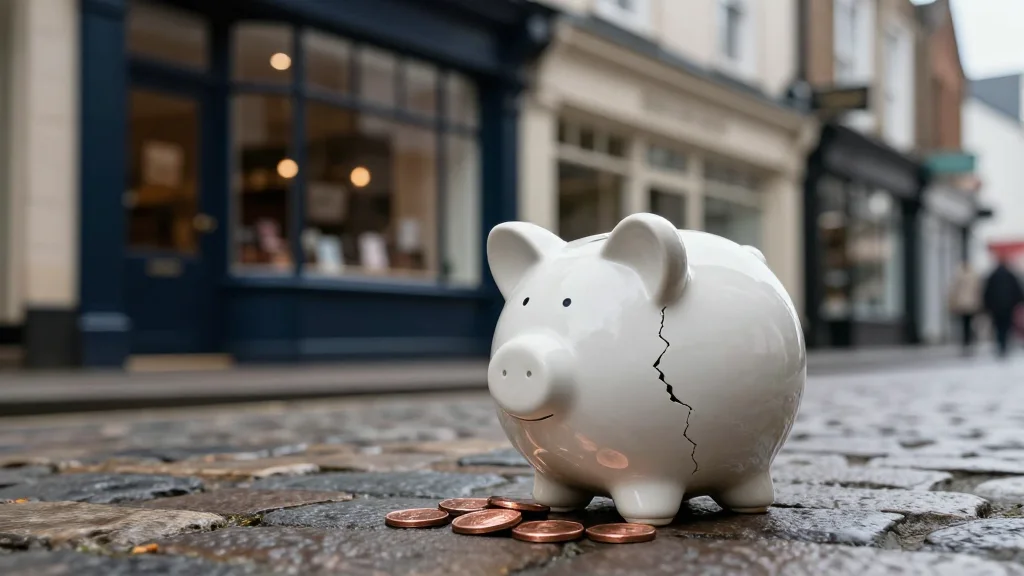
UK High Street Posts Weakest April Sales in a Decade as Discretionary Spending Slumps

Companies Mentioned
Why It Matters
The April sales slump underscores a broader shift in UK consumer behavior, where rising living costs are forcing shoppers to curtail discretionary spending. For brick‑and‑mortar retailers, the trend threatens footfall, revenue stability and long‑term viability, prompting a strategic pivot toward omnichannel models. The data also serve as an early warning for investors and policymakers about the health of the retail sector, which remains a key driver of employment and economic activity. If the downturn persists, it could accelerate consolidation in the high‑street landscape, with stronger players acquiring weaker competitors or expanding their digital capabilities. Policymakers may also need to consider targeted measures to support consumer purchasing power, such as temporary tax reliefs or subsidies, to prevent a prolonged retail contraction that could spill over into broader economic growth.
Key Takeaways
- •Like‑for‑like discretionary sales fell 1.6% YoY in April 2026, the weakest April since 2016.
- •In‑store sales dropped 1.8% versus a 2.3% growth base last year.
- •Fashion, homewares and lifestyle categories recorded their first sales decline since March 2018.
- •High‑street footfall fell 1.8% in week 1, 0.8% in week 2 and 2.8% in week 3 of April.
- •April marked the eighth straight month of sales growth lagging inflation.
Pulse Analysis
The BDO figures reveal that the UK high street is at a crossroads. Historically, April has been a launchpad for spring collections, delivering a seasonal sales bump. This year, however, the combination of stagnant wages, surging energy bills and a lingering cost‑of‑living crisis has muted that seasonal lift. Retailers that rely heavily on in‑store traffic—particularly mid‑market fashion and home‑goods chains—are now exposed to a double‑edged risk: shrinking margins from higher input costs and declining footfall.
Historically, retail cycles have shown resilience through macro‑economic shocks, often rebounding once consumer confidence stabilises. Yet the current environment differs in its persistence; inflation has outpaced wage growth for multiple quarters, eroding real disposable income. The eight‑month streak of sales lagging inflation suggests that the sector may be entering a longer‑term adjustment phase rather than a temporary dip. Retailers that can quickly scale digital fulfilment, optimise inventory, and negotiate flexible lease terms will be better positioned to weather the slowdown.
Looking forward, the next data points to watch are the Q2 earnings of major high‑street operators and the Bank of England’s inflation outlook. A modest easing of inflation could restore some consumer confidence, but without a corresponding rise in real wages, discretionary spend may remain subdued. In the meantime, the high street is likely to see accelerated store rationalisation, increased emphasis on experiential retail to draw shoppers back, and deeper integration of online and offline channels as the industry seeks to adapt to a new consumer reality.
UK High Street Posts Weakest April Sales in a Decade as Discretionary Spending Slumps
Comments
Want to join the conversation?
Loading comments...