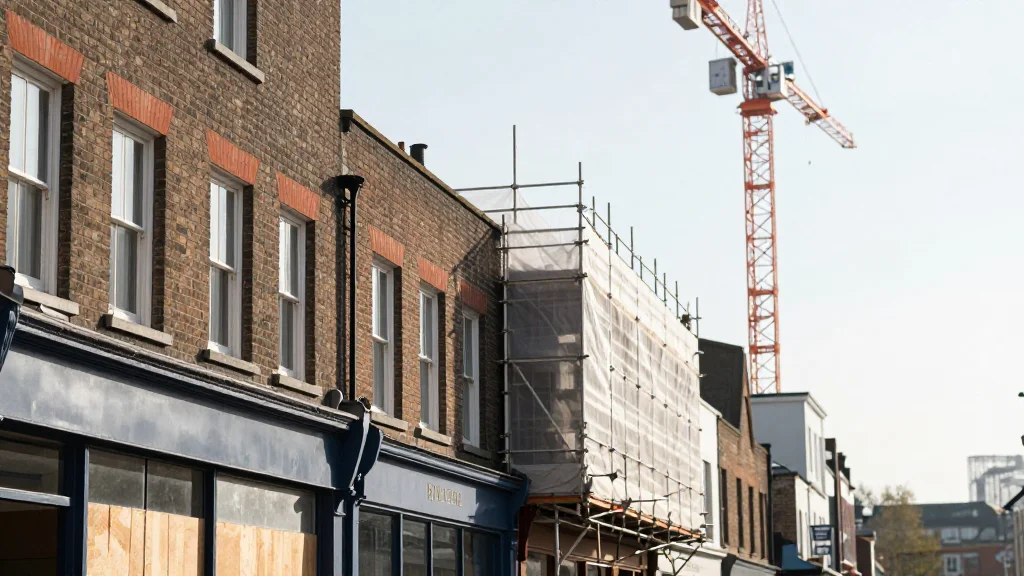
UK Voters Make High‑Street Decline Top Issue Ahead of May Local Elections

Why It Matters
The high‑street issue is more than a local nuisance; it reflects the health of regional economies and the social fabric of communities. Empty storefronts diminish consumer confidence, reduce employment opportunities, and erode civic pride, which can translate into broader political disengagement. By making high‑street revitalisation a campaign priority, voters are pushing councils to allocate scarce resources toward sustainable urban regeneration, potentially reshaping retail geography for years to come. Moreover, the focus on high streets signals a growing awareness that digital‑first retail models cannot fully replace the social and economic functions of physical town centres. Successful interventions could serve as templates for other post‑industrial towns facing similar decline, influencing national policy on urban development and funding allocations.
Key Takeaways
- •Pollster Luke Tryl says high‑street condition now influences voter judgments of local areas.
- •Walsall residents describe a "run‑down" town centre with high rents and limited jobs.
- •Centre for Cities finds vacancy rates of ~8% in London/Cambridge vs ~20% in Bradford.
- •£1.5 bn (£1.9 bn) regeneration project announced for Walsall town centre.
- •Government's £5 bn town‑centre fund expected to be allocated over the next few years.
Pulse Analysis
The surge in voter concern over high‑street decay marks a turning point for retail policy in the UK. Historically, retail strategy has been dominated by the shift to e‑commerce, with policymakers treating brick‑and‑mortar as a secondary concern. The current political climate, however, reframes high streets as essential public infrastructure, akin to transport or health services. This re‑valuation could unlock sustained public investment, moving beyond short‑term cosmetic fixes toward integrated mixed‑use developments that blend housing, health clinics, and community spaces with retail.
From a market perspective, the pressure on local councils may accelerate the adoption of innovative retail formats, such as pop‑up stores, co‑working retail spaces, and experiential venues that can thrive on lower footfall. Retailers that adapt quickly—leveraging data to target hyper‑local consumers and collaborating with local authorities on place‑making initiatives—stand to capture the remaining demand. Conversely, traditional department stores and chain retailers that rely on high volume may find the environment increasingly hostile.
Looking ahead, the May local elections will serve as a barometer for how seriously high‑street revitalisation is taken by both voters and elected officials. If candidates win on platforms promising concrete funding and clear timelines, we can expect a cascade of similar pledges across the country, potentially reshaping the retail landscape for a generation. The real test will be whether these promises translate into measurable reductions in vacancy rates and a resurgence of foot traffic, or whether they remain symbolic gestures that fail to address the underlying economic disparities driving high‑street decline.
UK Voters Make High‑Street Decline Top Issue Ahead of May Local Elections
Comments
Want to join the conversation?
Loading comments...