Union Seeks Ban on ‘Surveillance Pricing’ at Grocery Stores
Why It Matters
If unchecked, ESL‑driven surveillance pricing could deepen food‑price inflation and accelerate job losses in a sector already facing labor shortages, prompting a pivotal regulatory showdown for the retail industry.
Key Takeaways
- •UFCW pushes federal ban on surveillance pricing via ESLs
- •Walmart aims to install ESLs nationwide by end of 2026
- •12 states have introduced or passed digital label regulation bills
- •Studies predict up to 70% of store tasks automated by 2025
- •Maryland enacted first state law banning surveillance pricing in grocery stores
Pulse Analysis
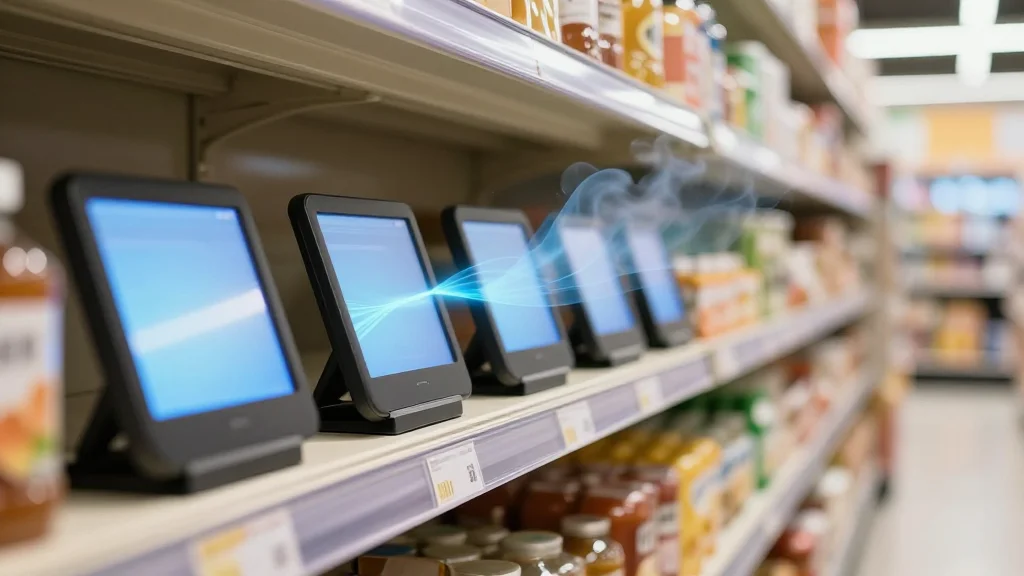
Electronic shelf labels are rapidly moving from niche pilots to a core component of U.S. grocery operations. Walmart plans to outfit every U.S. store with ESLs by late 2026, while Kroger and Whole Foods have already begun large‑scale rollouts. Proponents tout real‑time price updates, reduced labor for manual tag changes, and tighter price consistency for shoppers. Yet the United Food and Commercial Workers Union sees a different picture, launching a national campaign to outlaw "surveillance pricing"—the practice of using shopper data to vary prices at the point of sale. The union’s effort dovetails with the Stop Price Gouging in Grocery Stores Act of 2026, a Senate‑pending bill that would bar retailers from leveraging AI‑driven algorithms to set individualized prices.
The controversy hinges on two intertwined concerns: consumer equity and workforce displacement. Industry analysts estimate that up to 70% of routine in‑store tasks could be automated by 2025, potentially slashing hours for the 1.2 million grocery workers the UFCW represents. Simultaneously, studies from McKinsey and Verizon suggest that data‑rich environments enable retailers to segment shoppers by income, age or purchase history, raising the specter of price discrimination that could exacerbate food‑insecurity for the 48 million Americans already struggling to afford groceries. Early investigations, such as Consumer Reports’ 2025 probe of Instacart’s AI pricing, have shown that algorithmic price variations are not merely theoretical.
Retailers push back, emphasizing that ESLs operate on closed systems that display uniform prices to every customer. The National Retail Federation warns that pre‑emptive regulation could stifle innovation and delay efficiency gains that benefit both retailers and shoppers. Nonetheless, state‑level action is gathering momentum; Maryland’s Protection from Predatory Pricing Act sets a precedent that could inspire further bans. As the technology scales, policymakers, labor groups, and the retail sector will need to balance the promise of digital efficiency against the risk of a new form of price surveillance that could reshape the grocery landscape.
Union Seeks Ban on ‘Surveillance Pricing’ at Grocery Stores
Comments
Want to join the conversation?
Loading comments...