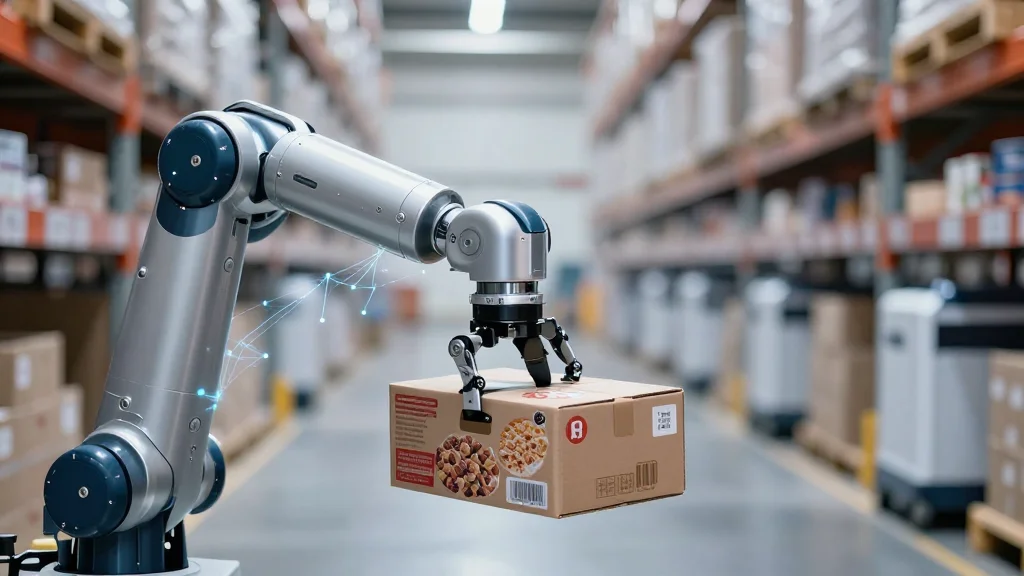
Walmart Accelerates AI and Automation, Claiming 35% Higher Order Values

Companies Mentioned
Why It Matters
Walmart’s AI and automation drive directly addresses the two largest expense categories—inventory and labor—potentially reshaping cost structures across the retail sector. If the retailer can sustain higher average order values while reducing operating costs, it could force competitors to accelerate their own technology investments, intensifying a race for efficiency and personalization. Moreover, the success of AI assistants like Sparky may set a new benchmark for how retailers engage shoppers, shifting the balance from price competition to experience‑driven differentiation. The broader market will watch Walmart’s forward P/E premium as a test case: if the technology rollout delivers measurable margin expansion, investors may re‑price other retailers’ valuations based on their AI roadmaps. Conversely, any lag in cost savings or consumer adoption could temper enthusiasm for similar initiatives across the industry.
Key Takeaways
- •50% of Walmart’s e‑commerce fulfillment center volume is now automated.
- •60% of Walmart stores receive some level of automated freight.
- •23 of 42 regional distribution centers are undergoing automation retrofits.
- •AI shopping assistant Sparky lifts average order values by roughly 35%.
- •Walmart’s shares have risen 34% over the past year, outpacing the industry’s 31.4% gain.
Pulse Analysis
Walmart’s aggressive AI and automation rollout reflects a strategic pivot from pure scale to technology‑driven efficiency. Historically, the retailer has relied on its massive buying power and low‑price model; now it is layering digital capabilities to protect those margins as labor costs rise and e‑commerce competition intensifies. The 50% automation figure is notable because it signals a transition from pilot projects to core operations, suggesting that cost reductions will start appearing in the income statement within the next fiscal year.
The 35% uplift in order value tied to Sparky is equally compelling. While the figure likely captures early adopters who are already inclined toward higher spend, it demonstrates the commercial potential of AI‑guided upselling. If Walmart can broaden Sparky’s reach without eroding the user experience, the incremental revenue could offset the capital outlay for automation retrofits. Competitors such as Target and Costco, which have been slower to embed AI at scale, may feel pressure to accelerate their own digital initiatives or risk losing share in higher‑margin online sales.
Looking ahead, the key risk lies in execution. Automation retrofits are capital‑intensive and can encounter integration challenges, while AI assistants must maintain relevance amid evolving consumer expectations. Investors will likely scrutinize Walmart’s upcoming earnings for concrete cost‑saving metrics and any signs of diminishing returns on AI spend. If the retailer can demonstrate that technology is delivering both top‑line growth and bottom‑line protection, it could set a new performance baseline for the entire retail sector.
Walmart Accelerates AI and Automation, Claiming 35% Higher Order Values
Comments
Want to join the conversation?
Loading comments...