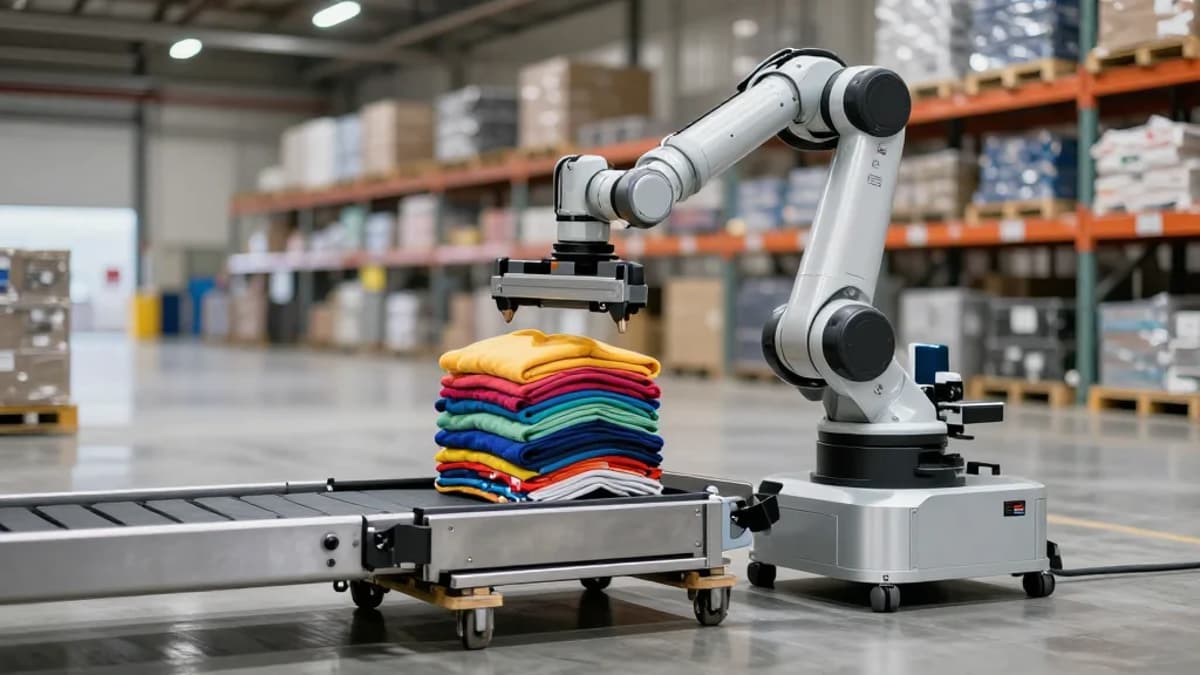
Week in Review: Mango’s Logistics Centre Shows Where Fashion’s Real Scale Lies
•March 9, 2026
0
Why It Matters
Centralised, automated distribution lowers costs and boosts resilience, setting a new standard for global fashion supply chains.
Key Takeaways
- •Logistics hub covers area equal to 40 football pitches
- •Facility can store up to 7 million hanging garments simultaneously
- •High automation reduces labor costs and speeds order fulfillment
- •Centralised distribution improves inventory visibility across global markets
- •Mango's hub sets benchmark for fashion supply chain resilience
Pulse Analysis
Mango’s new logistics centre illustrates a broader shift in the apparel industry toward hyper‑centralised, technology‑driven distribution networks. As trade tensions, pandemic‑era disruptions, and shifting consumer expectations create uncertainty, brands are consolidating inventory in mega‑warehouses that can be rapidly reconfigured. Advanced robotics, AI‑based demand forecasting, and real‑time tracking enable Mango to keep millions of garments in a ready‑to‑ship state while minimizing excess stock and dead‑weight costs. This approach not only shortens delivery windows but also provides a single source of truth for inventory across continents.
The scale of Mango’s hub—equivalent to 40 football fields—offers economies of scale that smaller, regional facilities cannot match. By housing up to 7 million hanging items, the centre can serve multiple markets from a single node, reducing the need for duplicated warehousing and associated carbon footprints. Automation technologies, such as automated guided vehicles and high‑speed sorting conveyors, cut manual handling time dramatically, translating into lower labor expenses and fewer human‑error incidents. For retailers, this means faster replenishment cycles and the ability to respond to fashion trends in near real‑time.
Industry analysts view Mango’s investment as a bellwether for the future of fashion logistics. As brands grapple with volatile raw‑material prices and unpredictable shipping lanes, a centralized, automated hub offers a strategic buffer against external shocks. Moreover, the data generated by such facilities fuels predictive analytics, enabling more accurate production planning and sustainable inventory levels. Companies that emulate this model are likely to achieve higher margins, improved customer satisfaction, and a stronger competitive position in an increasingly digital marketplace.
Week in Review: Mango’s logistics centre shows where fashion’s real scale lies
0
Comments
Want to join the conversation?
Loading comments...