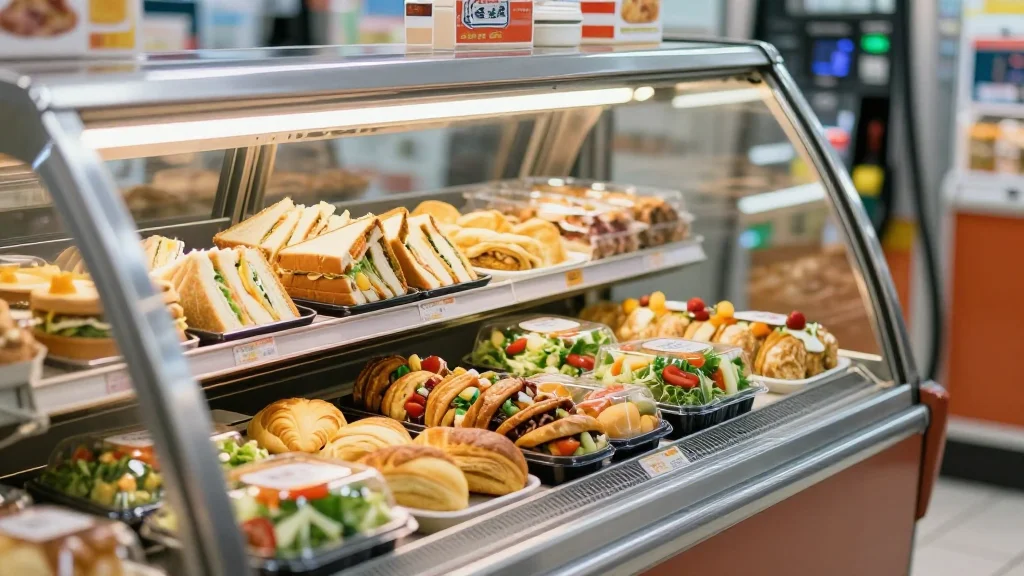
Yesway C‑Stores Pull Fast‑Food Diners as Fuel Costs Surge, Food Sales Jump 41% in 2025


Why It Matters
The Yesway story illustrates a fundamental shift in how price‑sensitive consumers allocate their limited budgets. As fuel costs climb, shoppers are consolidating trips, opting for venues that combine fuel, groceries, and affordable prepared meals. This behavior not only redefines the convenience‑store value proposition but also pressures fast‑food operators to rethink pricing, menu simplicity, and delivery strategies. The trend could accelerate consolidation in the c‑store sector, spur further menu innovation, and reshape competitive dynamics across the broader retail and foodservice landscape. For investors, Yesway’s IPO provides a rare glimpse into a hybrid business model that blends commodity‑sensitive fuel revenue with a rapidly scaling food service operation. The company’s ability to grow its food share while managing fuel margin volatility will be a litmus test for the viability of the convenience‑store as a next‑generation retail hub in an inflationary environment.
Key Takeaways
- •Yesway sold ~41 million proprietary food items in 2025, including 24 million burritos.
- •Food now accounts for roughly one‑third of Yesway’s total revenue, up from a negligible share a decade ago.
- •72% of U.S. consumers view c‑stores as a viable alternative to quick‑service restaurants, up from 56% in 2024 (NACS).
- •Deloitte reports 29% of shoppers are limiting purchases to essentials, up from 25% in Q4 2025.
- •Yesway priced its IPO at $20 per share, raising a valuation of about $1.21 billion.
Pulse Analysis
Yesway’s rapid ascent underscores a broader retail realignment where convenience‑stores are morphing into multi‑purpose destinations. Historically, c‑stores were fuel‑first outlets with limited food options; today, they are leveraging proprietary, low‑cost meals to capture a segment of the fast‑food market that is increasingly price‑sensitive. This evolution mirrors the earlier rise of "food‑as‑a‑service" models in grocery retail, where private‑label prepared foods drove traffic and higher margins.
The fuel price shock acts as a catalyst, compressing discretionary spend and forcing consumers to prioritize value. By bundling fuel with affordable, ready‑to‑eat meals, Yesway offers a one‑stop solution that reduces trip frequency and overall cost per purchase. Fast‑food chains, which traditionally rely on high volume and low margins, now face a dual challenge: defending low‑income traffic while maintaining brand relevance. Their response—aggressive value menus and promotional pricing—may erode profit margins further, prompting a strategic pivot toward digital ordering, loyalty programs, or partnership models with c‑stores.
From an investment perspective, Yesway’s IPO timing is strategic. The public markets are showing tentative optimism after a slowdown in 2025, and a hybrid retailer that can hedge fuel volatility with growing food sales presents an appealing risk‑adjusted profile. However, the sustainability of the food growth hinges on operational execution—maintaining quality, scaling kitchen infrastructure, and managing supply‑chain costs. If Yesway can sustain its food‑share trajectory, it could set a template for other c‑store operators, potentially accelerating industry consolidation and prompting a re‑evaluation of the traditional fast‑food versus convenience‑store competitive set.
Yesway C‑Stores Pull Fast‑Food Diners as Fuel Costs Surge, Food Sales Jump 41% in 2025
Comments
Want to join the conversation?
Loading comments...