
Article Intro - Console-Free Control for the Da Vinci
•February 16, 2026
0
Why It Matters
By eliminating bulky consoles, the technology could increase surgeon mobility and reduce system costs, enabling robotic assistance in more diverse clinical environments. Successful MR control would also accelerate the shift toward flexible, remote‑assisted surgeries.
Key Takeaways
- •Mixed reality replaces bulky surgical consoles.
- •HoloLens 2 enables hand, head, speech control.
- •Endoscope teleoperation matches traditional performance.
- •Instrument control lags due to gesture recognition limits.
- •Improving video latency critical for surgeon situational awareness.
Pulse Analysis
Surgical robotics has become a cornerstone of modern operating rooms, yet most teleoperation platforms still depend on large, stationary consoles that tether the surgeon to a fixed point. This physical separation can diminish the surgeon’s spatial awareness and restrict the environments where robotic assistance is feasible, such as bedside or field deployments. Mixed reality (MR) offers a way to dissolve that barrier by projecting the robot’s interface directly into the surgeon’s field of view, turning gestures, head orientation, and voice into intuitive control inputs.
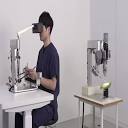
The research team built a console‑free teleoperation prototype for the da Vinci Research Kit (dVRK) using Microsoft HoloLens 2. Hand gestures manipulate the robot’s instruments, head movements steer the endoscopic camera, and spoken commands trigger common actions. Performance was measured with a camera navigation task and the standard peg‑transfer benchmark. Results showed that endoscope control achieved parity with traditional manipulator‑based setups, while instrument handling lagged, primarily because of gesture‑recognition errors and limited video display fidelity on the headset.
These findings highlight both the promise and the hurdles of MR‑driven surgery. Removing the console could lower costs, increase mobility, and expand robotic assistance to remote or emergency settings, aligning with broader trends toward decentralized healthcare. However, to reach clinical viability, developers must tighten gesture accuracy, reduce latency, and ensure high‑resolution video streams that match the surgeon’s expectations. Continued collaboration between robotics engineers, MR hardware manufacturers, and regulatory bodies will be essential to translate this proof‑of‑concept into a reliable tool for the operating theatre.
Article intro - Console-free control for the da Vinci
0
Comments
Want to join the conversation?
Loading comments...