Artificial Eyes Could Bring Human-Like Sight to Self-Driving Cars, Robots
Key Takeaways
- •New photomemristor adapts to light by swelling/desorbing water.
- •Achieves >95% pattern recognition in mixed lighting after seven training cycles.
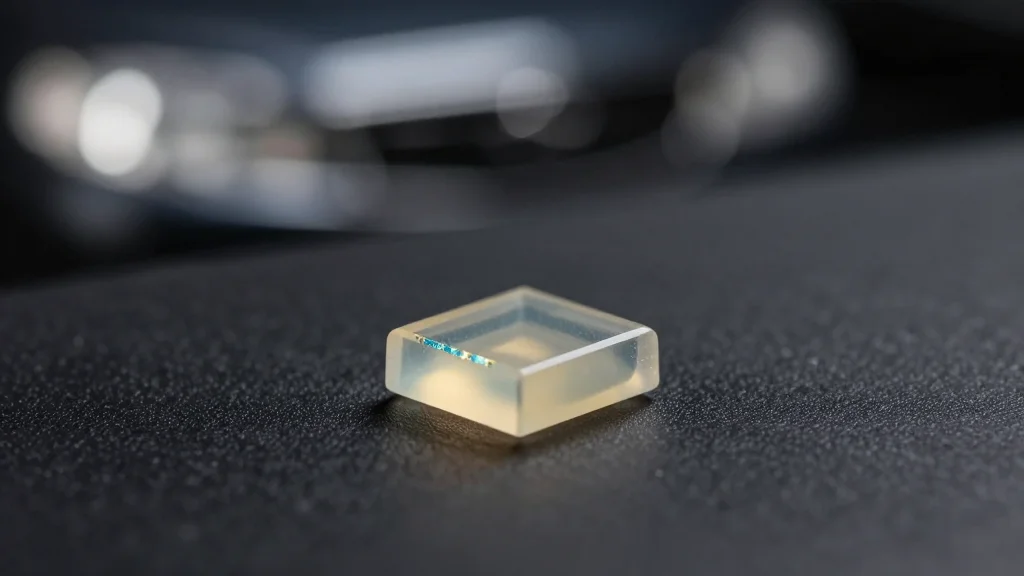
- •Device size half a millimeter, enabling compact sensor arrays.
- •Mimics human eye mechanisms, offering faster adaptation than biological vision.
- •Potential to lower power consumption in autonomous vehicle and robot vision systems.
Pulse Analysis
The photomemristor represents a convergence of materials science and neuromorphic engineering. By integrating a water‑responsive PEDOT:PSS polymer with light‑active titanium‑oxide, the device translates ambient illumination into an electrical signal while dynamically adjusting its gain. This self‑regulating behavior mirrors the bleaching and regeneration cycles of rod cells in the human eye, allowing the sensor to maintain high contrast and fidelity across abrupt lighting shifts that typically confound conventional CMOS cameras.
For autonomous vehicles and industrial robots, consistent perception under varying illumination is a safety prerequisite. Existing camera stacks rely on software‑intensive tone‑mapping and HDR pipelines, which add latency and consume significant power. The new photomemristor’s analog adaptation occurs in seconds, reducing computational overhead and enabling tighter integration with edge AI processors. Its sub‑millimeter footprint also facilitates dense sensor mosaics, improving spatial resolution without inflating vehicle architecture or robot end‑effector size. Early tests showing 95% accuracy in a mixed‑light eye‑chart simulation suggest a competitive edge for manufacturers seeking to differentiate their perception stacks.
Looking ahead, the research team aims to fuse photomemristors with tactile and acoustic transducers, creating multimodal sensing skins that could power next‑generation collaborative robots and assistive devices for the visually impaired. Such integration promises lower overall energy draw, as a single array can harvest and process multiple data streams. However, scaling production, ensuring long‑term environmental stability, and meeting automotive safety standards will be critical hurdles. If these challenges are met, the technology could become a cornerstone of the sensor ecosystem that underpins the rapidly expanding autonomous‑mobility market.
Artificial eyes could bring human-like sight to self-driving cars, robots
Comments
Want to join the conversation?