
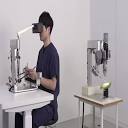
Why It Matters
The library reduces development cycles and risk for surgical‑robot manufacturers, accelerating market entry of AI‑enhanced operating tools. It also expands the data ecosystem needed for reliable autonomous surgery, reshaping healthcare technology adoption.
Key Takeaways
- •NVIDIA launches SimReady Medical Assets library
- •Library provides realistic surgical scenarios for robot training
- •Enables faster AI model validation in operating rooms
- •Supports multiple procedures across specialties
- •Accelerates adoption of autonomous surgical robotics
Pulse Analysis
The healthcare sector is witnessing a convergence of robotics and artificial intelligence, yet one of the biggest hurdles remains the scarcity of high‑quality training data for autonomous systems. NVIDIA’s SimReady Medical Assets library addresses this gap by offering a comprehensive suite of virtual surgical environments that mimic the tactile feedback, visual cues, and procedural nuances of real operations. By leveraging GPU‑accelerated physics and rendering, the library delivers millimeter‑accurate tissue deformation and instrument dynamics, enabling developers to stress‑test robot control algorithms under a wide variety of clinical scenarios without exposing patients to risk.
Beyond technical fidelity, the SimReady library serves as a strategic catalyst for the broader surgical‑robot market. Manufacturers can now shorten the prototyping phase, moving from months of physical mock‑up testing to weeks of simulated runs. This acceleration translates into lower R&D costs and faster regulatory pathways, as validation data generated in the virtual domain can be incorporated into safety dossiers. Moreover, the library’s modular design supports multiple specialties—from orthopedics to minimally invasive cardiothoracic procedures—allowing a single platform to serve diverse product pipelines and fostering cross‑disciplinary innovation.
Industry analysts predict that the availability of such robust simulation tools will spur a new wave of AI‑driven surgical solutions, ranging from semi‑autonomous assistance to fully autonomous interventions. As hospitals seek to improve outcomes while containing costs, the ability to demonstrate proven performance in a virtual setting becomes a competitive differentiator. NVIDIA’s entry into this niche not only reinforces its position in the AI hardware market but also establishes a foundational ecosystem that could redefine how surgical robots are trained, validated, and ultimately deployed in operating rooms worldwide.
Flickstop
0
Comments
Want to join the conversation?
Loading comments...