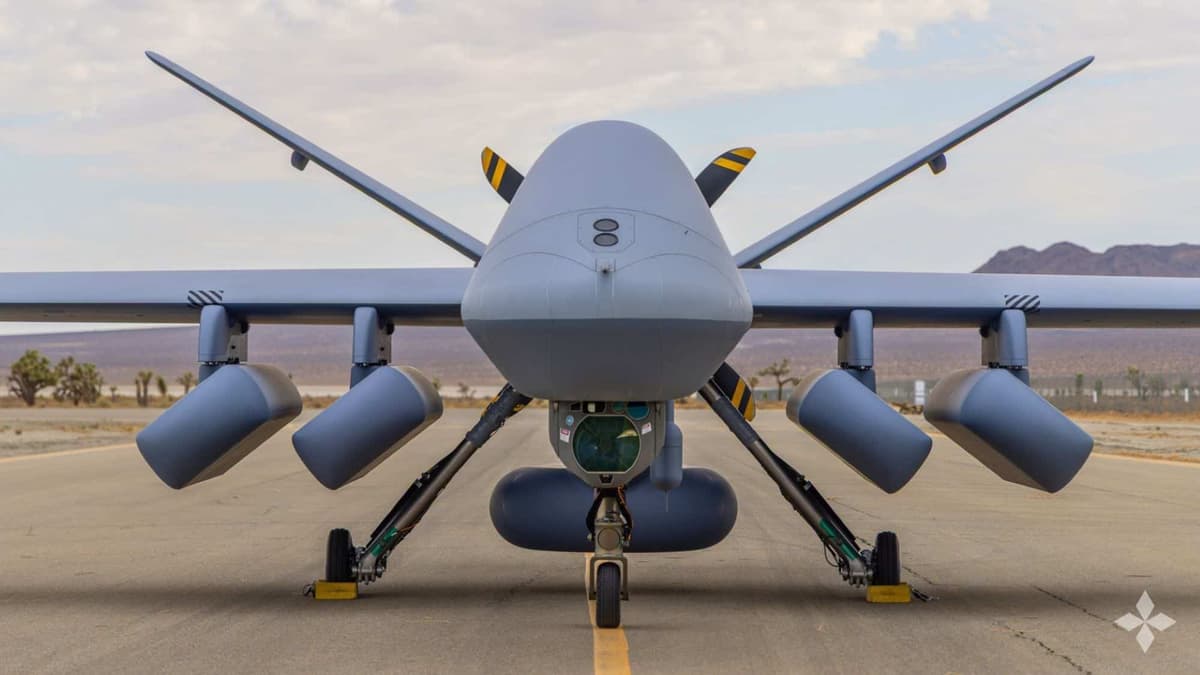
MQ-9B SeaGuardian Shows Off Four Sonobuoy Pods for Anti-Submarine Warfare
Key Takeaways
- •MQ-9B SeaGuardian now displayed with four sonobuoy dispensing pods.
- •Four pods hold up to 40 A‑size or 80 G‑size sonobuoys.
- •Extra pod may reduce range, endurance from 24‑40 hours.
- •Integrates with radar pod, SMCS for persistent submarine tracking.
Pulse Analysis
The MQ‑9B SeaGuardian’s evolution from a high‑altitude ISR platform to a dedicated anti‑submarine warfare (ASW) asset marks a pivotal shift in unmanned maritime operations. By mounting four Sonobuoy Dispensing System pods, the drone can launch up to 80 smaller G‑size sonobuoys or 40 larger A‑size units in a single sortie, dramatically increasing the sensor footprint over contested waters. Each empty SDS pod weighs 132 kg, rising to 340 kg when fully loaded, which forces operators to balance payload against the aircraft’s impressive 24‑to‑40‑hour loiter capability. The integration of a central radar pod—either Leonardo’s Seaspray 7500E V2 or Raytheon’s SeaVue—further augments surface surveillance, creating a layered detection suite that spans from surface vessels to deep‑water submarines.
From an operational perspective, the SeaGuardian’s expanded sonobuoy capacity enables persistent, networked ASW missions alongside legacy platforms such as the P‑8A Poseidon and MH‑60R helicopters. By offloading a portion of the sonobuoy launch and tracking workload to an unmanned system, navies can reduce crew exposure and lower operating costs, with each MQ‑9B priced between $16 million and $30 million depending on configuration. However, the added weight may curtail range and endurance, prompting mission planners to tailor loadouts for specific threat environments—short‑range, high‑density searches versus longer‑duration patrols.
Strategically, the four‑pod configuration positions the SeaGuardian as a versatile, cost‑effective complement to manned ASW fleets, especially for allies seeking to modernize maritime domain awareness without the expense of full‑scale aircraft programs. The concurrent development of AEW&C pods with Saab signals a broader push to make the MQ‑9B a multi‑role workhorse, capable of both under‑sea detection and airborne early warning. As great‑power competition intensifies in key choke points, the ability to field a persistent, low‑risk sensor platform could prove decisive for U.S. and partner forces tasked with safeguarding sea lanes and deterring submarine threats.
MQ-9B SeaGuardian Shows Off Four Sonobuoy Pods for Anti-Submarine Warfare
Comments
Want to join the conversation?