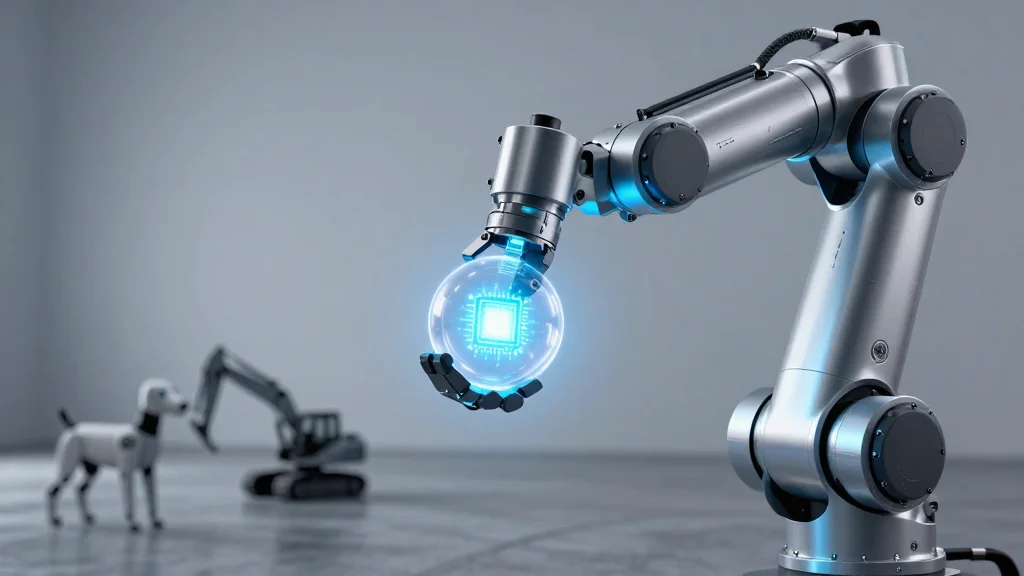
No Backspace in the Physical World – Building AI for 5,000-Lb Machines
Key Takeaways
- •FieldAI's universal AI brain powers diverse robots from excavators to drones.
- •Safety target set at 99.999% reliability for heavy‑machinery autonomy.
- •Uncertainty quantification lets robots pause when data is insufficient.
- •Legacy equipment can be retrofitted with drive‑by‑wire for AI control.
Pulse Analysis
FieldAI’s approach marks a shift from the glossy, humanoid‑centric narrative that dominates much of public robotics discourse toward a pragmatic, safety‑first model tailored for the world’s most hazardous worksites. By integrating risk and uncertainty quantification—skills honed in NASA’s Mars missions and DARPA’s Subterranean Challenge—with large‑scale data‑driven models from DeepMind and Meta, the company creates what it calls Field Foundation Models. These models fuse a physics‑aware world model with a robot‑specific dynamics model, enabling decisions that respect both terrain risk and mechanical limits, a necessity when a 5,000‑pound machine operates near human workers.
The architecture’s reliance on continuous real‑world data ingestion forms a powerful flywheel: each deployment captures edge‑case scenarios, uploads them to the cloud, and receives updated intelligence that can run offline. This feedback loop accelerates model robustness far beyond what simulation alone can achieve, positioning FieldAI to meet its 99.999% reliability benchmark. The ability to retrofit decades‑old machinery with drive‑by‑wire interfaces further lowers adoption barriers, allowing firms to upgrade existing fleets rather than replace them, thereby preserving capital expenditures while boosting safety.
For the construction and mining sectors, the implications are profound. Reducing the need for workers to perform high‑risk tasks can cut injury rates—over 1,000 annual deaths in a single construction sub‑segment in the U.S.—and free labor for higher‑value activities. Moreover, the interoperability across robot types creates a coordinated ecosystem where drones, quadrupeds, and heavy equipment share situational awareness in real time. This collaborative autonomy promises higher throughput, lower downtime, and a measurable return on investment, signaling a new era where AI‑driven safety nets become as essential as the machines they protect.
No Backspace in the Physical World – Building AI for 5,000-lb Machines
Comments
Want to join the conversation?