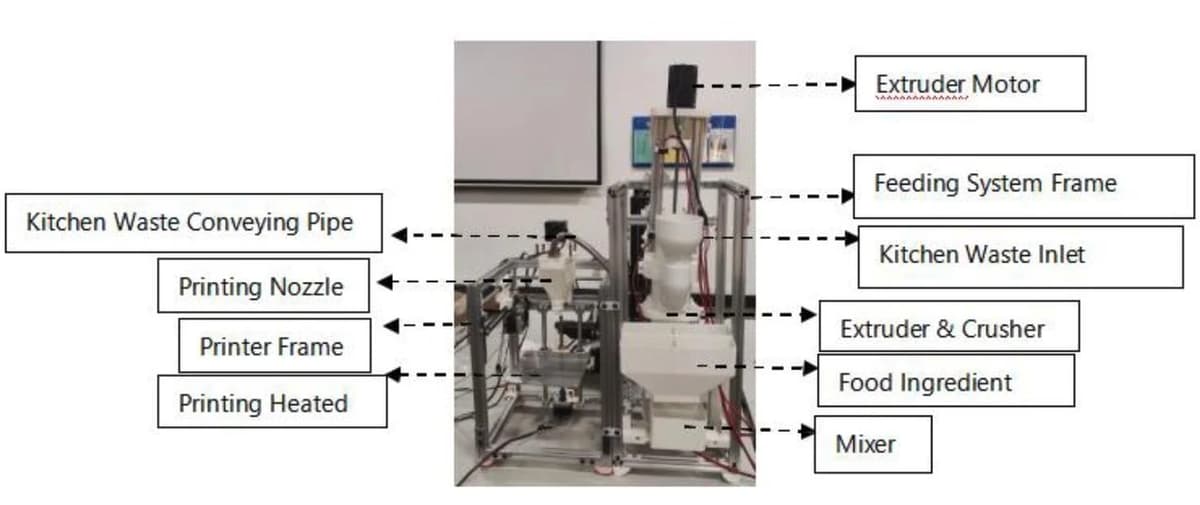
Paper Proposes Multifunctional 3D Robot For Kitchen Waste
Key Takeaways
- •3D‑printed robot can sort, shred, dry, and compact kitchen waste
- •Open‑source CAD files enable community replication and iterative improvements
- •PETG, ASA, or carbon‑fiber nylon recommended for wet, abrasive waste
- •Low‑cost platform suitable for makerspaces, schools, and small food operators
- •Rapid part redesign accelerates troubleshooting of clogs and biofilm buildup
Pulse Analysis
Kitchen waste represents a persistent challenge for municipalities and food‑service operators, accounting for a sizable share of landfill volume. Traditional industrial composters are capital‑intensive, leaving a gap for smaller entities that lack the budget or space for large equipment. By leveraging affordable 3D‑printed components, the newly proposed robot bridges this gap, delivering a modular system that can be built in a typical workshop. Its ability to sort, shred, dry and compact scraps transforms heterogeneous waste into a manageable form, supporting on‑site composting or anaerobic digestion and advancing circular‑economy goals.
From a technical standpoint, the robot’s design showcases the strengths of additive manufacturing in rapid prototyping and customization. FFF‑printed brackets, gear housings and fluidic chutes replace costly machined parts, allowing designers to iterate overnight to address clogs or biofilm formation. Material selection is critical; the authors recommend PETG, ASA or carbon‑fiber‑reinforced nylon for their resistance to moisture, heat and abrasion, ensuring longevity in a kitchen environment. By publishing the CAD and STL files under an open‑source license, the project invites a global community to refine the hardware, share firmware improvements, and adapt the platform for diverse waste streams, echoing successful open‑source recycling initiatives.
The broader market impact could be significant. Small‑scale food vendors, school cafeterias and makerspaces can adopt the robot with minimal upfront investment, turning waste management into an educational project and a cost‑saving measure. As sustainability reporting becomes mandatory for many businesses, having a tangible, verifiable waste‑reduction tool enhances ESG credentials. Moreover, the platform’s extensibility—such as integrating sensors for moisture monitoring or linking to IoT dashboards—positions it as a foundation for future smart‑kitchen solutions, potentially spurring a new niche in low‑cost, open‑source waste‑to‑resource technologies.
Paper Proposes Multifunctional 3D Robot For Kitchen Waste
Comments
Want to join the conversation?