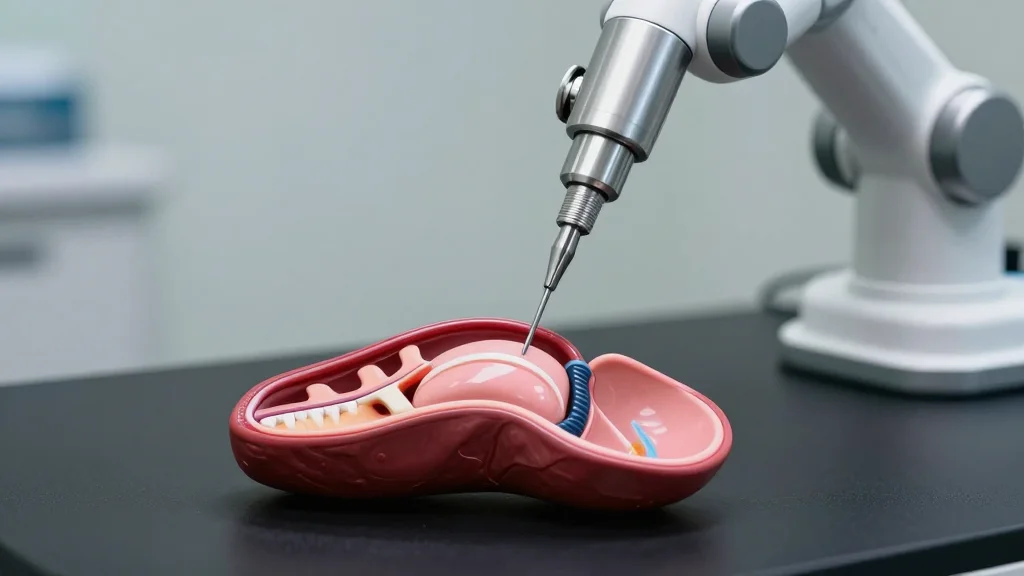
Surgical Robotics Beyond NVIDIA GTC
Key Takeaways
- •Open‑H contains 26,500+ demos and 5M video‑motion pairs
- •Dataset spans 9 robot platforms across 10+ institutions
- •Cosmos‑H predicts 92 future frames from a single image
- •Simulations cut testing time from two days to 40 minutes
- •Transfer model turns synthetic videos into photorealistic surgical footage
Pulse Analysis
Surgical robotics has long grappled with a scarcity of high‑quality training data, as real operations are rare, unpredictable, and ethically sensitive. Traditional simulators rely on handcrafted physics models that struggle to capture the nuanced behavior of soft tissue, blood flow, and tool interaction. By releasing Open‑H, NVIDIA addresses this bottleneck, offering the research community a massive, standardized repository that reflects real‑world surgical dynamics across diverse platforms and institutions, thereby laying a robust foundation for data‑driven AI models.
Building on that dataset, NVIDIA’s Cosmos‑H world model transforms static video frames into dynamic, photorealistic simulations. The fine‑tuned Cosmos‑H‑Surgical‑Predict can forecast 92 future frames, enabling synthetic data generation for downstream policy learning, while Cosmos‑H‑Surgical‑Transfer converts low‑fidelity renders into lifelike footage, narrowing the simulation‑to‑real gap. These capabilities compress testing cycles dramatically—what once required 600 physical runs over two days can now be executed in 40 minutes of virtual simulation—cutting costs and accelerating iteration for developers.
The industry impact is immediate. CMR Surgical’s Versius platform already leverages the technology to pre‑validate procedures entirely in silico, reducing patient risk and regulatory hurdles. As more manufacturers adopt these tools, we can expect a surge in AI‑enhanced robotic assistants, faster regulatory approvals, and broader access to minimally invasive surgery. Ultimately, NVIDIA’s open‑source approach democratizes advanced surgical AI, fostering collaboration that could reshape operative care worldwide.
Surgical robotics beyond NVIDIA GTC
Comments
Want to join the conversation?