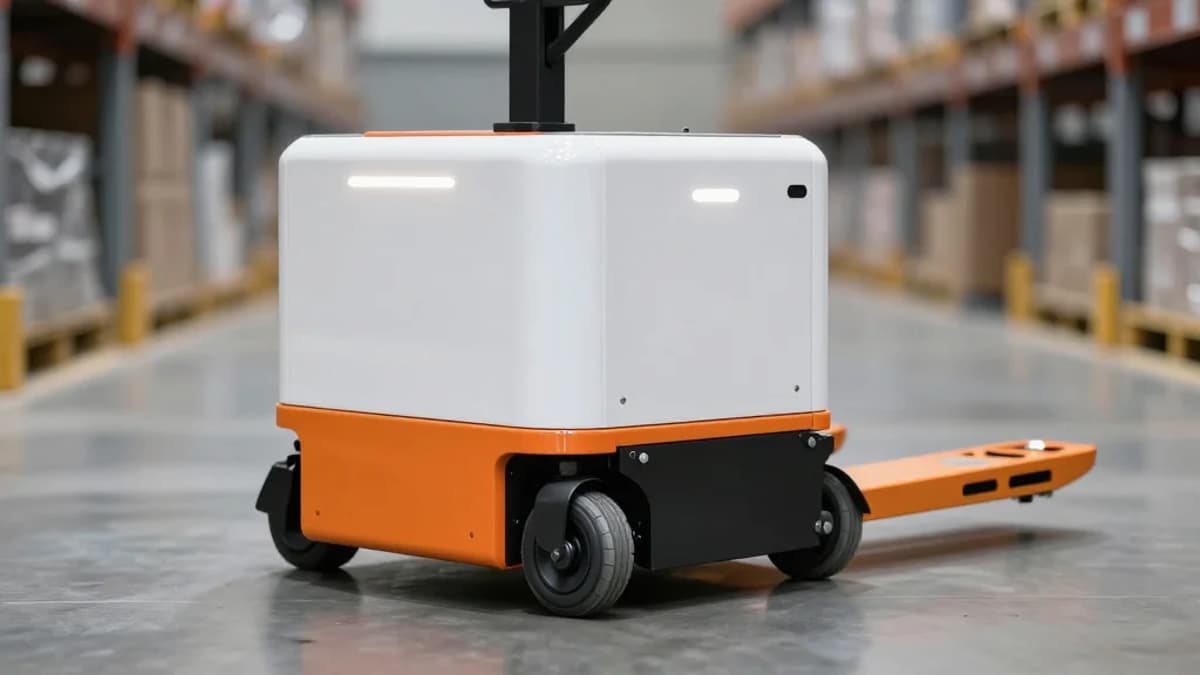
Swisslog to Debut AgileStore Pallet Shuttle Storage System
•February 25, 2026
0
Why It Matters
The technology boosts warehouse space efficiency and operational flexibility, giving users a competitive edge in fast‑changing supply chains.
Key Takeaways
- •AgileStore enables four-way shuttle movement.
- •Cross-aisle and vertical travel without extra equipment.
- •Dynamic routing reduces manual handling.
- •Supports deep lane, high-density storage.
- •Integrated with SynQ for real-time orchestration.
Pulse Analysis
Modern distribution centers are under pressure to squeeze more inventory into limited footprints while staying responsive to volatile demand. Traditional bi-directional shuttles lock operators into fixed aisles and require separate lifts for vertical moves, limiting density and flexibility. Swisslog’s AgileStore tackles this constraint with a four-way roaming pallet shuttle that can travel forward, backward, laterally and vertically, crossing aisles and changing levels on the fly. By eliminating the need for auxiliary equipment, the system promises higher cubic utilization, faster pick cycles, and the ability to reconfigure layouts as product mixes evolve.
The hardware advantage is amplified by Swisslog’s SynQ orchestration platform, which blends warehouse-management, execution and control-system functions into a single, data-driven interface. Real-time routing algorithms direct each shuttle along the most efficient path, while the software’s open protocols—MQTT, ModBus, OPC UA—allow seamless communication with conveyors, doors and elevators. This integration reduces manual interventions, balances labor workloads, and enables dynamic scaling of throughput during peak seasons. For operators facing tightening labor markets, the combined solution offers a tangible path to maintain service levels without costly headcount expansions.
AgileStore arrives at a time when high-density automation is becoming a differentiator for e‑commerce and third‑party logistics providers. Competitors such as Dematic and Vanderlande have introduced multi-axis robots, but Swisslog’s emphasis on modularity and its extensive project base—over 2,500 installations—gives it credibility for large-scale rollouts. The debut at MODEX 2026 signals the company’s intent to capture market share in the growing pallet-shuttle segment, especially among firms seeking to future-proof facilities for next-generation fulfillment models. Continued adoption could reshape warehouse design standards, pushing industry norms toward fully roaming, software-centric storage ecosystems.
Swisslog to debut AgileStore pallet shuttle storage system
0
Comments
Want to join the conversation?
Loading comments...