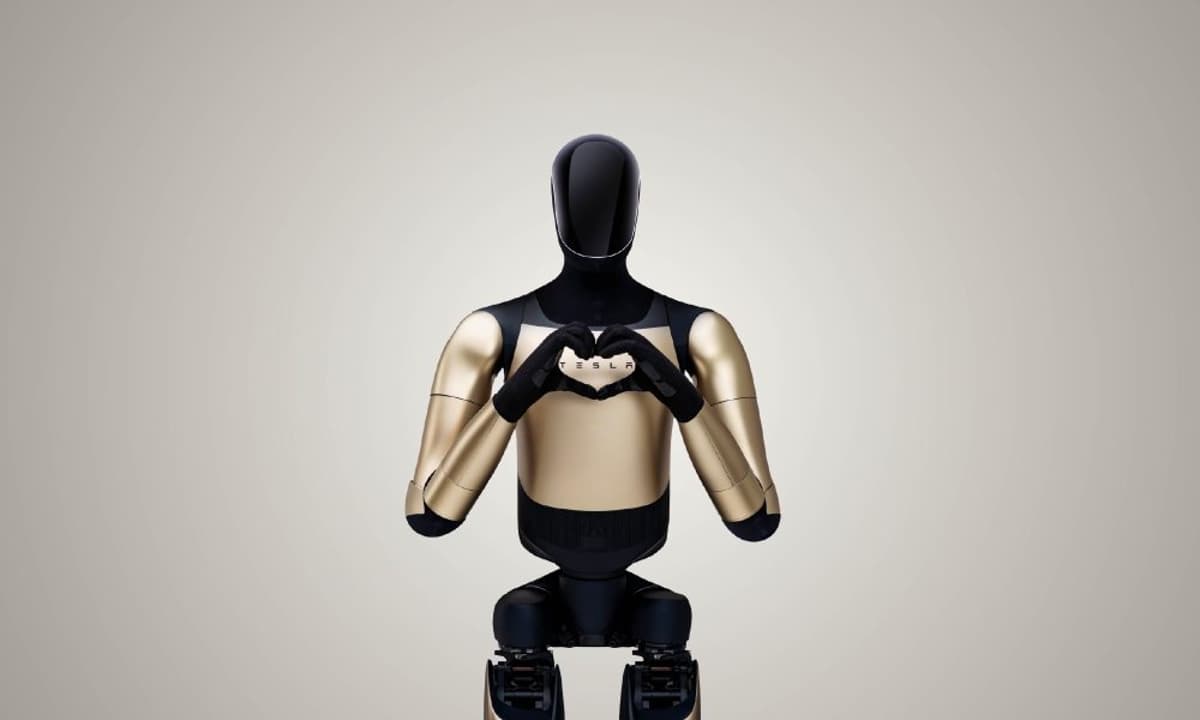
Tesla Optimus V3 Hand and Arm Details Revealed in New Patents
Key Takeaways
- •Actuators moved to forearm reduce hand weight and inertia.
- •Each finger has four degrees of freedom, wrist adds two.
- •Tendon routing minimizes stretch, friction, and crosstalk.
- •Joint design uses curved contacts for durable, low‑maintenance pivots.
- •Patents signal Tesla’s shift toward mass‑production‑ready humanoids.
Pulse Analysis
The hand has been the Achilles’ heel of humanoid robots, and Tesla’s new patents mark a decisive step toward overcoming that hurdle. By relocating the bulk of the actuation hardware to the forearm, the V3 design slashes the mass at the end of the kinematic chain, enabling faster, more precise finger movements. The four‑degree‑of‑freedom layout per finger, combined with a two‑degree wrist, replicates the nuanced articulation of a human hand while keeping the mechanical complexity manageable. This tendon‑driven system mirrors the anatomy of human forearm muscles, using cables that run through a sophisticated wrist transition to preserve tension and reduce unwanted play.
The wrist’s cable transition mechanism is a standout innovation. It re‑orients cable bundles from a lateral stack in the forearm to a vertical stack in the hand, dramatically lowering cable stretch and friction during combined yaw‑pitch motions. This reduction in mechanical loss translates to smoother multi‑axis control, a prerequisite for tasks that demand fine motor skills such as assembly or tool handling. Complementary joint patents introduce curved contact surfaces paired with flexible composites, delivering low‑maintenance pivots that can endure the repetitive stresses of high‑volume production without sacrificing precision.
From a market perspective, these filings signal Tesla’s intent to mass‑produce a capable, general‑purpose robot rather than a lab‑only prototype. The emphasis on manufacturability—stackable parts, simplified assembly, and reduced component count—aligns with Musk’s broader strategy of leveraging Tesla’s existing supply chain efficiencies. If Tesla can deliver on these design promises, Optimus could outpace competitors like Boston Dynamics and Agility Robotics, opening new revenue streams in logistics, manufacturing, and consumer services. The patents thus not only solve a technical problem but also lay the groundwork for a commercially viable humanoid platform.
Tesla Optimus V3 hand and arm details revealed in new patents
Comments
Want to join the conversation?