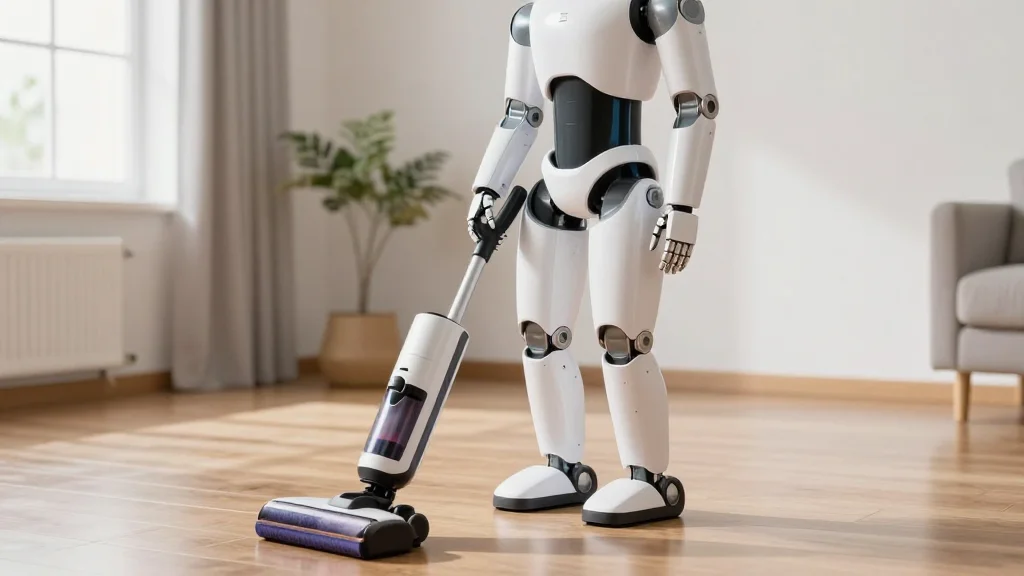
$150 Humanoid Robot Cleaning Service Debuts in San Francisco, Threatening Maid Jobs

Companies Mentioned
Why It Matters
The debut of a low‑cost, fully autonomous humanoid cleaning service signals a shift from industrial to consumer robotics, potentially redefining how households outsource chores. By pricing below traditional maid services, Gatsby challenges a labor market that depends heavily on migrant workers, raising social and economic stakes. If the model proves viable, it could accelerate investment in domestic‑use humanoids, prompting manufacturers to prioritize safety, adaptability, and cost‑effectiveness. Conversely, resistance from labor advocates and possible regulatory hurdles could shape the pace and scope of adoption, making the next few months critical for the sector’s trajectory.
Key Takeaways
- •Gatsby launched a $150 flat‑fee humanoid robot cleaning service in San Francisco
- •Service uses Unitree‑derived humanoid robots to clean floors, countertops, mirrors, and stovetops
- •Price undercuts typical deep‑clean rates of $200‑$400 per home
- •UBS predicts a surge in humanoid robot shipments through 2030
- •Launch could disrupt domestic labor market that relies on migrant workers
Pulse Analysis
Gatsby’s entry into the consumer cleaning space is more than a novelty; it is a strategic play to capture a market segment that has been resistant to automation due to the complexity of human‑like tasks. Traditional robot vacuums succeeded by focusing on a narrow set of functions, but Gatsby’s humanoid platform attempts to replicate a broader suite of chores, effectively positioning itself as a robotic maid. This ambition aligns with a broader industry trend where manufacturers are leveraging advances in perception, manipulation, and AI to push beyond point‑solution devices.
Historically, household service automation has been incremental—think dishwashers and washing machines—yet the labor intensity and personal interaction of cleaning have kept human workers dominant. Gatsby’s pricing strategy suggests confidence that economies of scale and rapid hardware cost declines can offset the higher upfront investment in humanoid platforms. If the service can maintain a low defect rate and navigate the liability landscape, it could force traditional cleaning firms to either adopt similar technology or risk losing price‑sensitive customers.
However, the rollout also surfaces risks. Consumer acceptance hinges on trust in a robot operating unsupervised in private spaces, and any high‑profile failure could trigger regulatory backlash. Moreover, the social impact on low‑skill workers could provoke political pushback, especially in cities with strong labor protections. The next quarter will reveal whether Gatsby can scale beyond a pilot while managing these challenges, and whether competitors will accelerate their own humanoid offerings to protect market share.
$150 Humanoid Robot Cleaning Service Debuts in San Francisco, Threatening Maid Jobs
Comments
Want to join the conversation?
Loading comments...