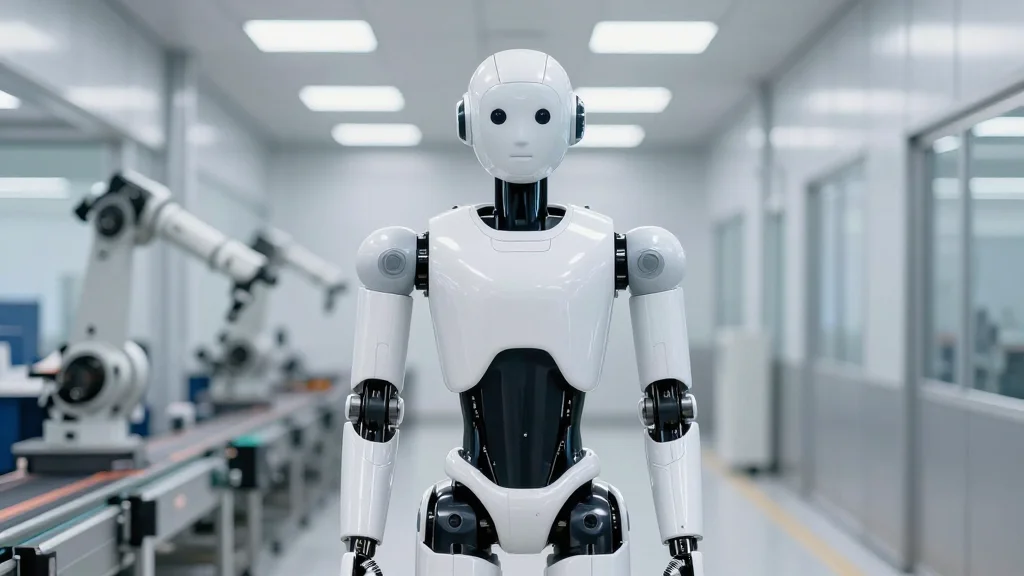
1X Technologies Opens 58,000‑sq‑ft California Factory, Showcases X1 Neo Humanoid

Companies Mentioned
Why It Matters
1X’s Hayward factory signals a shift toward domestic, high‑volume production of consumer humanoids, a segment previously dominated by a handful of Chinese manufacturers. By integrating component fabrication and assembly under one roof, the startup can accelerate hardware iterations and software updates, potentially lowering costs and improving reliability for end users. If 1X meets its ambitious output goals, the move could catalyze broader adoption of home robots for tasks such as laundry folding, elder‑care assistance, and household organization. The venture also underscores a growing trend of tech firms reshoring critical hardware production to mitigate supply‑chain risks and meet rising demand for AI‑enabled devices in the United States.
Key Takeaways
- •1X Technologies opened a 58,000‑sq‑ft factory in Hayward, California, employing ~200 staff.
- •The plant aims to produce 10,000 X1 Neo humanoids in its first year, scaling to 100,000 by end‑2027.
- •Neo robots are priced at $20,000 and are currently available for pre‑order, with a $499/month subscription option.
- •Company raised $100 million in a Series B round in Jan 2024, total funding $123.5 million.
- •Vertical integration includes in‑house production of motors, batteries, copper coils and electronics.
Pulse Analysis
1X’s aggressive scaling strategy reflects a broader inflection point in the robotics industry: the transition from niche, industrial‑only robots to mass‑market, consumer‑focused humanoids. By localizing production, 1X reduces latency in its feedback loop, allowing rapid hardware tweaks based on real‑world data—a competitive edge that cloud‑based rivals like Tesla’s Optimus may struggle to match without similar manufacturing footprints.
Historically, the humanoid market has been constrained by high unit costs and limited use‑cases. 1X’s pricing at $20,000, combined with a subscription model for software upgrades, mirrors the consumer‑electronics playbook that helped smartphones achieve scale. If the company can sustain quality while hitting its volume targets, it could force incumbents to rethink pricing and supply‑chain strategies, potentially accelerating the overall adoption curve for home robots.
However, the path is fraught with challenges. Skilled labor shortages, regulatory scrutiny over safety standards, and the need for robust after‑sales support could temper growth. Moreover, the reliance on pre‑orders means demand is still speculative. Investors will be watching the first wave of shipments closely; any delay or quality issue could erode confidence and give competitors a chance to capture market share. In the meantime, 1X’s vertical integration and early‑stage production footage serve as a powerful proof point that consumer humanoids are moving from science‑fiction prototypes to factory‑floor reality.
1X Technologies Opens 58,000‑sq‑ft California Factory, Showcases X1 Neo Humanoid
Comments
Want to join the conversation?
Loading comments...