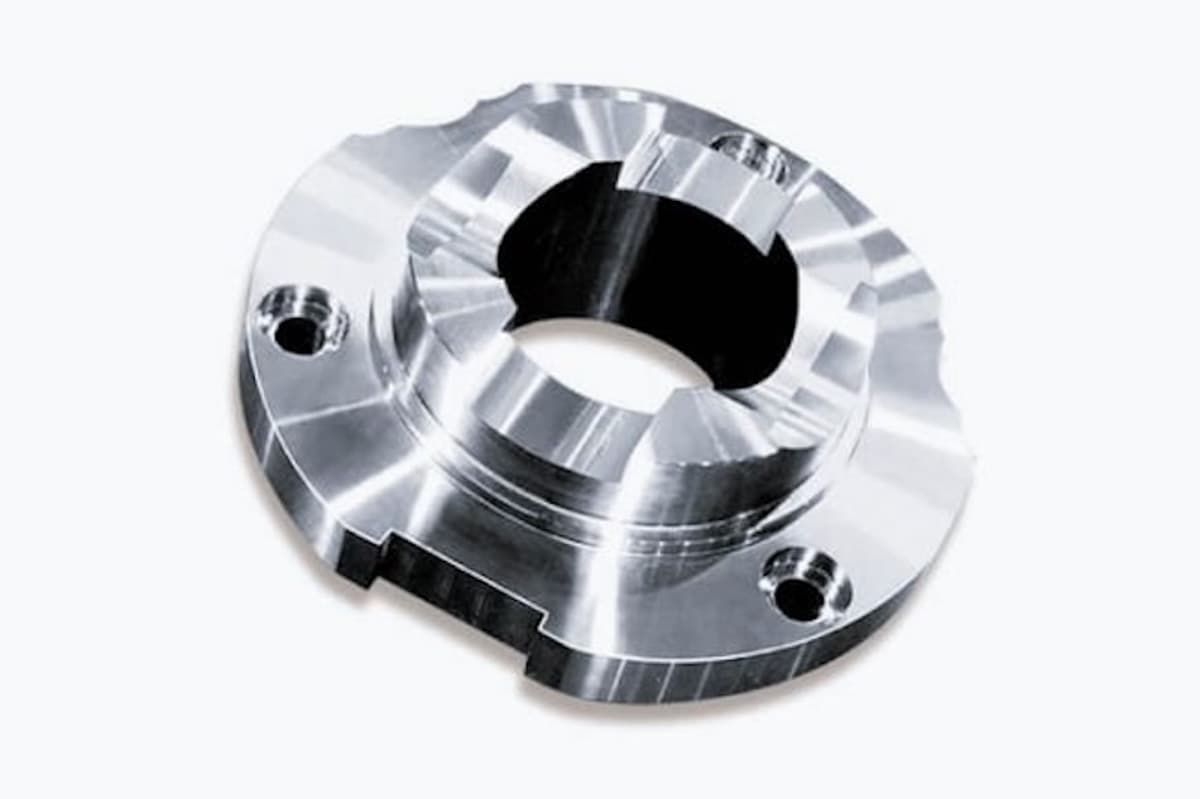
7 CNC-Machined Components Every Industrial Robot Depends On
•February 9, 2026
0
Why It Matters
Because the performance and longevity of robots hinge on these precision‑machined parts, any tolerance breach inflates development cycles, reduces payload capacity, and raises warranty expenses, making reliable CNC sourcing a competitive differentiator.
Key Takeaways
- •Joint housings need ±0.01 mm bearing bore tolerance.
- •Gearbox casings require Ra 0.8 µm surface finish.
- •Motor mounts demand 0.02 mm concentricity tolerance.
- •End‑effector flanges must stay within 0.01 mm flatness.
- •Supplier consistency critical for batch‑scale robot production.
Pulse Analysis
The surge in collaborative and high‑speed industrial robots has amplified demand for CNC‑machined sub‑assemblies that marry lightweight design with extreme rigidity. While online quoting platforms simplify part sourcing, engineers still bear the responsibility of translating functional requirements into manufacturable CAD models. Understanding the interplay between material choice—aluminum alloys for weight savings, hardened steels for torque‑heavy joints, and occasional titanium for aerospace‑grade stiffness—and machining strategy (3‑axis versus 5‑axis milling, precision boring, or grinding) is essential for achieving the ±0.01 mm tolerance envelope that modern robots require.
Tolerance drift, even at the micron level, propagates through a robot’s kinematic chain, magnifying positional errors at the end effector. A joint housing bore that is 0.05 mm out of spec can introduce angular play, while a misaligned gearbox casing surface finish above Ra 0.8 µm accelerates wear and heat buildup. These defects translate into longer settling times, reduced cycle rates, and higher warranty claims—factors that directly erode a manufacturer’s bottom line. Consequently, design‑for‑manufacturability practices, such as incorporating generous fixture points and specifying GD&T with realistic tolerances, become strategic tools for mitigating downstream rework.
For firms without in‑house machining capabilities, supplier selection is a decisive competitive lever. Consistency across batches hinges on rigorous vendor audits, capability verification (e.g., 5‑axis CNC capacity, surface‑finish measurement tools), and clear communication of tolerance stacks. Leveraging digital platforms that integrate real‑time metrology data and automated quote comparison can reduce lead times while preserving quality. Looking ahead, hybrid manufacturing—combining additive‑built cores with CNC‑finished surfaces—promises to lower material waste and enable complex internal geometries, further tightening the link between design intent and robotic performance.
7 CNC-Machined Components Every Industrial Robot Depends On
0
Comments
Want to join the conversation?
Loading comments...