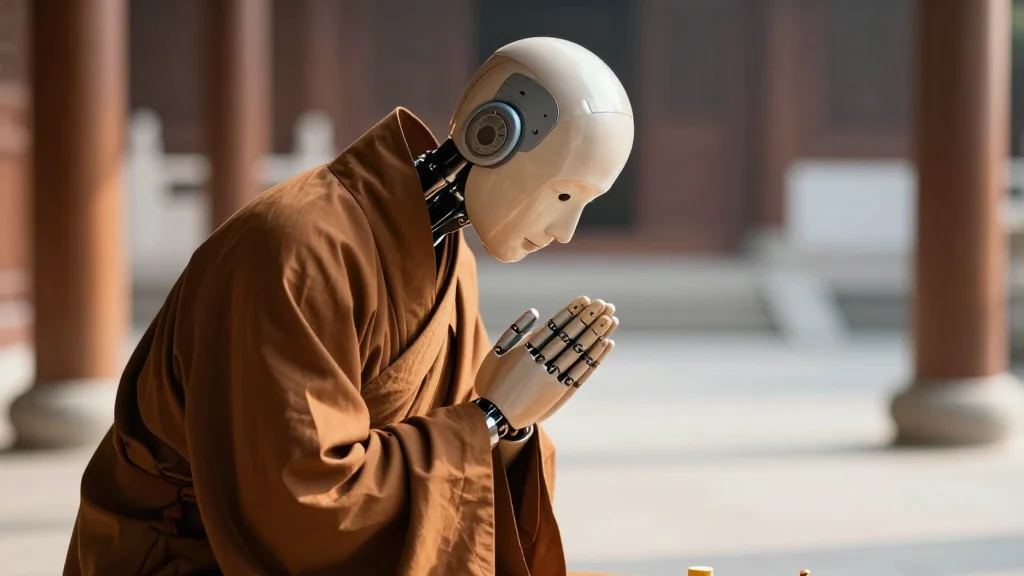
A $13,500 Unitree Robot Was ‘Ordained’ at Seoul’s Jogyesa Temple
Why It Matters
The event demonstrates how religious traditions can contribute concrete, culturally resonant guidelines for emerging AI systems, filling a gap left by regulatory and corporate frameworks. It also signals the growing urgency for practical ethics as humanoid robots become commercially viable.
Key Takeaways
- •Unitree G1 robot ordained as monk Gabi at Seoul’s Jogyesa Temple.
- •Ceremony used pre‑recorded voice and remote control; robot loaned for a day.
- •Buddhist monks created five robot precepts covering safety, property, obedience, honesty, energy.
- •Precepts mirror AI risk categories: physical harm, liability, alignment, deception, energy use.
- •Event drew over a million views, spotlighting AI ethics in East Asia.
Pulse Analysis
The ordination of a humanoid robot at Jogyesa Temple was more than a publicity stunt; it highlighted South Korea’s broader struggle to keep Buddhism relevant to younger generations. With the faith’s share of the population slipping to roughly 16 percent and monastic recruitment collapsing, the Jogye Order leveraged cutting‑edge robotics to capture media attention and spark dialogue about technology’s role in society. By framing the robot’s participation within a traditional vow‑taking ceremony, the monks created a vivid narrative that resonated far beyond the temple courtyard.
Central to the spectacle were the five precepts the monks drafted for machines. Unlike the Vatican’s lengthy theological treatise, these concise rules translate classic Buddhist virtues into actionable constraints for AI: protect life, avoid property damage, obey humans, refrain from deception, and conserve energy. The language mirrors the most pressing AI risk categories—physical safety, liability, alignment, misinformation, and sustainability—offering a pragmatic ethical scaffold that engineers can readily understand. This vernacular approach contrasts sharply with Western regulatory efforts, which often remain abstract or overly legalistic, and suggests that culturally grounded ethics can complement formal policy.
The ceremony also underscores the rapid commercialization of humanoid robots, a market dominated by Chinese firms like Unitree, which shipped roughly 90 % of global units last year and is eyeing a multibillion‑dollar IPO. As these machines move from labs to homes and workplaces, the need for universally accepted behavioral standards becomes acute. While it remains uncertain whether manufacturers will adopt the Jogye precepts, the fact that a centuries‑old religious order has articulated them signals a growing appetite for cross‑disciplinary input on AI governance. For investors and developers, the episode serves as a reminder that ethical credibility may soon be as vital as technical performance in the race for market leadership.
A $13,500 Unitree robot was ‘ordained’ at Seoul’s Jogyesa Temple
Comments
Want to join the conversation?
Loading comments...