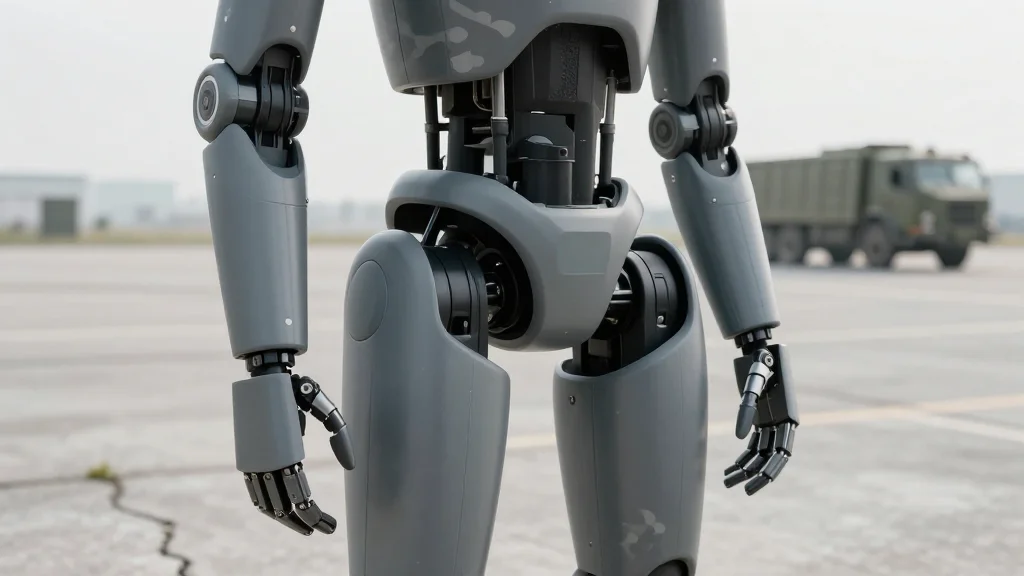
A Startup with Eric Trump as Adviser Is Testing Humanoid Robots in Ukraine. It Wants Them on US Front Lines Within 18 Months.
Why It Matters
The initiative could reshape battlefield logistics by reducing soldier exposure, while the high‑profile political ties raise questions about procurement integrity and the pace of U.S. military robotics adoption.
Key Takeaways
- •Foundation sent two Phantom MK‑1 robots to Ukraine for logistics testing
- •Eric Trump serves as chief strategy adviser amid $24 M Pentagon contracts
- •Company aims for US front‑line deployment within 12‑18 months
- •Critics cite cost, complexity, and political conflict‑of‑interest concerns
- •Humanoid robots could navigate urban terrain better than tracked platforms
Pulse Analysis
The deployment of Foundation Future Industries' Phantom MK‑1 robots in Ukraine underscores a rapid shift toward humanoid platforms for battlefield logistics. Unlike traditional tracked or quadruped robots, these bipedal units can negotiate stairs, ladders, and narrow corridors—features that mirror human movement in dense urban combat. Early tests showed the robots handling 44 pounds of supplies, a modest payload that still demonstrates the potential to pull soldiers out of high‑risk resupply routes. While battery endurance and waterproofing remain technical hurdles, the Ukrainian front provides real‑world data that laboratory simulations cannot replicate, accelerating the learning curve for U.S. defense developers.
The political dimension adds a layer of complexity. Eric Trump’s role as chief strategy adviser, coupled with $24 million in Army, Navy, and Air Force research contracts, has drawn criticism from figures like Senator Elizabeth Warren, who label the arrangement as "corruption in plain sight." This scrutiny highlights broader concerns about how defense funding is allocated and the influence of political connections on emerging tech procurement. Ethical debates also surface as Foundation hints at future weaponised capabilities, promising human‑in‑the‑loop control but acknowledging scenarios where fully autonomous decisions may be required. The conversation mirrors global discussions on lethal autonomous weapons and the need for clear policy frameworks.
Globally, the humanoid market is fragmenting. European firms such as Germany’s Stark are raising roughly $327 million (€300 million) for kamikaze drones, while Destinus, backed by a Rheinmetall joint venture, produces about 2,000 cruise missiles annually, valued at an estimated $2.73 billion (€2.5 billion). In contrast, Foundation targets a niche—humanoid logistics and potential combat support—positioning itself against both purpose‑built unmanned systems and consumer‑grade robots. Analysts like Toby Walsh predict that tracked, aerial, and underwater robots will outpace humanoids in near‑term adoption, but the U.S. push for a humanoid presence could spur innovation, drive supply‑chain resilience, and force competitors to reconsider design philosophies. Success will hinge on overcoming cost, engineering complexity, and regulatory hurdles, determining whether humanoids become a battlefield staple or remain a futuristic concept.
A startup with Eric Trump as adviser is testing humanoid robots in Ukraine. It wants them on US front lines within 18 months.
Comments
Want to join the conversation?
Loading comments...