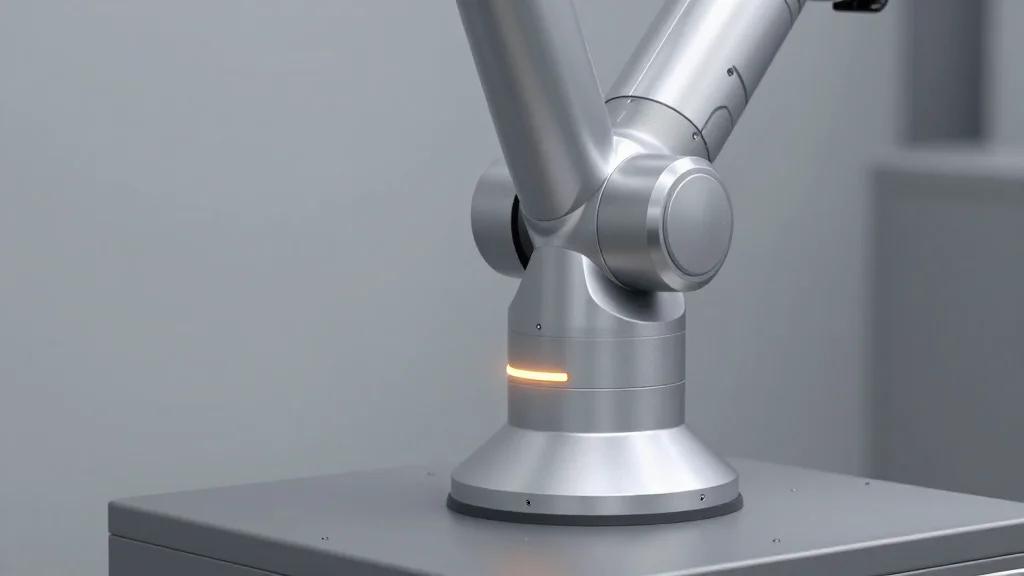
ABB Unveils PoWa Cobots, High‑Speed, High‑Payload Collaborative Robots

Companies Mentioned

Why It Matters
ABB’s PoWa cobot family pushes the envelope of what collaborative robots can do, merging industrial‑grade speed and payload with safety features that allow continuous operation alongside humans. If the security concerns are addressed, the line could accelerate the shift from isolated industrial robots to flexible, human‑centric workcells, especially in high‑mix, high‑throughput sectors like automotive and electronics. The launch also forces competitors to rethink their own performance‑vs‑safety trade‑offs, potentially spurring a new generation of faster, heavier cobots. Beyond productivity, the PoWa story highlights a growing tension in robotics: as machines become more capable, their attack surface expands. The industry’s ability to embed robust cybersecurity into motion‑control hardware will become a decisive factor for adoption in regulated environments, influencing standards, insurance premiums, and ultimately the pace of automation across global supply chains.
Key Takeaways
- •ABB introduced three PoWa cobot models (5 kg, 12 kg, 20 kg) with up to 220°/s wrist speed.
- •OmniCore C90XT controller uses real‑time Linux on a Xilinx Zynq UltraScale+ MPSoC, achieving sub‑100 µs servo jitter.
- •Torque sensing at 10 kHz enables deterministic safety without external scanners.
- •Security flaw (CVE‑2025‑12345) allowed unauthenticated joint drift; patch v2.1.1 released, but RBAC still missing.
- •Early pilots report a 30 % cycle‑time reduction versus legacy cobots.
Pulse Analysis
ABB’s PoWa launch is more than a product announcement; it signals a strategic pivot toward high‑performance collaborative automation. Historically, cobots have been positioned as low‑payload, safety‑first tools for light‑touch tasks. By delivering payloads up to 20 kg and maintaining industrial‑grade repeatability, ABB is effectively erasing the performance gap that has kept many manufacturers from deploying cobots on the main line. This could catalyze a wave of retrofits in sectors that previously relied on heavyweight industrial arms, unlocking new ROI scenarios.
However, the security shortcomings exposed by the Reddit analyst and the CVE highlight a systemic issue: robotics vendors have often treated motion control as a closed‑loop, physical problem, neglecting the software‑centric threat model that now dominates OT risk assessments. ABB’s decision to bundle a managed‑service security offering suggests the company recognizes that future sales will be judged not just on speed and payload, but on the robustness of the cyber‑defense stack. Competitors that can integrate signed firmware, encrypted APIs, and granular RBAC from day one will likely win the trust of regulated manufacturers, especially in aerospace and medical device production.
In the broader market, PoWa’s entry may compress the pricing curve for high‑speed cobots. ABB’s economies of scale and existing global service network could undercut smaller players, forcing them to either specialize in niche applications or accelerate their own high‑payload roadmaps. The next six months—when PoWa units ship and firmware v2.1.2 rolls out—will be a litmus test for whether performance can outweigh security concerns in the eyes of OEMs. If ABB can close the authentication gap quickly, the PoWa family could become the benchmark for the next generation of collaborative robots, reshaping factory floor dynamics for years to come.
ABB Unveils PoWa Cobots, High‑Speed, High‑Payload Collaborative Robots
Comments
Want to join the conversation?
Loading comments...