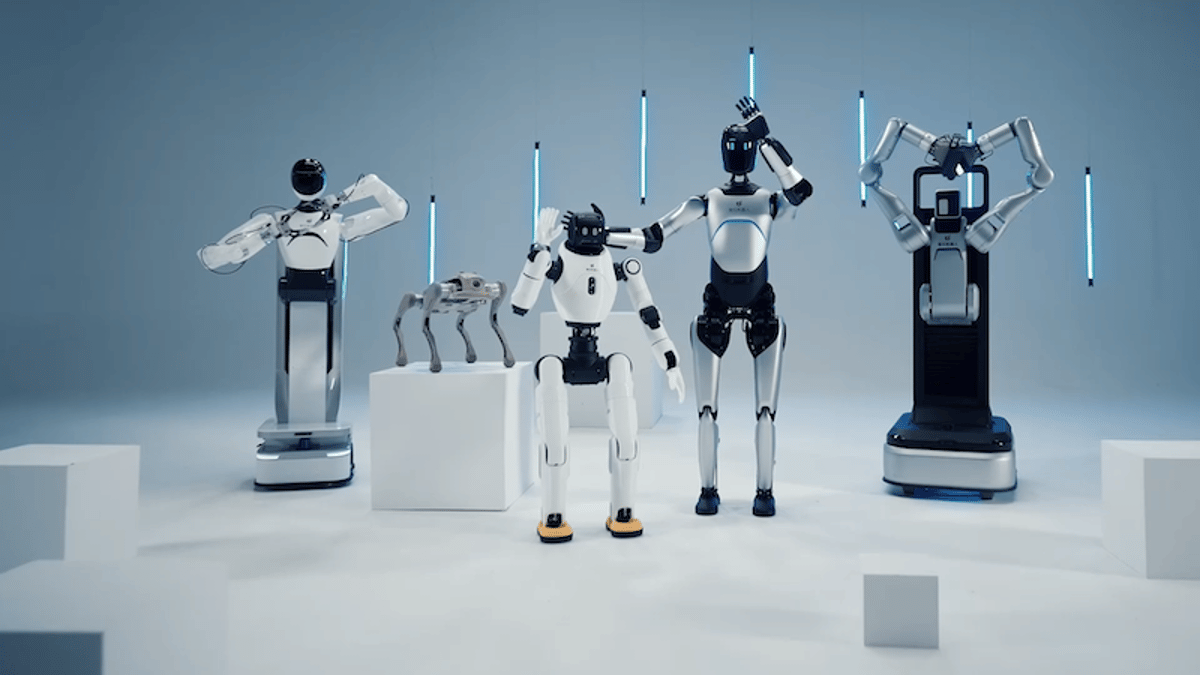
AgiBot Claims Top Spot in Global Humanoid Robot Shipments in 2025 with More than 5,100 Units Delivered
•January 21, 2026
0


Why It Matters
AgiBot’s dominant market share signals the scaling of commercial humanoid robotics and sets a benchmark for volume‑driven growth. The shift influences supply chains and investment priorities across sectors adopting autonomous agents.
Key Takeaways
- •AgiBot shipped 5,100+ humanoid robots in 2025.
- •Captured roughly 39% of global humanoid robot market.
- •Competitors Unitree and UBTech lag behind in volume.
- •Market forecast 2.6 million units annually by 2035.
- •US firms prioritize technical sophistication over high‑volume deliveries.
Pulse Analysis
The 2025 shipment surge marks a pivotal moment for the humanoid robot sector, with Omdia estimating total deliveries at roughly 13,000 units. This growth trajectory reflects broader adoption across enterprise applications, from guest services to assembly lines, and underpins a forecast that could see annual shipments climb to 2.6 million by 2035. Such scaling is driven by declining hardware costs, improved AI perception, and expanding use‑case libraries, positioning humanoid platforms as viable alternatives to traditional automation.
AgiBot’s market leadership stems from a diversified product lineup that includes full‑size, half‑size, and wheeled variants, each tailored for specific operational environments. By targeting high‑touch sectors such as hospitality and security, the company has built a recurring revenue stream that fuels further R&D investment. Its ability to deliver volume while maintaining competitive capability scores in perception and navigation differentiates it from rivals that focus primarily on niche, high‑performance models. This dual emphasis on scale and functional reliability has attracted partnerships with logistics firms and research institutions seeking reliable, deployable agents.
The competitive landscape is evolving as U.S. firms prioritize technical sophistication over sheer unit counts, aiming to embed advanced manipulation, natural language interaction, and safety certifications into their robots. This divergence creates a bifurcated market: volume‑driven players like AgiBot dominate commercial deployments, while innovation‑centric companies chase premium segments. Investors and supply‑chain managers must therefore balance short‑term volume opportunities with long‑term technology bets, as the next decade will likely blend both approaches to meet diverse industry demands.
AgiBot claims top spot in global humanoid robot shipments in 2025 with more than 5,100 units delivered
0
Comments
Want to join the conversation?
Loading comments...