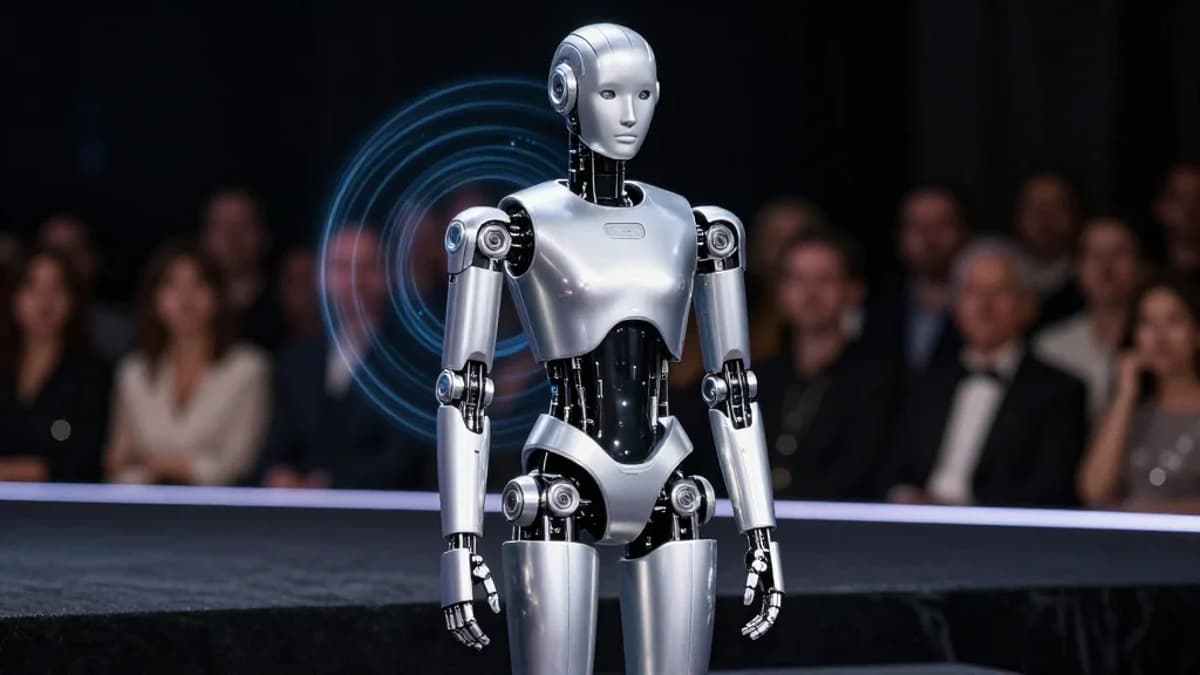
AGIBOT Hosts "AGIBOT NIGHT," A Robot-Led Live Gala Show
•February 9, 2026
0
Companies Mentioned

Why It Matters
The showcase proves humanoid robots can operate reliably in high‑visibility, consumer‑facing events, accelerating adoption beyond factories into entertainment and daily life. It signals a broader industry shift toward human‑robot symbiosis in cultural and commercial contexts.
Key Takeaways
- •First live gala fully performed by humanoid robots
- •Show demonstrated synchronized flips, dances, and real‑time human interaction
- •AGIBOT showcased A2, X2, G2, and D1 robot families
- •Event signals shift from labs to cultural, consumer spaces
- •Over 5,000 humanoids shipped, indicating scalable commercial maturity
Pulse Analysis
The debut of a robot‑led gala marks a watershed moment for embodied intelligence, moving it from research labs into the public eye. By delivering a seamless 60‑minute performance that blended dance, magic, comedy and music, AGIBOT demonstrated that humanoid platforms can meet the demanding timing, balance and expressive requirements of live entertainment. This cultural framing, timed with the Chinese Spring Festival, positions robots as participants in shared social experiences rather than mere industrial tools, opening new avenues for human‑robot interaction design.
Technically, AGIBOT NIGHT served as a stress test for multi‑robot coordination and system reliability. The synchronized flips, rapid turns and group formations required precise locomotion control, real‑time sensor fusion and robust communication across the A2, X2, G2 and D1 series. By integrating quadruped D1 units with humanoid performers, the show highlighted cross‑platform interoperability and the ability to maintain consistent performance over extended periods. These capabilities suggest that AGIBOT’s control architecture can scale to complex, mixed‑type deployments in factories, logistics hubs and public venues.
From a market perspective, the gala underscores the commercial maturity of humanoid robotics. With over 5,000 units shipped globally and high‑profile brand collaborations, AGIBOT is positioning its robots as versatile assets for entertainment, education, retail and service sectors. The event’s success may accelerate investment in embodied AI, encourage OEMs to explore co‑branding opportunities, and prompt enterprises to consider robots as front‑line customer‑engagement tools. As consumer expectations evolve, the ability to deliver reliable, emotionally resonant robot performances could become a differentiator in the burgeoning human‑robot ecosystem.
AGIBOT Hosts "AGIBOT NIGHT," a Robot-Led Live Gala Show
0
Comments
Want to join the conversation?
Loading comments...