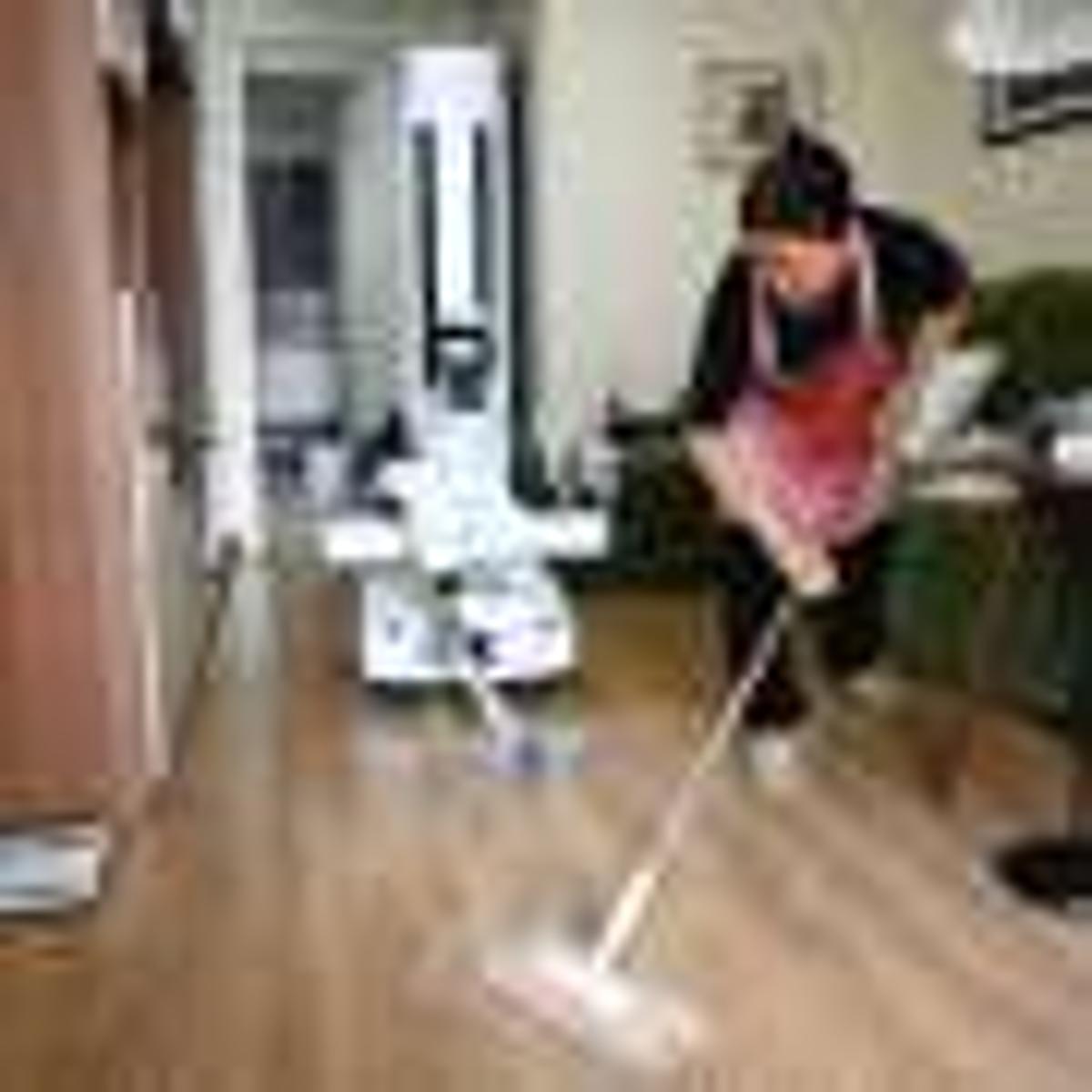
AI Robot Cleaners Leave the Lab for China's Living Rooms
Companies Mentioned
Why It Matters
The trial marks one of the first consumer‑facing deployments of embodied AI in China, providing real‑world data that could speed up robot autonomy while highlighting regulatory and trust challenges that will shape the market’s trajectory.
Key Takeaways
- •58.com & X Square charge $22 for three‑hour robot cleaning.
- •Service launched in Beijing, Shenzhen; 200 homes tried it since March.
- •Robots collect real‑world data to improve embodied AI models.
- •China’s embodied AI funding tops $8.5 billion this year.
- •Privacy, safety, and dexterity remain major barriers to scale.
Pulse Analysis
The introduction of the Quanta X1 Pro robot into Beijing and Shenzhen apartments signals a shift from laboratory prototypes to everyday consumer use. Unlike earlier demonstrations that showcased robots dancing or performing martial‑arts routines, this service tackles mundane chores—picking up litter, folding clothing, and navigating cluttered rooms. By charging 149 yuan for a three‑hour session, 58.com is testing price elasticity while gathering valuable interaction data, a critical component for training embodied AI systems that lack the massive visual datasets available to large language models.
Investors have poured over $8.5 billion into China’s embodied AI ecosystem this year, underscoring confidence that domestic robot manufacturers can capture a share of the global market. The partnership between 58.com and X Square leverages the platform’s massive user base to accelerate data collection, feeding back into algorithmic improvements and hardware refinements. Early adopters, ranging from cleaners to advertisers, provide diverse environments that help the robots learn to handle varied floor plans, lighting conditions, and household objects—knowledge that would be costly to simulate in a lab.
Despite the enthusiasm, significant obstacles temper expectations. Current robot hands lack the dexterity to match human manipulation, limiting tasks to simple pick‑and‑place actions. Moreover, cameras and sensors raise privacy concerns, as they continuously scan private living spaces, prompting questions about data storage and third‑party access. Safety standards are still nascent, requiring human supervision and emergency‑stop mechanisms. Until these technical and regulatory gaps narrow, widespread household adoption will likely remain a longer‑term prospect.
AI robot cleaners leave the lab for China's living rooms
Comments
Want to join the conversation?
Loading comments...